Uganda-China Should Collaborate on Climate Financing

I wish to first pre-empt the scepticism shared by some people about the feasibility of different modes of climate finance and the efficacy of their impact on mitigating climate change. The climate finance architecture easily seems to be capitalism’s mode of commercialising climate change without solving it. I am partly doubtful of the impact of offsetting emissions through buying carbon credits. However, I believe that to abstain from partaking in this business would only guarantee us a double loss. We lose nothing by being involved, yet we miss out on so many opportunities to raise capital to finance our other development needs if we boycott these international climate change mitigation efforts.

Uganda currently lacks a clear climate financing strategy despite the urgent need to meet its growing cost of addressing climate challenges. We stand to suffer serious economic consequences if we do not act. The recent decades have seen an increase and the frequency of arbitrary climate events in the country which have affected agriculture- the breadwinner industry for the majority of our population.

We are particularly at extreme risk of economically suffering from climate change due to the heavy dependence on farming, a very sensitive sector to our livelihood yet it’s highly vulnerable to climate change. With Agriculture affected, 40% of our GDP could be significantly reduced and 80% of our labour force could be rendered unemployed. A random destabilisation of rain seasons could put our economy on its knees since less than 2 % of farming in this country depends on irrigation.

I do not want to imagine a scenario of a hungry and jobless population and its likely effect on our security and political stability. Many Ugandans might be governable for now because of the high and reliable supply of food and water across the country. We are a country of subsistence farmers. Ugandans may not highly be impacted by the cost of clothes, sugar, spices, cooking oil or gas. These are considered luxury goods in our villages. But a serious decline in food production could detonate a time bomb of incipient political disgruntlement in our people. Therefore, just like Uganda partners with powerful countries on security, it is time we partnered with China on addressing climate change as though it were a security matter; because it is.

China has dedicated a serious stake in our infrastructure development, with a vision to contribute to our industrialization and consequently our development. This is a strategic investment, with a broad shared vision for both Uganda and China. However, the two states cannot blind themselves from factors that could potentially sabotage their grand strategy for development. We need to keep working together to tie any loose ends where our investment in development could be upset.

We would need this partnership because we lack the financial and human resources to adequately invest in the Carbon Credit Market. Just like with the oil industry where we partnered with international firms to negotiate and design our oil and gas agreements, we reasonably need some help here. The global Carbon Credit Market was valued at $103.8 billion in 2023 with a predicted growth at a CAGR (Compounded Annual Growth Rate) of 14.8% from 2024 to 2032. Last year, the value of this market hit a record of $949 billion. This is a market we cannot be indifferent about!

China would find financing us worthwhile because we have one of the most attractive carbon market profiles on the continent. Our carbon market portfolio boasts a total of over 33 million carbon credits issued from the Clean Development Mechanism (CDM) and Voluntary Carbon Market (VCM) standards. A carbon credit is worth about $40 to $80, on average. However, if Uganda sits on its potential in this market, it could fluctuate greatly since just like any other market, it depends on demand and supply.

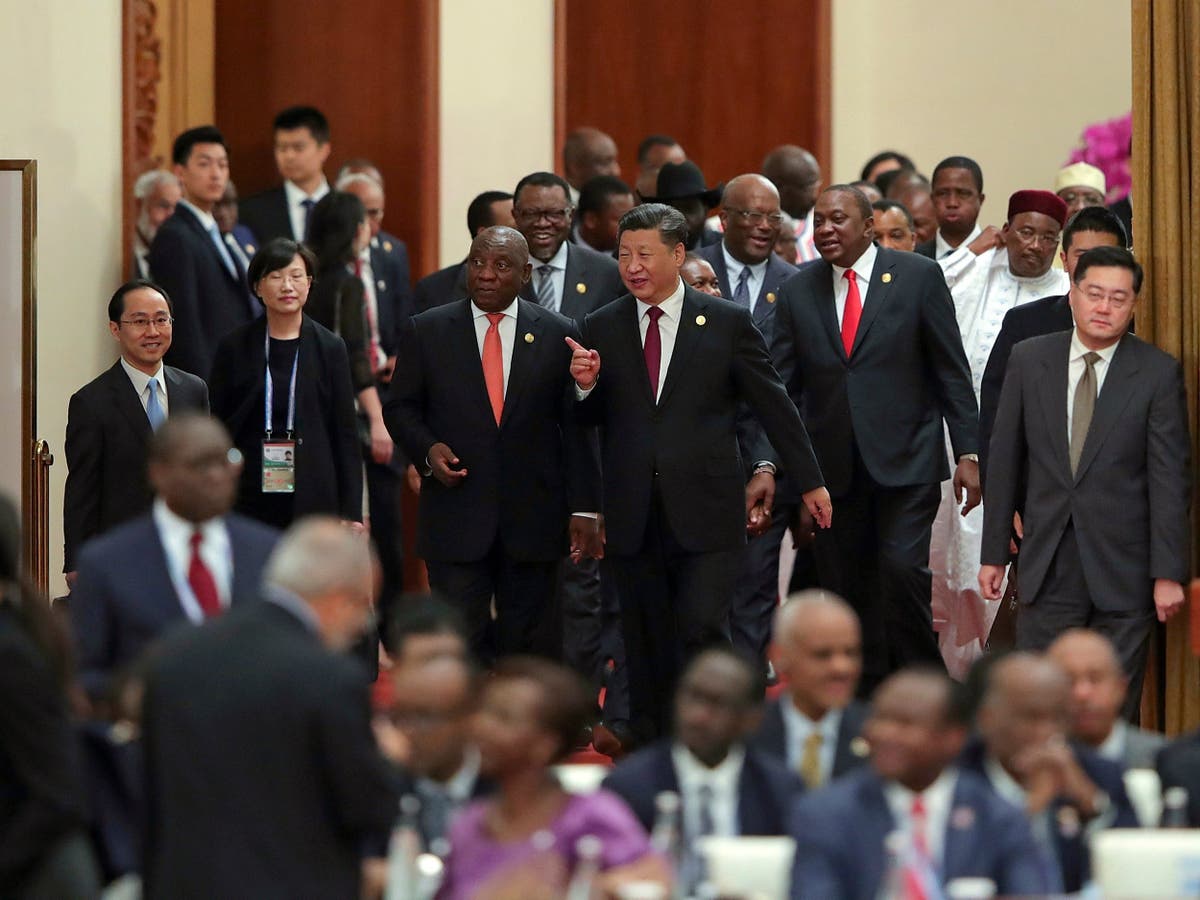
It is therefore urgent that we collaborate with a major global climate finance funder. China already contributes about $1.2 billion annually to climate finance through multilateral development banks and also contributes $1.4 billion bilaterally. This would be a strong partner to work with on this. The added advantage of working with China, as President Museveni normally quips, is that “…they don’t waste our time.” So, we would efficiently work through the modalities of a partnership in time to find the market still fertile.

The good news is that China has already initiated steps meant to address climate change in Uganda and Africa in general. For example, among other reasons, China’s support for bamboo growing is that it will help in addressing climate change.

Also, the Eighth Ministerial Conference of the Forum on China-Africa Cooperation (FOCAC) held in Dakar, Senegal (29-30th November 2021) adopted a consensus in which 53 African countries and the African Union Commission (AUC) and China agreed on “China-Africa Cooperation on Climate Change.” The two sides further committed to “support efforts to vigorously develop the green economy, advocate a green, low-carbon, circular and sustainable way of  development, and work actively to build an environment-friendly society.” With the already functioning China-Africa Environmental Cooperation Center which was established to advance  policy dialogue, exchanges and cooperation on environmental protection, Uganda and indeed other African countries should leverage it to advance climate mitigation policies including collaboration on climate financing.

We need to act early to meet the twin challenges and opportunities presented by climate change. On the one hand, we need to mitigate it because it threatens us economically and politically. Secondly, we need to participate in the booming climate change industry as espoused in the Carbon Credit Market. we need a reliable partner to face both challenges. Uganda’s vision for 2040 on achieving upper middle-income status and reducing poverty to 5% could dissipate into the wind if we only focus on infrastructure and energy and forget about potential subversive factors like climate change. Harnessing climate finance should thus be primary to our development agenda.

The writer is a senior research fellow at the Development Watch Centre.

Africa Must Leverage China Cooperation and Elevate or Stay the Arena for Great Power Rivalries

Africa Must Leverage China Cooperation and Elevate or Stay the Arena for Great Power Rivalries

By George Musiime

Today, we live in a very challenging world, a world desperately in need of sound global moral-leadership.  While this might not happen today, Africa is not lacking in potential. The African continent could actually provide this global-leadership, if only it could capitalize on its wealth of God given resources, brilliant citizenry, and development partnerships in its pursuits. However, we cannot provide global leadership, lest we fix our own leadership crises first. The concern of this essay however isn’t about global moral-leadership but rather to adumbrate on the possibility that Africa could actually overcome the challenges and stereotypes it faces today to achieve what all the other civilization throughout history have been able to accomplish. To put this into perspective, let us take a bird’s eye view of human civilization through time.

There was a time Egyptians were at the helm of global civilization, creating engineering marvels such as the pyramids, with worlds flocking to the region to experience and learn from the groundbreaking innovations that were prevalent in the region at the time. Then, there came the Arabs in Baghdad with their scientific discoveries and achievements in Mathematics, philosophy, physics, and astronomy, all of which laid the groundwork for many of the scientific breakthroughs that would follow.  However, human civilization did not rest in Baghdad or we would still be thousands of years away from where we are today. After the golden age of the Arabs, there came the Europeans and building on the previous knowledge and achievements, they gave us the industrial revolution.  This gave the Europeans so much power that they literally reached a point of sitting around a table in Europe with a map and began to share the rest of the world amongst them, and what an egotistical thing that was! It is no wonder that this would later contribute to the slump in their pace up the hill of civilization but does the story end here? Of course not, because at the beginning of the 20th century, the United States was mostly an Agricultural country just like Africa is today. It was nothing like France or Britain, yet through deliberately walking the Science and Technology path, it was able to elevate to a point where it has been able to run the world for the past century.

Moreover, following the Second World War and decolonisation in the global south, we have witnessed countries like China take enormous strides that Africa cannot any more, doubt the possibility of economic progress and transformation.

In his book “The Evolution of Civilisations” the American Historian Carrol Quigley posits that civilisation is a cyclical phenomenon which might give a reasonable explanation to the earlier passing on of the torch of civilisation from one civilisation to another throughout history. Nonetheless, regardless of some scholars faulting Quigley’s analysis as being too simplistic in as far as explaining the rise and fall of civilisations, he puts forth two points that will be the focus of this essay among the forces behind the rise and fall of civilisations. This essay will discuss these two points in relation to China-Africa relations i.e. the role of what Quigley terms as “the Instrumental Elite,” on one hand and Science and Technology on the other, in the rise of civilisations.

The instrumental Elite are a small group of people wielding enormous influence and having the power to steer the course of a society. Despite usually being a small group, they hold enough power to steer societies to progress, stagnation or destruction depending on their motives, intentions and consciousness.  Once again, one can argue that an instrumental elite with a clear vision is what has enabled China to make so much progress, becoming the world’s biggest economy over the past six decades.

Whereas most of Africa chose western democracy, China chose a different path and built a meritocratic society. Democracy by its nature rewards the popular regardless of their motives, intentions or consciousness unlike meritocracy, which rewards performance. Those that ride on popularity, tend to bring on board their kin and kind and in some unfortunate instances, form administration’s that are so incompetent that they can only get young nations on a crash-course with whatever tragedy is waiting at the end of incompetence avenue! On the contrary, China has adopted a system that rewards doers based on performance. This kind of “the instrumental elite” has enabled China to make huge leaps on the path of economic progress and transformation over such a short period. Moreover, right in there, lies the lesson and probably a model that Africa could borrow and adapt to its own journey to economic transformation.

However, Quigley does not only mention the role of the instrumental elite, he also talks about Science and technology as another factor that fuels the rise of civilisations and only God knows how strongly a deficiency in Science and Technology has held back the continent’s progress. In fact, even with the vast wealth of natural resources, Africa has not been able to make much progress due to a Science and Technology gap created by an education system designed during the colonial era with the goal of providing clerks and at the very best administrators that would implement the colonial model of governance. Therefore, we have ended up with an independent Africa, run according to the colonial rulebook and unable to make much Technological headway for the continent’s transformation. Luckily, through the continent’s friendship with China, a country that aside from its different approach was where Africa is today just a few decades ago gives Africa the hope that the goal is attainable. Additionally, China is not simply sharing skills, knowledge, expertise and technology with the continent but it is also increasing Africa’s productive capacity through investing in infrastructure.

China’s investment in infrastructure on the continent is not just to connect the periphery to the center, which was a model designed with facilitating colonial administration in mind during the colonial period. Chinese backed infrastructure projects aim to connect nations and nation-capitals facilitating cross border and intra-Africa trade and development. Therefore, all that remains now is for Africa’s instrumental elite to take decisive and deliberate actions to steer their different countries in the right direction; and that is the direction of economic transformation.

China brings to its relations with Africa the understanding that economic transformation cannot happen unless there are certain preconditions for economic progress. Conversely, the absence of these preconditions is what has become well known as  “development bottlenecks.” These same bottlenecks have grossly accounted for the continents transformation or the lack thereof. China does not necessarily have to promise Africa development and economic transformation, but through the win-win approach to its dealings with Africa, and investing in crucial infrastructure projects, China is practically setting the stage for Africa’s economic take-off. Therefore, the onus now remains on Africans to choose conscientious and enlightened leaders with the right motivation. More to that, Africa’s leadership requires a paradigm shift from the old-colonial administrator mentality that did not care much about accountability to the citizens and towards leadership that will work towards improving the livelihoods of their citizens, economies of their nations, and the economy of the continent as a whole. This way the continent will be able to advance on the ladder of civilisation, and even assume its position on the big table of the multipolar world.

George Musiime is a Research Fellow at the Sino-Uganda Research Centre.

China-Africa cooperation is more than just a silver lining, it is the blue

In an interview with CGTN last year, Mr. Wu Peng, director general of the department of African affairs in the Chinese foreign affairs ministry summed up the Chinese government’s view of its interactions with Africa in a single memorable statement in which he noted that “Africa is a big stage for international cooperation, not an arena for major power rivalry.” Such is the spirit that directs Chinese foreign policy towards Africa that is based on the five principles of mutual respect for sovereignty and territorial integrity, mutual non-aggression, non-interference in each other’s internal affairs, equality and mutual benefit and peaceful co-existence. It is this overriding principle that has not only made China such a significant development partner for Africa over the past few decades, but also why it will continue to play a key role on the continent.

Towards the end of the first half of the last century, Africa witnessed a wave of awakening that swept across the continent in the form of decolonization struggles, yet soon after the attainment of independence, these flames seemed to have fizzled out. Nevertheless, the cooperation between China and Africa still stayed albeit being with a measured scale of involvement. The turning point however came at the turn of the new millennium when, the then President of the Peoples Republic of China Jiang Zemin, announced China’s “going out strategy” in March 2000 followed by the first Forum on China-African Cooperation (FoCAC) Summit. Following these two events, China’s involvement in Africa began to increase and has continuously been on the raise ever since.

The African continent being home to  majority of the world’s developing countries was suffering from a multitude of challenges and bottlenecks that impeded economic progress across the continent  ranging from disease burden, peace and security, infrastructure deficits and food security among many others.  At the same time, the continent was striving to disentangle itself from this array of development bottlenecks. Meanwhile, the developed world mainly viewed Africa as a problem-riddled continent that only required interventions which would come in the form  of development aid. At the same time, China showed up with a very different perception of the continent. Following the announcement of the going out strategy in 2000, china saw Africa as an opportunity other than a problem needing solving. This was followed by more Chinese companies getting involved in Africa. As a result, the continent saw increasing Chinese investment in infrastructure including highways, railways, power generation plants, industry and manufacturing, agriculture and production etcetera. These investments revitalized the continent’s development efforts, setting Africa on a path to modernization-something that had eluded most of the continent since independence.

Confining myself to the Ugandan context, the fruits of Chinese cooperation with Uganda are far reaching spreading across such areas as infrastructure development, peace and security, food security, trade and general improvement of livelihoods of ordinary Ugandans. In fact, government of Uganda has been able to complete several infrastructure projects under the flagship of the Belt and Road Initiative BRI cooperation including the 183MW Isimba dam and 600MW Karuma power plants adding almost 800MW of clean power sources to the nation’s power generation capacity. Furthermore, there has been several completed road projects in partnership with China including but not limited to the Entebbe Express High way, which has significantly eased travel to and from the Entebbe International Airport, also completed are the Hoima-Kyenjojo, Kakumiro Kyenjojo roads. These roads made transportation of both personnel and equipment to the oil rich Albertine region much easier hence facilitating all manner of ongoing development work being carried out in the region. These and similar projects are responsible for pushing the length of paved roads in Uganda up by 1334Km from 4257.00m in 2016/17 financial year to 5591Km in the 2020/21 financial year. However, one other significant development has happened in the agricultural sector under the South-South Cooperation working with the UN’s Food and Agricultural Organization (FAO). The south-south cooperation, aimed at improving agricultural production capacity through the tri-factor of knowledge, skills and technology transfer and building the capacity of local farmers in Uganda. This project went from demonstration farms in 2012 to the establishment of hubs with the primary focus of increasing agricultural production and value addition. The south-south cooperation has been instrumental in increasing production, ensuring food security, creating more jobs along the agricultural value chain and improving the livelihoods of individual farmers in Uganda.

Therefore, China’s cooperation with Africa has been immensely beneficial to the continent in as far as addressing the different development challenges previously faced by the continent. In fact China has been directly involved in projects aimed at not only addressing the national development goals of the host countries but also helping African Countries  in their quest to attain their targets with regards to the UN’s agenda 2030 whether it be poverty eradication or zero hunger, affordable clean energy or climate action, industry, innovation and infrastructure or sustainable cities etcetera. It does not matter whether one is looking at BRI related road or power projects in Uganda, Wind and solar farms in Ethiopia or South Africa, Railway projects in Kenya or Ethiopia, Housing projects in Tanzania or Angola, it is growing increasingly hard to miss the Chinese hallmark on the current trend of economic growth across the continent.

George Musiime is a research fellow at the Development Watch Centre.
georgemusiime@dwcug.org


GIVING BUSINESS BUSINESS

‘’Imagine this: smooth roads and railway lines weaved through our landscapes, not just connecting places, but stitching dreams to reality. They are not just routes; they are the veins of commerce, making business not just easy, but irresistible. ‘’

Now end that imagination, and let us embark on a journey into reality, the African continent is now the host of the Chinese funded Trans-African Highway network which includes the Caira-Cape Town Highway.

Additionally, the African continent is also a home to the following China funded railway lines.

The Mombasa-Nairobi Standard Gauge Railway (SGR) in Kenya, covering roughly 480 kilometers, its construction began in 2013 and was finished in 2017.

The Addis Ababa-Djibouti Railway, connecting Ethiopia and Djibouti, is approximately 76 kilometers long and was built between 2011 to 2016.

Abuja-Kaduna Railway in Nigeria was completed in 2016, covering roughly 186 kilometers. Construction began in 2011, was completed in 2014 and officially inaugurated for commercial services in 2016.

The Lagos-Ibadan Railway in Nigeria commissioned in 2021 has three major train stations running from Lagos through Abeokuta to Ibadan.

Tanzania-Zambia Railway (TAZARA), Tanzania and Zambia: established with Chinese assistance in the 1970s, approximately 1,860 kilometers, the railway has been operational since the 1970s, with ongoing maintenance and improvements.

Another reality is that Uganda will be home to the Kenya-Uganda Standard Gauge Railway (SGR): the projected length is approximately 273 kilometers, and it is intended to facilitate the transportation of goods from the port of Mombasa to Kampala, then to Kigali, Beni in the Democratic Republic of the Congo, and finally to Nimule and Juba.

Akin to veins these roads and railways lines play a crucial role in the circulatory system of our economy, serving as tubes they pump business into the heart of the economy bringing in and taking out various businesses.

As these roads stretch and railways weave through the vast landscapes, the ripple effects are profound, especially for entrepreneurs daring to dream big, at this point, it is only proper that I delve with you how these investments are not just installing tracks and asphalt, but also paving the way for innovation and expansion.

The arteries of commerce, once clogged by inadequate infrastructure, are now flowing with vigor. Improved roads and railways are facilitating the movement of goods and services, enabling entrepreneurs to tap into previously inaccessible markets and expand their reach.

In today’s interconnected world, connectivity is key and Infrastructure is not just about physical roads and railways; its about connecting people, ideas, and opportunities. Entrepreneurs are leveraging this connectivity to access information, recourses, and markets, empowering them to turn their business ideas into reality.

The journey from idea to reality is often fraught with challenges, but Chinese-funded infrastructure projects are paving the way for innovation and collaboration. By fostering an ecosystem of connectivity and collaboration, entrepreneurs are finding new ways to innovate, collaborate, and succeed in rapidly evolving marketplace.

At the heart of Africa’s development is the prospect of economic growth and progress. These infrastructure investments not only lay the foundations for commercial success, but also for long-term economic growth that benefits every aspect of society.

Homegrown brands that drive industrial growth benefit from enhanced infrastructure, from agricultural products to renewable energy solutions, these brands are pivotal in fostering economic development and connectivity across the continent, including Uganda.

In the agricultural sector, Brands like Kuapa Kokoo in Ghana and Ethiopian Coffee Export Corporation rely on efficient transportation networks for cocoa beans and coffee production, while Uganda Coffee Development Authority, Agrisol Africa Limited and Pearl Dairy Farms Limited expand their market reach.

The textile and apparel industries represented by brands like Dupies African Clothing, ShweShwekini and Nytil Uganda are leveraging improved transport infrastructure to access raw materials and distribute finished products.

In the realm of minerals and resources, African brands like Anglo Gold Ashanti, De Beers, Nigerian National Petroleum Corporation, and Uganda’s Tullow Oil rely on well-maintained roads and railways for efficient mineral and resource transportation.

Telkom, Safaricom, MTN Uganda, and Airtel Uganda are leading providers of telecommunications services, leveraging improved infrastructure to expand networks and reach underserved communities across Africa.

Renewable energy brands like M-KOPA Solar, and GreenPower Overseas Limited capitalize on improved infrastructure to deploy solar panels and home systems in off-grid communities, driving electrification and socio-economic development. Uganda’s renewable energy sector, represented by the brands like SolarNow and Fenix international, are rapidly expanding, benefiting from upgraded infrastructure to expand access to clean energy.

A concise way to say ‘’one gives business business‘’ is that ‘’one supports businesses’’ and China giving business business is a fact that resonates with a profound truth.

China gives businesses business because through Chinese investment and skills focused at developing transportation infrastructure in Africa, one’s company idea can be transformed into a reality, therefore giving their business ideas the business.

Transforming your business idea into a thriving reality is a riveting journey, complete with unexpected twists, exhilarating highs, and yes, even a few hilarious mishaps along the way. From the initial spark of inspiration to the triumphant launch of your brainchild, each step is a chance to unleash your inner visionary and craft into a legacy that echoes far and wide.

And let’s not forget the unsung heroes in this saga – the roads and railways that crisscross the landscape, tirelessly ferrying your goods to eager markets. With these vital arteries in existence, your dreams aren’t just dreams anymore; they’re tangible possibilities waiting to be embraced.

So, as you navigate the exhilarating maze of entrepreneurship, remember to savor every moment, relish every challenge, and above all, keep your sense of humor intact. After all, in the unpredictable world of business, a hearty laugh might just be your most valuable asset. Here’s to chasing dreams, blazing trails, and turning aspirations into epic adventures!

There has never a better time to turn your business ideas into reality and ride the wave of Africa’s transformation, your business will surely get business.

The writer is a lawyer and research fellow at the Development Watch Centre.
 

Where Will Africa’s Democratization Come From?

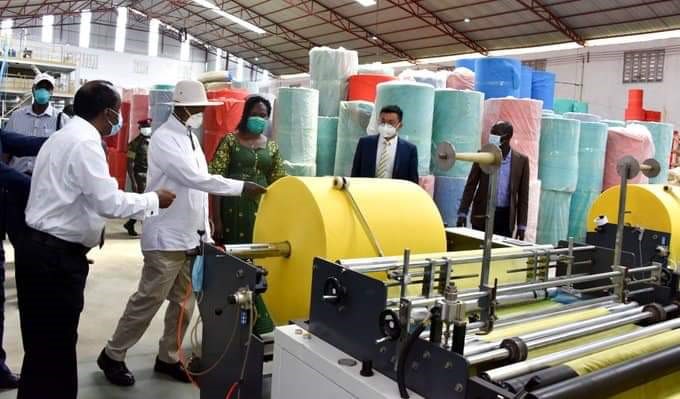
The title of this Op-ed should not mislead us into thinking that I suggest a possibility of African countries being undemocratic. All of them are aligned towards democratization and in some aspects, some are even more democratic than some Western nations.  Like any state, even the oldest democracies, African states are on the journey of becoming more democratic. Democracy is not an end or event where a given nation crosses a certain line and alas, they are happy-ever-after democratic. No. Democracy is a means. A process. This process will keep on for eternity because human beings who execute this system of political organization are inherently imperfect, and as such will always deal with internal contradictions to their governance. Therefore, by Africa’s democratization most likely coming from China, I imply that there is a high possibility of different African countries tending to democratize more and more through their partnership with China than with other global actors in Africa.

Democracy can be understood in its opposition to other forms of government such as autocracy/dictatorship/tyranny- systems of government in which absolute power is held by the ruler, known as an autocrat/dictator/tyrant, or where power is held by a few individuals. The Austrian-British philosopher Karl Popper in his work “The Open Society and Its Enemies”, contrasted democracy to tyranny, and established that unlike under dictatorship, democracy offers opportunities for people to control their rulers, to appoint and disappoint them without the need for a revolution.

For Karl Popper’s idea of democracy enabling people to control their leaders to function, another argument comes into play – that of development leading to democracy. It has also been articulated and criticized as the modernization theory. This theory holds that as societies become economically developed, wealthier and more educated, their political institutions become increasingly liberal democratic. Whereas critics have compromised the modernization theory by accentuating cases where industrialization failed to produce democratization, such as Japan, Germany, and the Soviet Union, and claiming that the theory was too general and overlooked societal differences, this has not fundamentally challenged the fact that economic development significantly predicts democratization. We should note that social science theories are never as accurate as scientific theories. Several arbitrary factors undermine a prediction because societies are very disparate, and are as fluid and changing as the weather. The preponderance of accuracy for a social theory is never better than about 75 percent.

My argument emerges from an observation of the flow of development finance from the West and China, with a focus on what that finance does in Africa. According to a 2018 report by the China-Africa Research Initiative at Johns Hopkins University’s School of Advanced International Studies (SAIS), in 2000, China’s annual development finance to Africa totalled US$121 million. It was distributed among a handful of countries. However, by 2013, it had crossed over US$16 billion and was comparable to those of the largest Western development finance providers. China’s development Finance portfolio also focused on infrastructure projects and industries. In Uganda, finance from the Belt and Road Initiative enabled us to construct two hydropower plants; the Isimba Hydro Power Plant which generates 183MW to the national grid and the Karuma Hydro Power Plant which will produce 600MW. This will definitely contribute to our country’s power supply, which is a fundamental ingredient for manufacturing economic development.

However, another revelation from the SAIS’s report was that as China’s development finance portfolio in Africa increased, Western countries focused more on the quality of governance in the developing world and how it relates to economic development. They became keen on corruption controls, democratic development, and respect for human rights and they made their perception of those attributes in Africa an integral part of their countries’ foreign policy agendas. They hypothesized that China’s growing economic and political footprint is undermining the West’s drive to promote good governance in Africa. This is my disagreement with them and the focus of the argument I make about modernization.

Whereas modernization is never linear, evidence stipulates that each stage of modernization changes people’s worldviews. Christian Welzel and Ronald Inglehart, German and American political scientists respectively, in their book “Modernization, Cultural Change, and Democracy: The Human Development Sequence” argue that Industrialization leads to one major process of change, bringing bureaucratization, hierarchy, and centralization of authority, secularization, and a shift from traditional to secular-rational values. Then the rise of postindustrial society introduces another set of cultural changes that move in a different direction: instead of bureaucratization and centralization, the new trend capitalizes on individual autonomy and self-expression values, which increasingly emancipates people from authority. Therefore, other factors being constant, high levels of economic development tend to make people more tolerant and trusting bringing more emphasis on self-expression and participation in decision-making. However, this process is never deterministic. Any forecasts can only be probabilistic since economic factors are not the only influence. They observe that a country’s leaders and nation-specific events could also shape what happens and disclaim their argument thus; modernization’s changes are not irreversible. Severe economic collapse can reverse them, as happened during the Great Depression in Germany, Italy, Japan, and Spain and during the 1990s in most of the Soviet successor states. Inglehart and Welzel further argue that modernization does not automatically bring democracy but with time it causes social and cultural changes that make democracy increasingly probable.

Suppose we are to predict which of the foreign actors between China and the West is likely to contribute to the democratization efforts among African nations. In that case, the biggest contributor to our development and modernization efforts is probably China. The West is mistaken and forgetful of their own development experience to assume that lecturing African leaders, sanctioning them and banning countries like Uganda from AGOA for passing anti-homosexuality laws will democratize Africa. It won’t. Supporting us to develop economically will.

The writer is a Lawyer and Research Fellow at the Development Watch Centre.


Understanding the Belt and Road Initiative

Probably you have heard about it. Probably not. What is it? Let us first understand what it isn’t. Many initiatives from China suffer from being misunderstood, even at the highest echelons of policy experts around the world. This is due to the saturation in public media internationally by Western propaganda and culture, which has bred most of us. We are therefore predisposed to be suspicious of any agenda, idea, initiative or policy from “others” i.e. not the collective West. That’s why it’s important to begin by explaining what the Belt and Road Initiative (BRI) has been disarticulated to be.

Firstly, it isn’t about Debt Trap Diplomacy. BRI has been grossly misrepresented in the media as China’s means to propagate an empire across the globe by intentionally loaning developing countries sums of money they cannot repay. And that in default, China will turn around and attach national assets and gain strategic control of countries’ resources. Not only is this an oversimplification of the complexities involved in the financial architecture of BRI, but there is also no evidence found for a single national asset auctioned to China by any developing country that defaulted on a loan.

What is widely available is evidence where China has written off billions of loans owed to China by African countries including forgiving interest free loans that reach maturity. For example, in 2022,  China announced debt cancellation of 23 loans for 17 African countries. Also, a study by Deborah Brautigam, the director of the China-Africa Research Initiative at Johns Hopkins University concluded that between 2000 and 2019, China restructured about $15 billion in African debt adding that to date, no evidence that China has been involved in any asset seizures.

Secondly, some critics have expressed concerns that misunderstand the BRI as a subtle strategy that China is employing to pursue military interests. This might be more a reflection of what those critics would have done and less to do with China’s primary goal. It is in China’s interest and strategy for long-term success as a nation to maintain its founding ideals of peaceful coexistence and mutual respect for all nations. Building its military muscle would threaten a global conflict with America and it has nothing to gain from such a catastrophe, yet it has everything to gain in pursuing economic success.

Having dispelled the major misconceptions and misrepresentations of what BRI isn’t, let’s understand what it is. The Belt & Road Initiative is ironically China’s promotion of a Western-born idea and process of globalisation. It is generally agreeable that globalisation is synonymous with global Westernisation, which might be why the West generally criticises China for BRI because it is a way of China overtaking them on their own game. The BRI is a restoration of the ancient Silk Road Economic Belt and 21st-Century Maritime Silk Road Development Strategy.

This initiative is designed to increase global connectivity, primarily through constructing gigantic infrastructure projects. Its broader aim is to link Asia, the Middle East, Africa, and Europe via railways, highways, sea ports and other infrastructure and trade channels. By 2023, over 150 countries and about 75 percent of the global population had signed up under the initiative.

BRI’s stated objectives include; constructing a unified large market, making full use of both international and domestic markets through cultural exchange and integration, enhancing mutual understanding and trust of member nations, and creating innovative patterns of capital inflows, talent pools, and technology databases. The project also intends to fill the infrastructure gap in developing countries which promises us increased economic growth.

To become a member of BRI, countries sign a memorandum of understanding with China regarding their participation in it. The Government of China maintains a profile of all member countries and Xinhua News Agency, China’s state media house, releases a press statement whenever a memorandum of understanding related to the Belt and Road Initiative is signed with a new country.

Financing of BRI mainly comes from the Chinese government. It has injected billions of dollars into Chinese public financial institutions, such as the Chinese Development Bank (CDB), the Silk Road Fund (SRF) and the Export-Import Bank of China (EXIM). As policy banks, these enjoy low borrowing costs given that their bonds are Chinese government debt with very low interest rates.

The Central Bank of China also lends cheaply to both Chinese and foreign companies working on BRI projects. Multilateral financial institutions, such as the Asian Infrastructure and Investment Bank (AIIB) and the New Development Bank (NDB), Commercial banks, such as the Industrial and Commercial Bank of China (ICBC), China Construction Bank, and the Agricultural Bank of China also provide loans and financial services for this initiative. China has also established bilateral agreements with some member states to finance BRI projects through concessional loans (loans characterized by more generous terms than market loans e.g. below-market interest rates, long-term grace periods etc.), grants, or other financial instruments. It should be noted that BRI projects’ financing mechanisms may vary per project specification, the country involved or the type of infrastructure being developed.

Cynics have not spared critiquing the BRI. Most of its critics are policymakers from non-participant countries, especially the United States. They have called it a plan for a Chinese-centered international trade network to make it unpopular. In fact, panicking about the success of BRI, the United States, Japan, and Australia formed the Blue Dot Network (BDN) in 2019 to support infrastructure investments around the world. As though BDN wasn’t effective, in 2021, Western nations comprised under the G7 introduced another initiative called Build Back Better World (B3W). As developing countries, let us cautiously navigate how to achieve our own interests from this project finance competition among global powers.

The writer is a Lawyer and Research Fellow at the Development Watch Centre.

Strategies for Uganda to Harness China’s Development Finance

On 8th August 2023, David Theis-the Press Secretary and Spokesperson of the World Bank Group- released a statement about Uganda in the wake of our Parliament’s passing of the Anti-Homosexuality Act, noting that “no new public financing to Uganda will be presented to our Board of Executive Directors until the efficacy of the additional measures has been tested…” This statement effectively meant that the World Bank had suspended further funding to Uganda although priorly funded projects weren’t to be affected.

This is the trouble with Uganda’s reliance on development finance especially from the West. Instead of respecting the sovereignty of Uganda and allowing us to build the critical internal political forces to challenge these bigoted laws ourselves, they emasculate us with these superficial interventions. We cannot perpetually rely on external sources of financial support if we are to build a stable, independent state. We must build capacity to stand by ourselves, which invites us to strategize on the best possible ways to harness development finance.

The 2023 incident was not the first time Uganda was starkly reminded about the dangers of relying on foreign financial support. Similar economic constraints and disruptions happened in 2009, 2012, and 2014 when Western funders cut the taps under similar circumstances, crippling our fiscal operations.

However, over the years, China has become a valuable alternative to the West’s development financing and its attendant conditionalities. We should not take this partnership for granted. We must utilize their financial support optimally to arrest chronic dependence.

Why China?

Due to the shortage of development funds, donors often prefer countries with established mechanisms that increase the accountability and effectiveness of development finance. Whereas this is well-meaning, Western donors often unnecessarily intervene in internal affairs of countries which affects the long-term reliability required for development finance to be utilized effectively. Additionally, research shows that this funding is also highly dependent on the strategic objectives of the donor. China’s strategic objectives as articulated in several official statements including the “China Africa Policy” are keen on respecting our chosen development paths and mutuality.

To maximize the benefits of China’s development finance to Uganda, we must have clear national development goals and strictly implement them. President Museveni has reiterated severally that his government’s historical mission is the socio-economic transformation of Uganda. I find this a very appealing goal for any developing country to pursue. But how can we do this?

Firstly, we need to sustain Gross Domestic Product (GDP) growth for a long time. The NRM government has commendably achieved this with a 6.92% growth average sustained between 1986 to 2015 (33 years).

Secondly, two key elements must also be realized to achieve Uganda’s socio-economic transformation. We must transition from an agrarian economy to a manufacturing hub in order to transform our people from hand-to-mouth peasants to working-class citizens who participate in the nation’s financial environment. To do this, we need the availability of long-term cheap credit to support industrialization and indigenous ownership of the most productive sectors of our economy. This is where China comes in.

China’s development finance to Uganda comes in multiple forms such as concessional loans, grants, and investments in infrastructure projects. Sometimes, the interest rates on their concessional loans are below the market rate, which makes them attractive as a source of cheap credit. The Belt and Road Initiative (BRI)- China’s project where this development finance comes from- is also a long-term initiative, which meets the time scale requirement.

We should further focus on local workforce development through skills and technology transfer from our Chinese partners to local populations. As a global technological powerhouse, China possesses advanced technologies in various sectors which we should borrow. This can be done by ensuring that Ugandans collaborate with Chinese technocrats on managerial and maintenance areas of implemented projects. China has many big infrastructural projects in Uganda including roads, power plants, mines, industries, etc. These are strategic areas for us to acquire skills and build capacity among locals to take on such projects by ourselves in future. Chinese expertise should provide us with invaluable training opportunities for our engineers and laborers but should never create chronic dependence.

It is not a given that pumping development finance into our economy will lead to structural transformation. It is easy to lose these investments if we do not maintain our selected purposes for utilizing these funds. Therefore, we must adopt strategic approaches systematically from careful project selection, transparent negotiation and local workforce development. We must always remember that the end goal in all this is to be independent from this assistance. With a thoughtful and well-executed strategy, we can harness China’s development finance to propel ourselves into a more prosperous and sustainable future.

The writer is a Lawyer and Research Fellow at the Development Watch Centre.
Navigating the minefield of negative media punchlines on China-Africa relations will take forming our own opinions

As Africans, we cannot continue to be a people that turn on our own because we have outsiders urging us on to do so. We are as human, as the next human trying to help us determine our destiny. Unfortunately, to use the words of one notable Son of Africa Dr. Kaihura Nkuba, the biggest obstacle to Africa’s progress is “the riddle of who we truly are” and to some this, all we need is to build our people’s confidence in being African and taking pride in it. Only then shall we be able to think for ourselves and to trust our choices; that we are able to make the right choices for our people and ourselves. As sociologists argue, he who controls your langauge of discourse your reality! History has it that we have already lost to the ploys of divide and conquer in the past. Moreover, albeit being able to lift the heavy boot of colonialism from our neck at independence, we were not able to totally free ourselves, as many of us remain prone to being turned into marionettes; our opinions swayed easily by manipulating a few strings by some who relentlessly attempts to influence the course of our future.

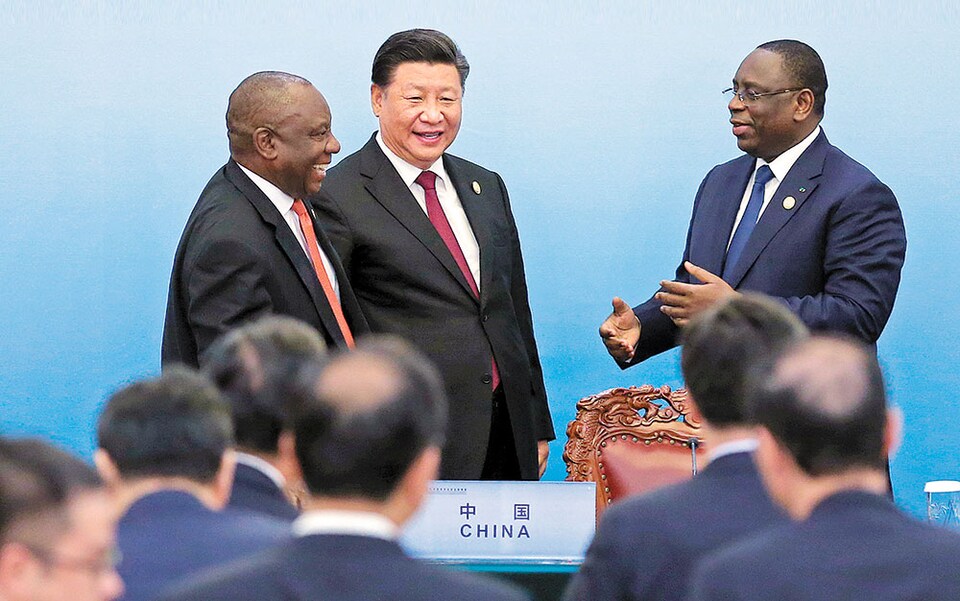
When it comes to Sino-Africa relations, it is no doubt that China presents Africa with a uniquely suitable development partner who understands the distinctive problems of the continent and its people given our shared history. Yet commentary originating from without is often times punctuated by denunciations that echo notions such as resource exploitation, developmental debt-trap diplomacy, corruption, dictatorship and neo-colonialism etcetera. What is more is that, unless we take the initiative to rationalize the spirit underpinning the conception of such opinions, we are likely to be misled and consequently pitted against arguably, Africa’s best bet when it comes to development partnerships and all that  to our own detriment.

One such opinion is the negative impact of Confucius institutes (CIs) across Africa, which critics associate with a tactful push of Chinese soft power and influence over Africa. Since the establishment of the first CI in Kenya in 2005, many more have followed with the aim providing an understanding of the Chinese culture and language to many Africans. This has in turn laid the necessary groundwork for the growing cultural interaction between the African continent and China. For example, by 2018, during the FOCAC conference in Beijing, China committed to making available 50,000 government scholarships to African students as well as 50,000 opportunities for seminars and workshops to train more professionals in a diversity of fields. All this serve to strengthen one of the key pillars of China-Africa relations, which is the people-to-people exchange. Therefore, CIs do not act as a tool for imposing Chinese culture in the old assimilation fashion as critics baselessly claim; but rather serve to build a bridge for the exchange of knowledge, culture and expertise between China and Africa.

This is in line with the Chinese diplomacy principle of bolstering people-to-people exchange between China and rest of the world focusing on relations that are not prejudiced or relations  where one-entity projects its superiority over the other. Conversely, these are relations built on mutual understanding and camaraderie.  Such should be the basis upon which Africa relations must be built especially at a time when we are looking to take a step into the future; away from the mound of bottlenecks, the continent has faced against a backdrop of unfair dealings where Africa has engaged as the lesser party. Of course, China understands this as a fundamental cornerstone to progressive diplomatic relations with Africa as emphasized in their foreign policy. The Chinese approach is from a position of awareness that not only Africa needs China but China needs Africa as well if we are both to achieve our development goals. As such, China relations with Africa are hinged on the understanding that both parties are Partners of equal significance and nothing but a win-win cooperation. Moreover, as we move towards improved diplomatic collaboration aided in part by the work of the Confucius institutes, we realize an increased potential for extending the chain of linked benefits. As diplomatic collaboration avenues are expanded, so are development partnerships both in the public private sectors for both parties. This in turn forms a sound basis for a surge in trade and investments, the one thing that Africa needs more than anything at the moment.

Therefore, to emphasize cultural and language exchange as a tool for galvanizing Chinese soft power over Africa while ignoring the role of language as a cornerstone of human interaction and communication as emphasized by a 2023 publitard article titled “The Role of Language in Global Collaboration” and a key part in the broader jigsaw puzzle that is global cooperation is to say the least intellectual dishonesty. Even more important is the emphasis on mutually beneficial China-Africa relations stressed in a document titled “China’s African Policy” which also highlights actionable steps to this end.  According to this policy paper, the five key aspects of the China-Africa relations are Sincerity, Equality, Mutual benefit, Solidarity, and common development focusing on the fundamental benefits of both the African and Chinese people.

Certainly, this is not to say that this is exactly how things are going to happen in principle but the language and cultural exchange being built under the flagship of the Confucius Institutes is a key ingredient in putting in place an integral element on the soft infrastructure such as the people-to-people exchange necessary for China-Africa relation. And it should be the work of all; governments, Independent thinkers and every forward-thinking African to debunk the punchy news headlines and social media bites aimed at painting the negative image of China-Africa Relations and the future for Africa.

George Musiime is a research fellow at the Sino-Uganda Research Centre.

Examining Ideological Foundations Informing China & the West’s Relations with Africa

As a continent that is unfortunately suffering late development, Africa is a highly engaged region of the globe with interventions in trade, politics, and culture from the different global powers. We can taxonomize the divide of global powers intervening in Africa today under two categories; the West and China (East). How Africa benefits or loses and sometimes even suffers from its relations with these players, fundamentally depends on the ideological persuasions or prejudices which inform the policy makers designing each block’s foreign policy in Africa. These foundations of ideology are age-old in some instances. Over time, they have even been watered down and bastardised into “neo-isms” that are a vulgarised form of the original ideologies. Let us examine them.

The West’s ideological system can be described as liberal democratic capitalism. It has been over time been characterised by self-righteousness and religious universalism. Western elites who propagate this ideology sincerely believe that it is not just the best system of political-economic organisation in their countries but that it is really universal and can be transplanted onto any part of the world and superimposed on any society or culture. These elites/policymakers and implementers do not consider the importance of the differences and uniqueness of any country or society from theirs. They blindly believe that their systems of governance are the best across history, time and geography. This is not to say that there is overarching evidence that liberal democracy did not protect native Americans from genocide, black Americans from slavery or blacks across the West from racism. In fact, liberal democracy did not impede colonialism and apartheid.

These Western foreign policy elites perceive their ideology and intentions as benign. Like their colonialist great-grandparents, they see themselves as good people on a civilisation mission trying to save Africa from poverty and bad governance.  They are very honestly deluded that no amount of criticism even from academics and philosophers in their own countries can impact their ideological views about Africa and how to deal with it. They are therefore unable to see Africa in the eyes of Africans and think about themselves in ways Africans would perceive them. Their self-righteousness only responds to the opinions of African elites who regurgitate their internal biases about Africa. Those are the Africans they award for championing change on the continent, offer sponsorships and provide funding.

On the other hand, China’s relationship with Africa is different from the West’s because they are informed by a different ideology. But there are commonalities which I want to address first.

Both the West and China’s foreign policies in Africa are fundamentally meant to promote their interests as well. As the saying goes, there is no free lunch in the world. China’s aid to Africa, just like the West’s are partly an economic instrument to support their national firms’ exports. Both their development finance to African countries also comes with expectations of some political alignment with them. This means that both their aid and loans are not only a tool to promote trade and development, but also a means to support their foreign policies. What should be emphasised is that while interests play a major role on how the two sides conduct their international relations, for China, there is overwhelming evidence their relations with Africa are guided by the principle of win-win cooperation with emphasis on sincerity, real results, cooperation, amity and good faith.

However, unlike the West, China stands in the shoes of other countries and tries to see things from their vantage point. That is why China faces much less friction while dealing with Africa. China has diplomatic relations with 179 United Nations member states and maintains embassies in 174 of those countries. It also has the largest diplomatic network of any country in the world. This global reach and appeal has been streamlined because of their ideological position on international relations which is based on win-win cooperation, mutual respect and equality. The Chinese government’s foreign policy is informed by the five principles of peaceful coexistence. These include; mutual respect for each other’s territorial integrity and sovereignty, mutual non-aggression, mutual non-interference in each other’s internal affairs, equality and cooperation for mutual benefit, and peaceful co-existence. These principles are a strict interpretation of the Westphalian norms of state sovereignty. China’s relations with Africa are also driven by the concept of “harmony without uniformity”, which encourages diplomatic relations between states despite ideological differences.

This difference in ideology between the two competing global powers in Africa has left a practical footprint on how we respond to each of them, i.e. we are growing more aligned with China than the West. To avoid the dangers of political conflicts on the continent with foreign intervention, it is important for the West to also make policies that anticipate the perceptions of African leaders when dealing with foreign governments. Our leaders govern small countries but they are nevertheless sovereign. So, our leaders deserve to be respected when dealing with any global power’s leader. Our countries have contradictions and challenges but we want to deal with them organically and internally without taking contemptuous lectures from self-assuming paragons of virtuous governance.

The writer is a Lawyer and Research Fellow at the Development Watch Center.  


Myths & Misconceptions: How the West biases our perception of China

We are interesting animals, humans. Interesting! Nobel Laurette and profound cognitive psychologist Daniel Kahneman, author of “Thinking, Fast and Slow”, has argued that our brains are predisposed to give priority to bad news. That negative perceptions stick to our psyche faster than positive perceptions. If true, nowhere has this attribute of human psychology been more manipulated and caused gross danger than in Africa. Not only has the West captured the intellect of our elite class and used it against us as a people, but it has also prejudiced our understanding, perception and relation with our more developmental partner, China.

As of 2023, China’s investment portfolio in infrastructure projects in sub-Saharan Africa totalled $155 billion over the past two decades. Whereas the West is an equally important partner for Africa, granting us diffrent aid packages into diffrent sectors including pumping money into our Non-Government Organisations where our middle-class elites find easy sustenance, regurgitate Western biases against Africa and forget about our structural-developmental needs, China comes different.

Unlike the West, China has a fresh memory of underdevelopment and knows what it takes to transform from a backward agrarian society to a modern, industrial powerhouse. It shares in Africa’s painful experience of political and economic domination by foreign countries. Therefore, where the West arrogantly lectures us on how to govern ourselves having supported our national budgets with a few dollars, China concentrates on investing immensely in more transformative projects in energy, infrastructure, communication, and others.  China’s relationship with us is more sincere because, unlike the West, they practice in Africa exactly what they practice at home. Their infrastructure spending as a share of the country’s GDP in 2021 was nearly 10 times higher than that of the United States and significantly higher than anywhere else in the world. So, we can trust their intentions in Africa when they equally spend more on our infrastructure projects. In 2022, America spent $877 billion on their military, constituting nearly 40 percent of the total military spending worldwide. However, they would conceive any other global power’s increased military spending as an act of aggression. Therefore, they do not practice what they preach and their intentions cannot be trusted.

And yet America, as the archetype of the West, still controls the global narrative of them as the good guys, and China as the bad guys. Perhaps nowhere has the West’s lies against China been more devastating than with the so-called ‘debt-trap diplomacy’ claims. One of the world’s leading experts on China-Africa relations, Professor Deborah Brautigam of Johns Hopkins University defines debt trap diplomacy as the narrative that China deliberately seeks to entrap developing countries in a web of debt to secure some kind of strategic advantage or grab our national assets.

Uganda has not been insulated from this myth. In November 2021, one of local dailies published a false story, “Uganda surrenders key assets for China’s cash” where it claimed that Entebbe International Airport and other national government assets were exposed to potential takeover by China. Elsewhere, similar allegations have been peddled by Western media. Sri Lanka has been one of the most highlighted victims of these false media stories.

Why is it easy for us to believe lies told to us about ourselves and our Chinese allies by the West? Answers might be found in “Orientalism”, a work of the great Palestinian-American academic, literary critic, political activist, and musician Edward Said. Edward articulates the practical and cultural discrimination that was applied to non-European societies and peoples in the establishment of European imperial domination. He argues that in justification of imperialism, the West claims to know more “essential and definitive knowledge” about the rest of us than we know about ourselves. They have cultural representations derived from fictional Western perceptions of us. Through the history of colonial rule and political domination, they distorted our intellectual objectivity and skewed us to be culturally sympathetic to them. To aggravate Edward Said’s observations, the British post-colonial theorist, cultural critic, and historian Robert Young questions the very concept of history and the West. In “White Mythologies: Writing History and the West”, he argues that it is difficult to write history that avoids the trap of Eurocentrism and that our history could simply be a Western myth. If unchecked, today’s prejudices against Africa and China by the West will condense into tomorrow’s history.

We therefore need to decolonize our intellects collectively as Africans. China also needs to invest more in African Think Tanks and Organisations to support the global narrative that counters Western prejudices against them. According to the World Bank, China has funded the easement of African countries’ debt burden and actively implemented the G20 Debt Service Suspension Initiative for Poorest Countries and has the highest deferral amount among G20 members. They have also not confiscated a single project in Africa because of failing to pay loans. Yet, with all these facts in their favour, Western myths and misconceptions seem to prevail.

The writer is a Lawyer and Research Fellow at the Development Watch Centre.