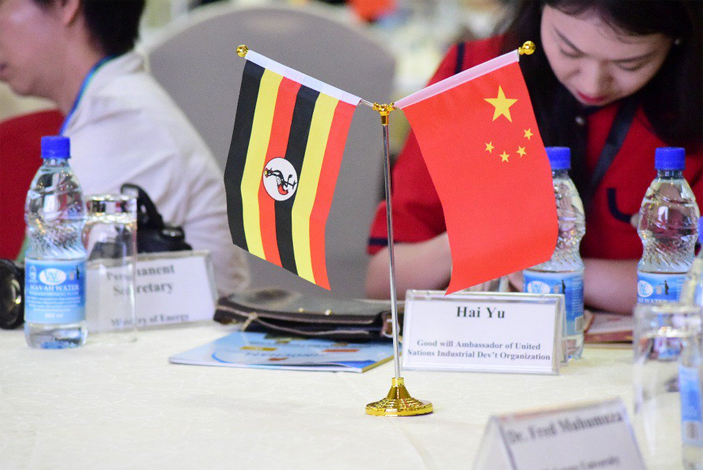
The 9th FOCAC Ministterial Confrence: China and Africa Are Now Looking Beyond Economics, Focusing on A Composite Shared Future

By Mpewo Alan Collins

The just concluded Forum on China-Africa Cooperation (FOCAC) gave a new picture of how we should view FOCAC. The confrence laid a groundwork for the just concluded 2024 FOCAC Beijing summit attracted foreign and economic ministers from 53 African member countries, and representatives of the African Union and other regional and international organizations were among more than 300 attendees of the meeting.

This confrence has held a long standing life since the year 2000, when it came to life. The partner states meet in the FOCAC confrence after every 3 years of holding a similar gathering, a tradition until now, that has been maintained registering this year’s as the 9th FOCAC Ministerial Conference.

Because of the growing changes in the international relations environment, China and Africa Continent countries but Eswatini found it fitting in their wisdom to come up with the idea of a coalition where they would keep looking out for the best for their citizens while enhancing multi border cooperation. The FOCAC bases on two major standing values to wit, ‘Mutual Respect’ and ‘Mutual Benefit’. It goes without saying that succeeding the relations among major superpowers of the mid and late 1990’s, China and Africa appreciate a change in direction as regards international cooperation to which, the FOCAC was birthed as a pilot idea, interesting enough, that today its profile of successes and ideals are becoming a model for China’s and Africa’s rivals to emulate.

As all good things, the FOCAC has over the years registered new states joining to also take part in the benefits that come with association. The 9th FOCAC Ministerial Conference is under the theme ‘Joining Hands to Advance Modernization and Build a High-Level China-Africa Community with a Shared Future’. As before, the focus is to build more for the future having significantly realized the 8th FOCAC Ministerial Conference action points. The attention is therefore on extensive focus on modernization as by all standards should be.

But amidst the events that occasioned the success of the conference, the greatest attention snatcher was the Beijing Declaration on Jointly Building an All-Weather China-Africa Community with a Shared Future for the New Era. The declaration was adopted by attendant FOCAC members, and the letter and spirit of each declaration clause gets interesting as to what it speaks to. Three key extracts being international security and human rights; science; and sustainable globalization. In this the African Union and United Nations agendas have been factored in. China has resounded its commitment to an Africa that’s empowered to ending Western power financial trapping into unconscionable interest loans and extended solidarity for the 2026 World Trade Organization conference that will take place on the African continent. The financial independence that understands the balance in negotiation for a win-win situation has never been neglected, and as sustainable globalization became something of concern, the FOCAC members are continuously focusing on materializing it.

These commitments and more come at a time of a fragile international environment (economically and socio-politically) to which major superpowers keep finding their way to a strategic position of leading the apex. Many global powers have made their work plan known over and over again, locking arms topping the list, the consequences of which are forever regrettable. China has maintained course for partnerships with every possible global member and it doesn’t come off as shocking that it is a leading economic superpower in recent decades. Africa stands strategically in the global agenda especially on major subjects such as climate change, global industrialization, and maintaining economic dominance. It is of less wonder therefore that major superpowers keep finding ways of penetrating the continent, but telling enough, is the modus operandi.

Africa member states have a trigger to leverage on now that the First Ten Year Implementation Plan of Agenda 2063 was implemented. The Second Ten Year plan having been launched, the implementation phase is going to detailing because of the much work that will be required by the members. Green financing is something the FOCAC members should look closely to especially in the extensive Belt and Road Initiative program to account for their contribution to the Paris Agreement net zero agenda. Now than before, the FOCAC members are more resolute partly because the 9th FOCAC Ministerial Conference came succeeding major events like the Non-Allied Members Conference where equally important pillars of global security and human rights were a topic of importance.

The economy wheel has maintained Its face but with rejuvenation on the conversation of deeper penetration of markets in China. China has without a doubt extended its influence in industrialization and product accessibility in the African markets, but what has been a constant struggle was the reciprocal ease in accessing some markets by Africa FOCAC Members. With the recent opening of imports and tariff policies by China to their economic partners, it is going to be up to the Africa FOCAC members to take advantage of China’s commitment to share technology and science so as to lessen gaps in Africa’s industrialization. Empowerment will have to remain a pillar of the cooperation to enable independence in running of affairs. Africa FOCAC Members have grappled with imbalances in financial cooperation from external powers who see them as a cash cow, but the storyline has kept drifting to one of a shared future – Trade and Commerce, Global Climate Change, Science and Technology, International Human Rights and Diplomacy, Infrastructure Partnership, Cultural and Traditional exchanges and learning, Education, and more multi phased into a singular composite. The watch remains focused to the next phase before the 10th FOCAC Ministerial Conference.


The writer is a Senior Research Fellow and Lawyer at the  Development Watch Center.

FOCAC 2024: Xi’s Speech Attests to China’s Commitment to a Community of Common Prosperity and a Shared Future

Dear Editor, on Thursday, September 5, 2024, Chinese President Xi Jinping delivered a 10-minute keynote address at the opening ceremony of the Forum on China-Africa Cooperation (FOCAC) summit in Beijing, China. In the address entitled; “Joining Hands to Advance Modernization and Build a Community with a Shared Future,” President Xi explained that “the friendship between China and Africa transcends time and space, surmounts mountains and oceans, and passes down through generations,” and pledged China would support African countries’ endeavours in different sectors with approximately $50.70 billion.

Explaining the 24 years of the FOCAC, Xi emphasized that “China has advanced forward hand in hand with our African brothers and sisters in the spirit of sincerity, real results, amity and good faith…” He explained that China and African countries “…stand shoulder to shoulder with each other to firmly defend our legitimate rights and interests as once-in-a-century changes sweep across the world.” This he emphasized is making the two sides “stronger and more resilient together by riding the tide of economic globalization, delivering tangible benefits to billions of ordinary Chinese and Africans.”

Explaining that “modernization is an inalienable right of all countries,” Xi regretted that “the Western approach to it has inflicted immense sufferings on developing countries.” He pledged China will continue working with African countries and support the continent’s development efforts as laid out in the African Union’s Agenda 2063, which he noted will accelerate the Global South’s transformation. Explaining that “China and Africa account for one-third of the world population, Xi observed that “without our modernization, there will be no global modernization.” He thus pledged that “China is ready to deepen cooperation with Africa in industry, agriculture, infrastructure, trade and investment.”

To be specific, President Xi pledged, “In the next three years, China will work with Africa to take the following ten partnership actions for modernizations to deepen China-Africa cooperation and spearhead the Global South modernization.” The ten partnership actions will focus on; Mutual Learning among Civilizations, Trade Prosperity, Industrial Chain Cooperation, Partnership Action for Connectivity, Development Cooperation, Health sector cooperation, and supporting African countries’ Agriculture and Livelihoods. The others are; supporting People-to-People Exchanges, Green Development, and the Partnership Action for Common Security.

When critically analyzed, the ten areas President Xi mentioned that China would work with African areas “deepen China-Africa cooperation and spearhead modernizations,” if implemented, will not only reignite Africa’s economic growth but also drive sustainable development.

For example, President Xi listed Partnership Action for Connectivity; specifically, noting that “China is prepared to carry out 30 infrastructure connectivity projects in Africa, promote together high-quality Belt and Road cooperation, and put in place a China-Africa network featuring land-sea links and coordinated development.” China’s offer to further support Africa’s infrastructural development is a welcome move as the continent is still faced with a shortage of funding in this critical sector. He also mentioned Partnership Action for Green Development stressing that “China is ready to launch 30 clean energy projects in Africa, create a China-Africa forum on peaceful use of nuclear technology…” Put differently, Xi promised to cooperate with the continent on nuclear technology which will tackle a power deficit which has been cited as one of the major challenges delaying Africa’s industrializations efforts. A study by the WB titled “Why we need to close the infrastructure gap in sub-Saharan Africa,” underscores this, stressing that infrastructure funding gaps are hindrances to Africa’s economic take-off. The African Development Bank (ADB) notes that to reduce the continent’s infrastructure funding gaps, Africa needs a of budget $130-$170 billion annually. Therefore, China’s support in such a sector is spot-on.

On the Partnership action for development cooperation, and the partnership action for agriculture and livelihoods, President Xi pledged China’s readiness to “implement 1,000 “small and beautiful” livelihood projects. “China will provide Africa with RMB1 billion yuan (approximately $140 million) in emergency food assistance, build 100,000 projects of standardized agriculture demonstration areas in Africa,” stressed President Xi. These programs if implemented will help the continent in addressing key challenges. It is important to note that China has already been supporting livelihood programs in several African countries, Uganda inclusive. For instance, under the arrangement of the South-South Cooperation (SSC) project between China, Uganda and the Food and Agriculture Organization of the United Nations (FAO), China has injected over 30 million USD is Uganda’s agriculture sector and livelihood programs.

On the Partnership Action for Trade Prosperity, Xi promised to ensure trade between the two sides improves, stressing that “China will voluntarily and unilaterally open its market wider. We have decided to give all LDCs having diplomatic relations with China, including 33 countries in Africa, zero-tariff treatment for 100 per cent tariff lines.” This in many ways will continue to support the continent’s social and economic development. Already, China for the last 15 years has been Africa’s largest trading partner. As of the end of 2023, the trade volume between China and Africa reached 282.1 billion USD.

President Xi further proposed to African leaders that “bilateral relations between China and all African countries having diplomatic ties with China be elevated to the level of strategic relations, and that the overall characterizations of China-Africa relations be elevated to an all-weather China-Africa community with a shared future for the new era.”

In conclusion, looking at China’s record of fulfilling its pledges, there is no doubt Beijing sees African countries as partners and the cooperation between the two is indeed guided by principles of mutual respect, real results and win-win cooperation. Therefore, as President Xi noted, China and Africa should rally their populations together to become a “powerful force” and write a “new chapter in peace, prosperity and progress.” This is a sure way for Africa to realize her development goals.

Dr. Allawi Ssemanda is a Senior Research Fellow at the Development Watch Centre.

FOCAC to Further Deepen China-Africa Cooperation

This week, from the 4th to the 6th of September, China will be hosting the 2024 Forum on China-Africa Cooperation (FOCAC) in Beijing. This will be the 4th FOCAC to be held as a summit where heads of states from Africa and China meet.  Some experts have described the 2024 summit as a key means to deepen cooperation between China and African countries further. The summit will be held under the theme; “Joining Hands to Advance Modernization and Build a High-Level China-Africa Community with a Shared Future.”

The summit comes when the world is faced with unprecedented challenges such as great power politics, block formation, wars, unilateralism against multilateralism, and low economic recovery, especially in the global south due to some countries’ protectionist policies, hegemony and coercion.

On a positive note, despite the said challenges the world is facing, the summit comes at a time when China has earnestly and religiously shown willingness to work with African countries, the Global South and the entire world to forge together ways to address global challenges, advance common development and build a community of a shared future for mankind. Indeed, while promoting China’s Global Development Initiative (GDI), President Xi Jinping emphasized the value of working together, stressing that “we need to jointly build international consensus on promoting development.” Xi stressed the importance of unity thus; “It is important that we put development in front and at the center of the international agenda, deliver on the 2030 Agenda for Sustainable Development, and build political consensus to ensure everyone values development and all countries pursue cooperation together.”

It is therefore not a surprise that in the last 24 years of FOCAC, guided by the principles of sincerity, real result, amity, and shared interests, China has been clear in supporting the development agendas of African countries with Beijing’s foreign policy banner towards African countries being win-win cooperation.

During the 2021 FOCAC’s 8th ministerial conference, in his opening remarks President Xi explained that the two sides jointly prepared China-Africa Cooperation Vision 2035 in which under this plan, China promised to work with African countries to fully implement the nine programs the two sides identified.

The nine programs are; supporting African countries’ medical programs with a focus on the continent’s public health, supporting African countries’ poverty reduction and agricultural development programs, supporting and African countries’ digital innovations, supporting the continent’s green development program, and supporting Africa’s peace and security programs. Others were; China supporting cultural and people-to-people exchange programs between the two sides, capacity building, investment promotion programs and supporting and promoting trade between the two sides.

Taking examples of the promotion of trade between the two sides, investment promotion, and supporting African countries’ poverty reduction programs,  one can confidently conclude that China fulfilled its previous promises. These promises have been fully implemented with visible results today. For example, at the end of 2023, the trade volume between China and Africa reached 282.1 billion USD. Also, important to note is that China has been Africa’s largest trading partner for the last 15 years in a row.

To further support African countries’ agriculture and boost the trade between the two sides, in 2022, China announced preferential Tariff Treatment for several African countries. As of June 2024, China granted zero tariffs on 98% of tariff items from at least 27 African countries including Uganda. Also, Beijing signed bilateral investment promotion and protection agreements with at least 34 African countries. All these measures are meant to support and facilitate trade between the two sides. Under similar arrangements, today, many African countries have access to China’s “green channel” allowing more African products access to Chinese markets.

Regarding capacity building which is point number 7 under FOCAC’s nine pragmas, China promised to support Africa’s human capital by supporting the education sector. As of today, in Uganda, at the end of 2021, China has provided over 5,000 short-term training opportunities for Ugandans in fields such as; agriculture, medical care, public administration, computer science and infrastructure. This is on top of offering over 500 scholarship opportunities ranging from bachelors to PhDs to Ugandans.

Broadly, under FOCAC programs, more African scholars have benefited. For example, during the 2015 FOCAC summit, China offered 30,000 scholarships to African students to pursue higher education in Chinese universities. This was followed by another 50,000 scholarship offers announced by President Xi during the 2018 FOCAC Summit held in Beijing.

As observed by the International Monetary Fund (IMF) 2024 economic growth forecast, China’s contribution to global growth is paramount. “The very fact that China is also bigger, means it has a bigger footprint in the rest of the world.  An increase in the trade surplus might be small from the Chinese perspective, but it could be big from the perspective of the rest of the world,” noted IMF’s Division Chief researcher, Jean-Marc.

Looking at the fruits coming from the last 24 years of FOCAC, one can conclude that FOCAC is a sure way of jointly building a high level of China-Africa Community of Shared Future.

Allawi Ssemanda, PhD,  is to a Senior Research Fellow at the Development Watch Center.

The Forum on China-Africa Cooperation 9: The Journey Over The Last Two Decades

From September 4th to 6th  the Forum on China-Africa Cooperation (FOCAC) will take place in Beijing. This comes at a very critical time for South South-Cooperation, the world economy has slowed down mainly because of the impacts of the last Pandemic and the ongoing 54 major conflicts around the world that affect Africa and China’s supply chain on the Geopolitical discourse.

FOCAC 9 comes at a time when African Continental Free Trade Area (AfCFTA) is taking root and its backbone the Belt and Road Initiative (BRI) in many forms makes a decade milestone. The FOCAC summit also comes at a time when the BRICS have become formidable on the global scale and Africa is now very much involved in the new format that is driving multipolarity.

In many aspects, FOCAC 9 will be a momentous summit, in the year 2000 the Forum on China-Africa Cooperation started in Beijing with a ministerial meeting and it was followed by multi-year efforts by African diplomats to formalize the new relationship, in 2003 FOCAC 2 was hosted in Addis Ababa, Ethiopia Africa’s political capital and China announced the first Zero-tariff trade measures for Africa. It also marked the first time cultural exchange started being a target area. In 2006 FOCAC moved back to Beijing and it was held at summit level resulting in a $5 billion in financing from China that was geared toward agricultural exchange as a focus area and in 2006 the China-Africa Development Fund was also put in place.

The next FOCAC was back in the African continent in 2009 in Sharm el-Sheikh Egypt with more formalization of the cooperation area, with greater attention on the African development agenda including training and there was $10 billion in funding that was put in place for the Continent.  FOCAC 5 was in Beijing in 2012 and with a number of conflicts largely fuelled by Western interests on the African continent and posing as a stumbling block for development, peace and security was the focal area of cooperation and China put in place $ 20 Billion in funding the endeavour.

In Johannesburg South Africa in 2015 FOCAC embraced the famous Belt and Road Initiative of President Xi that has seen infrastructural developments across the continent and the initial investment that was put in place at that SUMMIT by China was $ 69 billion in funding and it’s fruits are evident today across the Continent, from ports on the East African coast to the Standard Gauge Rail that snakes its way into the interior and new road networks like the Kampala-Entebbe Express highway.

As a tradition the next event in 2018 was in Beijing and the formal integration of the FOCAC into the BRI, agricultural modernisation was the key area of cooperation and more $ 60 Billion in funding was put in place.

FOCAC 8 was special and it was in Dakar Senegal in 2021 happening at the tail end of the COVID-19 Pandemic and it was a semi-virtual event. This saw health and inter-parliamentary diplomacy as Focus areas. And for this meeting there was no single funding package; instead the $ 40 billion put in place was to be spread across a wide range of different categories.

It’s at this back foot that we head into the 9th FOCAC on the 4th of September 2024 in Beijing and we expect agricultural trade for Africa’s part to be the focus point. Agritech cooperation is something that is lacking on the African continent and China has the resources and experience to make this end. Over the past years, diversification through Africa exporting to China for food security purposes will most likely take priority at FOCAC 9 as Africa seeks to move up the value chain. Africa’s agricultural potential production still has space for expanding and more countries can find thriving markets in China. China is already doing a great job in this aspect. To support Africa’s agricultural modernisation, Beijing has sent over 500 agricultural experts to Africa and provided more than 9,000 training opportunities for agricultural experts from the continent.

Other key areas are going to be climate resilience and we have seen China in the past collaborate with countries to develop satellite systems aimed at improving weather forecasts and other forms of scanning to make agriculture more climate-resilient.

As Africa now seeks to export more to China, there is a need to industrialize and Chinese firms are going to be asked to come into the African arena at FOCAC since the BRI has laid the groundwork for that to happen smoothly.

People to people exchange through training and the many scholarships will be another major focus area for cooperation at FOCAC, technology transfer and employment pipeline will take center stage and many African delegations heading to Beijing will be products of China in terms of education.

China’s partnership with Africa is crucial for our infrastructure, and energy sectors. FOCAC isn’t just about building relationships on a diplomatic level, it’s a strategic platform that’s shaping Africa’s role on the global stage.

Over the years, FOCAC has evolved from focusing mainly on economic ties in 2000 to becoming a broader platform for Africa-China relations. Now, Africa is setting the agenda when it comes to working with China, especially in areas like green energy, our youthful population, and our rich mineral resources. China plays a key role in helping us with mass electrification and industrialisation through technology transfer and this is the basis of South-South cooperation.

The September summit comes at a time when the trade between China and Africa is booming. For the last 15 years in a row, China has been Africa’s largest trading partner. In 2023, the trade between the two sides reached a hooping USD 282.1 billion. As we look ahead to FOCAC 2024 on the 4th of September,  this moment is set to be a critical time in our relationship as Africa with China. It has the potential to bring significant progress in trade, industrial development, and sustainable cooperation. For Africa, the key to long-term benefits will be our ability to shape and influence the agenda in this partnership.

The writer is a  research fellow at the Development Watch Centre.

Harness China-Africa Collaboration on Artificial Intelligence

Current economic estimations project the value of the Artificial Intelligence (AI) industry globally to reach $16 trillion by 2030. It is also approximated that AI, if well harnessed, could grow Africa’s economy by an additional $1.5 trillion. Given that as of June 2024, the estimated nominal GDP of Africa is $3.1 trillion, a 1.5 addition would go a long way in improving our economic standing.

That said, it brings me great sadness to often discuss Africa along the lines of “seeking help” or as diplomatically coined, “partnering” with developed countries to pursue the continent’s development goals. But given our several immense development challenges, and the nature of the world’s current scientific and technological areas of innovation, partnerships seem to be the most realistic means available.

Even then, we should evaluate our continent’s contribution to this new frontier of technological possibilities, which will dramatically alter the course of all human endeavor.

When discussing strategic partnerships for Africa, the competition between the West (United States) and China unpreventably shows up. It is not Africa’s making to be in such a position. Still, it is our call to always choose wisely which partners we embrace to negotiate our development journey, particularly in line with AI development and implementation on the continent.

Several American tech giants have already implemented AI-driven projects in Africa. For instance, IBM has set up research labs in Kenya and South Africa directed towards healthcare diagnostics, precision agriculture, and financial services. Google opened an AI research center in Ghana where among other projects they develop and apply natural language processing (NLP) technologies to understand, interpret, and generate human language specific to Africa’s linguistic diversity. Cisco, which has a center in Nigeria, also initiated AI training programs to develop smart city solutions using AI technologies.

However, the West’s investments in Africa usually do not give African countries the confidence required for long-term, sustainable reliance. Even the countries of choice for these investments already show a bias in investment destinations for American capital. It will be hard for Africa to transform if our leadership systems are under constant questioning and screening for legitimacy – which risks cutting the taps of investment cooperation whenever a country’s democratic credentials don’t appeal to our Western partners’ standards. This is why I have limited faith in these ambitious AI projects by the West in those few African countries.

On the other hand, during this year’s China-Africa internet summit, China and Africa enthusiastically discussed collaboration on AI. Following the event, the Cyberspace Administration of China (CAC) released a statement on China-Africa artificial intelligence cooperation calling for: strengthening of dialogue and cooperation mechanisms on AI policy, technology, industry, application, governance, and best practices; promoting technological research, development, and application within Chinese and African enterprises, universities, and scientific research institutions, in fields such as big data analysis, machine learning, natural language processing, and computer vision; promoting industrial cooperation, development, and application of AI in, among others, agriculture, medical care, education, and urban management, as well as supporting digital infrastructure; carrying out talent exchange and capacity building, including the provision of online courses and professional training; and building strong network and data security barriers, including the development of auditable, supervised, traceable, and trustworthy AI technologies, as well as preventing abuse of AI and cyberattacks. These are very inspiring areas of collaboration for Africa, where development in AI is still nascent.

The disappointing bit is that whereas China already articulated such a brilliant memo on AI cooperation with Africa, neither a single African country nor the African Union has designed a similar policy. It is an unpromising sign. China has published its policy on how to cooperate with us on AI, but we don’t have a policy on how we shall cooperate with it. Why should we be docile partners on matters involving our development interests and ultimate survival? Are we always going to sleepwalk through history?

It is not hard to realise that the integration of AI in Africa will potentially impact diverse sectors as already highlighted. Why is it that only a handful of countries such as Egypt, Rwanda and Mauritius have adopted national AI strategies? What is Uganda’s AI strategy for instance?

Our governments should develop these strategies if we are to enable African innovators to leverage Chinese expertise in developing AI-driven solutions for our development challenges. China is the world’s leading AI innovator with 61.1% of globally registered AI patents while the U.S. accounts for only 20%. Why are we not utilising our partnership with a forerunner like China to participate in the happening AI revolution?

The author is a research fellow at the Development Watch Centre.

China Expands Africa’s International Trade Potential

Any country’s development plays out based on its participation in international trade. Countries with higher participation in global trade are comparatively wealthier than those with lower participation. Therefore, for African countries to develop, they must increase their business involvement with other countries on the international market. Several factors determine this. One of those is the availability of cheap long-term financing for infrastructure that supports production such as roads, dams, etc.

Chinese lending in Africa can be observed to increase the participation of borrowing countries, especially in Sub-Saharan Africa, in international trade. Whereas other major funders in Africa such as the World Bank concentrate their resources on social sectors like education and health, which are equally important, China focuses more extensively on infrastructure, particularly transport, energy and communications.

Research shows that funding towards these sectors which China is keen on achieves practical, significant results for African countries by increasing their potential to share in global value chains.

Over time, Chinese funding for roads, railways and hydropower dams in Africa can be seen to immensely reduce trade costs for African countries while at the same time enhancing their connection to international markets by linking landlocked areas to the coast and connecting seaports.

Since African countries are still limited in their manufacturing capacities, it is difficult for them to have an immediate advantage over more developed countries in the entire value chain of international goods. Those developed countries have centuries of efficient production techniques under their belt. However, by enabling Africa to access markets, China pushes us one step towards competitively playing in the international market.

Of course, we cannot avoid contrasting the disparity in approach between Western funders and China. I think as a recent comer to the scene of developed countries, China has a more practical appreciation of what developing countries need to spur development. It also has a fresh memory of poverty, which aligns its development experience closer to Africa’s. therefore, whereas Western funders are hellbent on dictating moral environments upon African societies as a pre-requisite for their funding, and stage-managing the results, which are often smaller than they are projected and reported to be, China on the other hand is culturally less arrogant but more practical on making results.

Chinese development finance institutions like China Development Bank and China Export-Import Bank (Eximbank) can be observed to respond to African countries’ industrialization agendas. They fund public infrastructure that supports value-added production and international trade.

This funding comes both through Chinese Development Lending (particularly concessional loans) and from China’s Belt and Road Initiative under which China directly builds infrastructure that removes trade inefficiencies like slow production and costly transportation of goods often caused by poor transport and communication networks.

Efficient transport infrastructure is very important for African countries to access the international market. Research shows that each day a good spends in transit translates into a taxation cost based on the value of the good. We should avoid unnecessary delays of our goods in transit if we are to compete better.

African countries also produce mostly raw materials and trade more in parts and components rather than final products. Such goods are much more affected by time delays than final goods. Therefore, for African countries to benefit more in international trade and reduce costs, efficient transport and communication infrastructure is fundamental.

Another area supported by Chinese funding is domestic industrialization in various African countries. Uganda is a key example, with several industrial parks established with China’s support, such as Mukono Industrial Park, Shandong Industrial Park, and Sino-Uganda Industrial Park in Mbale. By supporting the industrial capabilities of Africa, China helps us reduce imports and increase value-added exports, thus transforming our economies toward upstream positions in international production networks.

Additionally, having strong domestic industrial capacities lowers Africa’s need to import inputs used in the production of exported goods. It also reduces our dependence on foreign industries for goods which sometimes are unavailable or become very expensive due to production disruptions. We cannot forget that during the COVID-19 pandemic, we suffered “vaccine discrimination” while most countries hoarded tons of vaccines. That was a crisis we must never suffer again. We must therefore invest in our industries and also enhance the production of domestic value-added goods, which will buy us a higher place in the global value chain.

With the support of non-politicized Chinese funding, we can mitigate liquidity constraints which often limit our exporting capacity since exporters usually need the push of external capital to enter foreign markets. Africa’s weak financial institutions can never reasonably support our development because they are very risk-averse. We need to complement the little funding they are willing to provide with China’s generous, long-term credit.

Lastly, educating our children and youth is very important if we are to compete in the highly innovative and competitive international world. African governments should invest in a highly educated labour force to increase their chances to access global markets and participate more in higher value-added activities. Only by investing in innovation can African States help domestic producers meet the international standards required by global buyers.

The author is a senior research fellow at the Development Watch Center.

From Herbal Remedies to Holistic Harmony: Unveiling the Power of China-Uganda Medical/Cultural Diplomacy

The recent “China and Africa: A Fine Traditional Culture and Modernisation” lecture organised by the Development Watch Centre and China-Africa Institute  sparked a fascinating conversation about the opportunities for collaboration between these two vibrant continents. Our collaborations have typically been defined by economics and infrastructure partnerships but beyond these, a particularly intriguing prospect lies in the potential for medical diplomacy and cultural exchange. China and Uganda can leverage their unique strengths in traditional medicine, foster intercultural understanding, and ultimately, advance through a process of mutual learning and convergence of knowledge.

The People’s Republic of China and Uganda boast of rich histories of traditional medicinal practices. In China, Traditional Chinese Medicine (TCM) has flourished for millennia, with a holistic approach that emphasises harmony between the body, mind, and spirit. Practices like acupuncture, herbal remedies, and dietary therapy form the core of TCM, offering effective treatments for various ailments.

Uganda, on the other hand, possesses a treasure trove of indigenous medicinal knowledge. Local healers, across the various cultural spectrums utilise plants, animal products, and rituals to treat illnesses. This creates a vast repository of traditional practices that holds an intricately rich capacity for scientific exploration and drug discovery.

The potential for collaboration between these two systems is immense. China has over the years developed advanced research capabilities and clinical experience which can be combined with Uganda’s rich biodiversity and indigenous knowledge. Exploring joint research efforts could have the potential of inspiring the development of innovative, culturally-sensitive treatments for diseases prevalent in both regions, like Cancer, HIV/AIDS, and various chronic conditions. Cultural exchange programs will also likely bring together practitioners of TCM and Ugandan traditional medicine to form a modern mastermind. Sharing knowledge about diagnosis, treatment methods, and the underlying philosophies can foster mutual respect and lead to the integration of effective practices from both systems.

We already have an established culture of  academic exchanges between Chinese Universities and research institutions in the two countries and if this is expanded to include medical research it can facilitate knowledge sharing in areas like pharmacognosy (the study of medicinal properties in plants) and ethnomedicine (the study of traditional medical practices). This exchange can contribute significantly to the advancement of both traditional and modern alternative medicine.

Beyond the specific practices of medicine, China and Uganda have much to learn from each other’s hoard of cultural wealth. China’s long history and emphasis on social harmony (Confucian principles ) offer valuable lessons for Uganda’s young democracy to chart its own identity politically and socially. Creating unique Ugandan solutions to Ugandan problems like the Chinese developed a unique system of governance and values that has shaped their society. Conversely,Uganda’s vibrant artistic traditions and strong community spirit have the potential of enriching Chinese society.

Intercultural learning programs already in place like the Confucius institute in Makerere foster understanding by promoting language exchange, artistic collaborations, and student exchange programs. These initiatives bridge the geographical and cultural distance, creating a space for mutual appreciation and respect.

The process of collaboration should however not be one-sided. It should be a journey of co-creation, where both cultures contribute meaningfully. Uganda should bring to the table its knowledge of medicinal plants and traditional healing rituals. In return, China can offer expertise in clinical research, drug development, and modern medical technologies. Additionally, the government of Uganda needs to also start making conscious efforts towards bridging these gaps. This should be by widening the resource envelope for research platforms like Universities and think tanks and also repealing much of the red tape that encumbers our research capacity.

This intercultural approach would not only enrich healthcare systems but also foster a deeper understanding between the two countries. By recognising the value of each other’s traditions and fostering collaboration, China and Uganda can embark on a path of mutual advancement. This is already a concept being pioneered at the African Rural University in Kagadi where a significant number of senior lecturers have little to no formal education but are quite knowledgeable in African traditional wisdom. The Chinese story with their Confucian schools of thought has done the same thing with resounding success and this is definitely something we should explore.

The path of collaboration is not without its challenges. Intellectual property rights regarding traditional medicine knowledge need careful consideration. Additionally, ensuring the safety and efficacy of traditional remedies requires rigorous scientific validation.

However, these challenges can be overcome through open communication, transparent research practices, and collaboration with international organisations like the World Health Organisation (WHO).

By embracing the spirit of medical diplomacy and cultural exchange, China and Uganda can forge a powerful partnership.This collaboration holds the potential to revolutionise healthcare systems, improve public health outcomes, and cultivate a deeper sense of understanding between two culturally rich nations. As they learn from each other’s ancient wisdom and modern expertise, China and Uganda can pave the way for a brighter, healthier future for their citizens and serve as a model for collaborative progress on the world stage.

Back to the 20th China-Africa lecture which inspired this Op-Ed, organised by China-Africa Institute (CAI) and the Development Watch Centre, the lecture attracted a number of scholars with Chinese side delegation of 4 professors led by CAI’s Vice President professor Wang Xiaoming and while Dr. Allawi Ssemanda, the Executive Director Development Watch Centre led the Ugandan side with participants drawn from among others; Mbarara University of Science and Technology, Makerere University, Ndeje University, Islamic University in Uganda, and African Rural University. Further Chinese professors held more community engagement (lectures) with focus on poverty eradication among others.

If such collaborations can be reinforced, both sides stand to benefit as it is one sure way of learning from each other as the two sides embark on building a community of shared future for mankind in the new era.

The writer is a senior research fellow at the Development Watch Centre.


Fighting Corruption: Lessons from China’s Decisive Triumph Over the Vice

In Uganda, and Africa in general, the spectre of corruption infiltrates nearly every conversation, and the heavy shadow it casts on our nation’s potential for developments is noticed.

Emulating China’s bold strategies and unwavering resolve, Uganda has an imperative opportunity to eradicate corruption and unlock its true potential for a brighter, more prosperous future.

This article outlines six rungs of China’s history, highlighting the persistent challenge of corruption across different eras, highlighting the ongoing struggle against corruption and the evolving efforts to combat it.

The journey begins in ancient China, where corruption was prevalent during the Han Dynasty. Emperor Wu’s attempts to eradicate corruption were only partially successful. The Tang Dynasty saw a Lushan Rebellion, while the Ming Dynasty saw Wei Zhongxian’s corruption, where he amassed immense wealth and power through corrupt means.

The Qing Dynasty, a dynasty with significant influence, experienced a decline due to corruption. Empress Dowager Cixi was accused of diverting funds for military and public projects. Despite attempts at modernisation, corrupt officials embezzled funds, further destabilising the dynasty.

The Republican Era, marked by warlord-period instability, saw local military leaders engage in corrupt practices to maintain control. The Nationalist Government, led by Chiang Kai-shek, also struggled with corruption, leading to rampant inflation and public trust erosion, ultimately leading to its downfall to the Communist forces.

The fourth rung, is an ascend to the early years of the People’s Republic of China, we see Mao Zedong’s government adopting a hard stance against corruption. Campaigns such as the ‘’Three-anti’’ (1951) and ‘’Five-anti’’(1952) movements targeted corruption, waste, and bureaucracy. However, these campaigns often led to harsh punishments and sometimes unjust persecutions, reflecting the intense yet sometimes misguided efforts to eradicate corruption.

The Reform and Opening Up Era under Deng Xiaping is the Fifth rung, the rapid economic growth that followed provided new opportunities for graft, especially at local levels.

The sixth rung is the 21st Century and President Xi Jinping’s Anti-Corruption Campaign; under the formidable leadership of Xi Jinping, China has launched an unprecedented and vigorous campaign to eradicate corruption.

This comprehensive and aggressive approach spans from high-ranking officials to grassroots bureaucrats, underscoring the nation’s unwavering resolve to cleanse its political landscape.

At the heart of China’s crusade are large-scale campaigns targeting both high-level ‘’tigers’’ and lower-level ‘’flies’’. These initiatives have led to the investigation and prosecution of numerous influential figures, including former Politburo members and senior military officials. The government’s relentless pursuit of corrupt officials signals a zero-tolerance policy and a profound commitment to accountability at all levels of governance.

The Central Commission for Discipline Inspection (CCDI) stands as the vanguard of China’s anti-corruption efforts, wielding significant power and resources to enforce party discipline and investigate misconduct within the Communist Party of China (CPC). This powerful body plays a critical role in ensuring that party members adhere to strict ethical standards, conducting rigorous investigations that leave no stone unturned.

Enhancing its anti-corruption arsenal China established the National Supervisory Commission. This body integrates various anti-corruption agencies and extends its jurisdiction to all public officials, not just CPC members. By overseeing the CCDI’s efforts, the commission amplifies the reach and impact of anti-corruption measures across the public sector.

In this sixth rung, china has enacted substantial legal reforms to fortify its anti-corruption framework. New and amended laws impose harsher penalties for corruption-related crimes, providing a stronger legal backbone for the campaign. Key legislative changes such as the amendment of the Anti-Unfair Competition Law and the implementation of the Supervision Law, are pivotal in this legal offensive.

Transparency is a cornerstone of China’s anti-corruption strategy, the government has introduced online platforms and reporting systems, empowering citizens to report corrupt activities. Enhanced financial disclosure requirements for public officials further promote accountability, ensuring that official’s assets and interest are transparent and scrutinizable.

With the CPC, internal regulations and oversight mechanisms have been significantly strengthened. Stricter enforcement of party discipline and the promotion of intra-party democracy aim to prevent the concentration of power and foster a more transparent and accountable party structure.

Administrative reforms are critical to reducing corruption opportunities. By streamlining government functions, cutting red tape, and simplifying procedures, China aims to create a more efficient and less corruptible administrative environment.

China’s relentless and multifaceted war against corruption demonstrates an extraordinary dedication to addressing one of its most formidable challenges. Despite facing criticisms and obstacles regarding the campaign’s impartiality and overall effectiveness, the breadth and depth of China’s approach highlight a resolute commitment to cultivating a cleaner, more transparent governance system.

Lessons for Uganda; China’s anti-corruption efforts were driven by a strong political will and commitment from the highest levels of government. The unwavering resolve of Chinese leaders to tackle corruption head-on set the tone for nationwide reforms. Uganda can benefit from having its leaders demonstrate a firm and consistent stance against corruption, signaling a zero-tolerance policy and leading by example.

It’s success hinged on the establishment of robust and independent anti-corruption bodies, such as the Central Commission for Discipline Inspection (CCDI). These agencies were empowered with the authority and resources needed to investigate and prosecute corrupt officials. Uganda can strengthen or create similar institutions, ensuring they have the independence and capacity to operate effectively and without political interference.

Significant legal reforms supported China’s anti-corruption measures. By updating laws, closing loopholes, and ensuring harsher penalties for corrupt activities, China created a formidable legal framework. Uganda can undertake a comprehensive review of its legal system, enacting reforms that reinforce anti-corruption efforts and deter potential wrongdoers.

By learning from China’a strategies and tailoring them to its unique context, Uganda can make significant strides in eradicating corruption. The path to a corruption-free Uganda requires strong leadership, robust institutions, legal reforms, transparency, public involvement, continuous monitoring, educational campaigns, and international cooperation. Embracing these lessons will pave the way for a brighter, more prosperous future, unleashing Uganda’s true potential and fostering sustainable development.

The writer is a research fellow at the Development Watch Centre.

Rethinking Africa’s Education Systems: Lessons from China

Let me first caveat the fact this is a sweeping generalization as far as reference to “Africa’s education systems” is concerned. But I believe the generalization will still meet some nuance in this article.

Most African countries (especially Sub-Saharan) maintain a varied mixture of traditional and colonial/European/Western schooling systems. By their very nature, our education systems generally lack domestic responsiveness to address our societies’ unique historical, contemporary, social and future realities. This is due to their unmindful inheritance of formal education structures which were relinquished to us at the dawn of independence, without reassessing the intentions that informed the colonial design of education in Africa. Besides this, other factors such as epidemics, humanitarian crises and other development challenges continue to bear negatively on our children’s schooling.

Often, when action is championed to do something to address our education challenges, it is still spearheaded by external actors like the United Nations which sets a cookbook of Millenium Development Goals which every country should pursue. Of course, this is not to say no fruits have been born from this. Millions of children have been enrolled in school continent-wide through adoption of UN Programmes and support from UN agencies like the World Food Programme which provides meals in schools to combat hunger-related dropouts.

However, I think so much more would have been done if our governments keenly rethought, redesigned and reimplemented their education systems.

I’ll draw inspiration from one of the most recently poor, underdeveloped, famine-stricken, disease-affected, resource-constrained countries which paid clinical attention to their education and now boasts global excellence in almost all indices measuring academic excellence – China.

Estimates from 2022 showed that Uganda’s adult literacy rate (the percentage of people aged 15 and above who have basic reading, writing, arithmetic and understanding) was 80.59%. in contrast, China’s literacy rate upon the founding of the People’s Republic of China in 1949 was estimated between 20 and 40%. As of 2021. The country’s literacy rate was estimated at 99.83%  It took a great investment of thought and resources to change the course of literacy in their country.

Currently, China is among the biggest investors in academic research. Every year, millions of students graduate in science and engineering from Chinese universities, including thousands of international students. They surpassed the United States in 2017 with the highest number of scientific publications. It also ranks topmost in most international STEM (science, technology, engineering and mathematics) championships.

This is not by luck or coincidence. When China emerged out of the Cultural Revolution (1966–1976), it redesigned its education system to focus on economic modernization. Few if any African countries seem to understand or act with the understanding that there is intersectionality between education and economic transformation. China understood this early and highly prioritized the development of scientific and technical knowledge as well as training skilled personnel to realize it economic modernization agenda.

Needful to add, the pursuit of scientific studies excellence did not undermine humanities. Literature and the arts were also highly revived, which explains the world-wide appeal of Chinese cultural expression through movies.

The country has also keenly responded to climate change, with its Education Ministry formally implementing environmental education content in the school curriculum from early primary through to high school since 2003.

In order to satisfy their country’s industrialization and urbanization, the country also instituted higher vocational schools, secondary skill schools and job-finding centers. These institutions tailor the skills they equip workers with to address the urgent needs of China’s modern manufacturing and service industries.

Capital shortages to highly finance education is expected. However, like in China, alternative forms of education especially at higher levels can be embraced. Some institutions in Africa already implement online and long-distance learning, but we need to inform more people about this possibility. Spare-time and part-time learning can also go a long way in onboarding low-skilled youth who did not get a chance to study due to high resource constraints in formal arrangements.

China has also embraced the opportunity of using education to cause social change, specifically by making it compulsory for all universities to teach literature that encourages the integration of the country’s ethnic minorities and end discrimination.

It is difficult, almost impossible to develop a country without getting it right with education. But we can’t get it right if we do not think through it. If we keep rolling the machine, churning out graduates and drop-outs who have undergone a rusted, inherited, unexamined system. We need to press the reset button, get on the drawing board and think Africa’s education systems anew.

The author is a senior research fellow at the Development Watch Centre.

Lessons From China’s Climate Change Strategy

For a long time, China was known for relegating the challenge of combating climate change to “developed countries.” It did not consider itself among them and thus stood alongside developing countries to demand that wealthy, developed countries address the issue. As one of the largest CO2 emitters worldwide, it did not take long to backtrack its stance and become a world leader in green technology and climate-change mitigation. The nation’s commitment now is to shrink carbon emissions to safe levels by 2030 and realise carbon neutrality before 2060.

China has come a long way on this journey involving devising various strategies and implementing several policies to mitigate long-term effects of climate change. In 2004, they started experimenting with the “Green GDP” policy. The idea behind this policy was to deduct resource and environmental costs from the GDP of the country. This is how they began greening their economic policies and promoting nature conservation in their economic development model.

The “Green GDP” initiative is an environmental index applied while assessing an area’s GDP.  China uses it to evaluate economic performance by considering indicators such as energy consumption, energy reduction and emission intensity of major pollutants per 10,000 yuan of GDP. This is an environmentally smart and responsible method of measuring economic performance of the country without blindsiding oneself only to GDP growth.

Over time, China has improved assessment criteria by relying on indicators which pay attention to people’s livelihood, improvement of social conditions and monitoring ecological benefits. This should be the way to go for countries that aren’t yet implementing similar models.

In a more drastic move in 2013, China unveiled an Air Pollution Prevention and Action Plan, termed the “Air Ten.” By this, it passed strong regulations on pollution and restructured industries to achieve better air quality, especially in Beijing which is usually heavily affected by air pollution. By 2021, Beijing’s air quality had improved greatly with the city’s average PM2.5 reading dropping by 52.9% within five years.

President Xi Jinping also introduced the “new normal” concept in 2014. This denoted that government had appreciated the need to improve the quality of China’s economic development since it had attained a higher stage of development and outgrown the age of primitive acceleration of growth. Xi famously remarked that; “the carrying capacity of the environment has reached, or is close to, its upper limit and it is necessary to promote a new way of green, low-carbon and circular development”.

He noted that it was no longer sustainable for China to pursue the old economic path of extensive economic development and warned that such a path would be a dead end.

Therefore, China now pursues green development as a necessary means to mitigate climate catastrophe while maintaining economic development.

Additionally, Xi conceptualized the “ecological civilization” theory. He articulated the principles that must be followed in order to promote ecological civilization including; maintaining harmonious coexistence between man and nature and working together to build a global ecological civilization among others.

He stated: “We must deeply involve ourselves in global environmental governance, enhance our voice and influence in the global environmental governance system, actively guide the direction of change in the international order and form solutions for world environmental protection and sustainable development.”

But that would not be possible if corruption had continued to eat up China’s environment and energy sectors. For instance, officials in the coal industry conspired in the destruction of grasslands by coal mines in the Qilianshan Muli area and the illegal construction of villas in the Qinling Protected Area.

To confront this challenge, President Xi founded the Central Ecological and Environmental Inspection Team (CEEIT) in 2015 to supervise provincial and central ministries. Over 6,000 senior officials at various levels of government were arrested for corruption and have been held accountable for several environmental and energy-related cases.

This is tremendous progress – from denying contribution and responsibility for climate change – to holding large numbers of public servants for complacency in environmental degradation. China’s transformation ideologically and proactively in combating climate change and assuming global leadership in green technology should challenge all countries slacking on this urgent global challenge to stand up to the task.

Nnanda is a senior research fellow at the Development Watch Centre.

nnandakizito@dwcug.org