Learning from the best: Lessons from China’s Development Path

Just like Uganda, China was predominantly an agricultural economy with basic traits of home consumption right before the country started to undergo a series of guided reforms that ushered the economy into a modern-day market-based economy that China inherits. However, China’s success story paints an independent model of transitioning alien to the largely western fronted capitalistic reform strategy by the I.M.F and World Bank which on the contradictory registered some shortfalls in underscoring the agendas of how a market-based economy is groomed. This henceforth invited criticism for example the Poland and Soviet Union implementation in 1990-91. Just like the end’s-based strategy, a notion that emphasizes the results to justify the means, China’s economic might as of present is worth bench marking.

The world’s second largest economy has evolved from events not so alien to Uganda and Africa at large. Right from colonialism, socialism and being war tone by civil wars. Following Uganda’s story in a time like 1986 right after the civil war, Uganda’s economy had literally collapsed with inflation levels up to 240% and the economy literally depending on mostly coffee which contributed 50% of tax revenues and 90% of export earnings. With the private sector contributing only 9% to the general G.D.P, hence a huge need to revamp the economy henceforth leading to economic reforms of 1987 by the government.  The worldwide reformist strategy followed a delegate meeting from 44 countries at Bretton Woods in the United States to discuss the future of the world economies right after the devastations of World War II chaired by the International Monetary Funds and World Bank in 1944 which fronted reforms like mass privatization and neutralizing institutionalism in the economies of the world as some of the mechanisms to revive the already failing economies around the world.

However, I take interest in some of the alien mechanisms Beijing took that are indifferent with the I.M.F and World Bank Standard. In the 1950’s, China was a largely capital scarce country prior the reforms that gave birth to a market economy with the nation pre-dominantly being socialist, the economy was state centric, institutionalized and with large productive firms governed by the state, within this system, production was monitored and profit maximization not being the ultimate driver. Here, a number of commodities were to be produced as stipulated by the state and the market and supply of commodities still dictated and implemented by the state with no consideration for the surplus market.

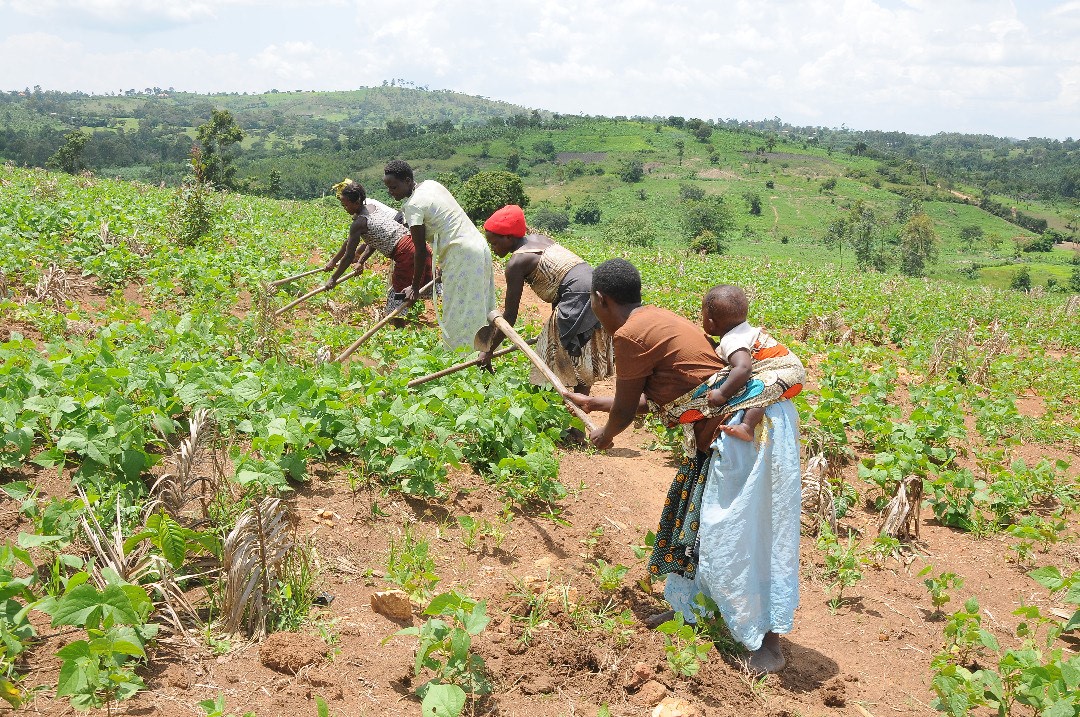
To begin with, China implemented several micro-management reforms and the most notable ones being the replacement of collective farming with house hold based system that agriculture was now done at a family level as opposed to the previous community- socialistic kind. This was later accompanied by up to a 15year lease to the land for cultivation and by 1993, this reform had widely been implemented across the country and for the record, buffer harvests were noted and empirical estimates show that almost half of the 42.2%  growth of output in the cropping sector in the years 1978-84 was driven by productivity  brought by the reforms hence highlighting loopholes in the prior-existing socialist farming strategy that was characterized by mis-management and had discouraged most famers.

Beijing further took reforms in the state- owned enterprises with the first gradual process being from 1979 that emphasized several experimental initiatives that were intended to enlarge enterprise autonomy and to expand the role of financial incentives within the traditional economic systems, for example the state-owned enterprises were then allowed to produce outside the mandatory state plan. This was pivotal that it begun to encourage competitiveness and urged to occupy virgin markets hence breeding the profit-oriented capitalism economy. To note however, is the double price track strategy that state owned enterprises in the bid to occupy new markets had to agree on the price policy according to the population and the privately owned enterprises for a favorable price. This was aimed to deter out competition by the rich state funded enterprises hence promoting competitiveness with favorable prices and environment.

State owned enterprises were also allowed to produce for export with the government at the helm of marketing the produce. The state as well monitored re-investment of the surplus profit retained from both exports and new markets with an idea that capital resettlement was done in those specific locations of the very state-owned enterprises. The state introduced a reward strategy that was based on merit and productivity that productive state-owned enterprises were awarded quarterly and annually with more incentives for example with more improved machinery.  To the employees, salary increment policies were introduced as opposed to the old standard that now increment was based on how productive individuals were to profit maximization. Recruitment was also based on merit, education and skills as opposed to the prior mechanism that was based on the relationships, political affiliation and age.

The increase in enterprise autonomy put pressure on the distribution system hence a driver for resource allocation mechanism reforms that now the state started to decentralize credit rationing to the local banks. This was a major turning point for the sprouting private enterprises that needed some capital stimulation for healthy competition. The steady progress in competition between state owned enterprises and private entities became the major driver for tapping into other competitive but rather virgin sectors like energy production for the successful privately owned that had accumulated capital and other mechanized sectors while other private entities as a result of competition opted for more labor-intensive small industries hence creating a balance for development that these also employed a huge percentage of the countries labor force.

In conclusion, it should be noted that the Chinese model entailed a serries of guided gradual steps that struck a balance in preserving and the special socialistic traits of the nation with a larger capitalistic out look to the realization of a market economy, highlighting faint state visibility that the state at every point granted more autonomy to enterprises especially to the state-owned enterprises.

With the largest number of developing countries, Africa has a lot to learn from China, not necessarily copying and pasting everything, but the Chinese model has proved to be the most ideal to developing countries.  Most important to note is that Chinese path to modernization offers a new type of development option for the countries seeking development while maintaining independence and self-reliance at the same time.

Daniel Balongoofu is  a Research fellow at Sino-Uganda Research Centre, Ndamaje Francis is Board Chairman, Isimba Community Hub


China-Africa Relations Bridging the Gap in African Countries’ Struggle for Educational Transformation

Over the years, the government of the People’s Republic of China has proved to be Africa’s
reliable development partner through supporting African countries strategic sectors. One of many key areas to note which China has greatly and religiously supported is human capacity building – a sector that is very instrumental in development of any nation. The education support China offers to African countries ranges university degree scholarships, both short and long term for professional and government financials as well as funding research and innovation programs. China has also been providing other material assistance such as helping in construction of schools and institutions as well as equipping others with computers and books.

In Uganda for example, by the end of 2021, China had provided over 5,000 short-term training opportunities for Ugandan talents, covering wide range of fields; among others agriculture, medical care, public administration, computer science and infrastructure.

If critically analysed, Chinese universities have gained more ground in the world rankings and as a result, thousands of African students are now looking at China for have attracted more African students.

Through the Forum on China-Africa Cooperation (FOCAC), China focused on supporting
African countries through capacity building by supporting talented Africans to gain expertise indifferent sectors. Indeed since 2009, China has been announcing scholarships for African
scholars during FOCAC’s annual summits. Specifically, just after the 2015 FOCAC summit,
China announced that Beijing would offer at least 30,000 scholarships annually to African
students. This has seen an increase of African students in students in Chinese Universities thanks to Chinese government scholarships that today, African students account for over 16% of China’s international students. This makes China the second country with the largest number of African students in higher institutions of learning replacing the United States of America and the United Kingdom that used to be African students’ main destination.

Similarly, China has been on the forefront of backing up Uganda’s need to transform her
education even before Uganda government’s implementation of the new curriculum. For
example, after the 2018 Beijing Summit of the Forum on China-Africa Cooperation (FOCAC)
under the theme “China-and Africa: Toward an Even Stronger Community with a Shared Future through Win-Win Cooperation,” China quickly reacted in Uganda by setting up Uganda-Luban Workshop which was launched at Sino-Uganda Mbale industrial park. The multi-vocational skills training facility focused on offering courses in mechatronics innovation and intelligent application technology, steel making technology, refining technology, vocational skills trainings in electrical control among others. Indisputably, the kinds of skills that the workshop offered are a proper target for the new curriculum which was implemented by the government of Uganda. This multi-vocational skills facility was established as a result of President Xi Jinping’s promise during his opening remarks at the summit where he proposed the establishment of eight initiatives including the establishment of 10 Luban workshops in Africa to provide vocational skills training to the youth in Africa. Thanks to the Chinese Government that Uganda was one of the states thought of and the facility was a blessing.

Also, Chinese firms and enterprises are equally supporting African governments in strengthen
and improving education sector through offering grants, cooperation and partnerships. Under
such arrangements, Chinese firms continue to offer support to equip African schools with
required support to ensure that scholars in these schools acquire necessary skills for today’s
markets. In 2017 for example, China’s telecom giant Huawei provided laptops and internet
connection to schools in Kamwenge district. In May last year, Uganda Revenue Authority in
partnership with Huawei Technologies Uganda donated several computers to Nyarilo Secondary School in Koboko district. Since then, several other donations of this kind were registered in Tororo Girls School among other regions.

Relatedly, like many other Chinese firms, China National Offshore Oil Cooperation (CNOOC)
has been offering Ugandan scholars with scholarships in strategic fields. For example,
beneficiaries like Lamech Mbangaye and Ritah Nasaazi who graduated from China University of Petroleum in Shangdong Province as petroleum engineers are now employed by CNOOC at
Kingfisher oil fields and the two are among few Ugandan engineers at the core of the country’s
oil drilling activities. This manifests how China is mutually helping Uganda’s education sector to advance by training its scholars with efficient skills as the country works hard to move to attain middle income status.

If critically analyzed, Africa-China cooperation in education sector is strategic and mutually
beneficial. Partly, this is because, African countries’ capacities to give tertiary and higher
education to their energetic and young population are constrained. According to United Nations Educational, Scientific and Cultural Organization (UNESCO), Sub-Saharan Africa is one of the largest regions in the world with a small tertiary education enrollment ratio which stands at 9.4%. This is far below the global average of 38%. If analyzed, this means that with its 16% of the global population, Africa contributes just 1% of global research. In all ways, such
undersupply of tertiary education impedes the continent’s prospects of achieving one of the
United Nations Sustainable Development Goals whose major goal is providing universal,
inclusive and higher quality tertiary education.

That said, China’s education support to African countries is timely and will go handy in aiding
Africa as a continent to achieve her scientific research capabilities which is also key among the
goals of African Union’s Agenda 2063. Growing and improving human capital will in accelerating African countries development take off. Whereas this important support is often
viewed in context of competition between China and the United States of America for what
Sino-Africa skepticists call China’s growing global influence, China’s education support is much needed by African countries to improve in skills development of their citizens. Also, African students making China their top destination for education is not a coincidence. Despite the U.S having a million plus number of international students in their universities if compared to China’s over 492,000 international students, over the years, African students opting for China than the U.S have been on rise. If critically analysed, the trend can be attributed to facts such as; China’s progress in areas of technology and poverty eradication makes their education more attractive since it seems to offer practical and fast solutions. Also, unlike China, the U.S and European countries often make unfavourable demands such as requirements for visa applications and proof of large sums of money for prospective African students to join their universities.

When it comes to language issue, one can argue that the U.S and largely other European
countries have an advantage over Chinese universities when it comes to attracting students from Africa, western countries must stop looking at African students applying for school visas as destitutes running away from their motherlands by making them go through complicated
requirements to obtain visas. They should borrow a leaf from China’s side and make education easy for African prospective scholars to obtain visas. Like China, this should not be
discriminative whether the applicant has sponsorship or otherwise. Also, the West should not
see China’s support to African educational institutions as part of the so-called geopolitical
competition between China and Western countries but see it as it is; this assistance is much
needed for if equipped with necessary skills and technical knowledge, Africa’s young population will immensely accelerate Africa’s economic and development take off.

Critics of China-Africa relations should therefore know that for over 60 years, China and almost all African countries have forged unbreakable fraternity through our struggle against imperialism and colonialism, and embarked on a distinct path of cooperation in journey toward development and revitalisation. Together, the two sides continue to write a splendid chapter of mutual assistance amid complex changes, and set a good example for building an even stronger China- Africa community of shared future in the new era.

Ssemanda Abdurahim is a junior research fellow at Sino-Uganda Research Centre; Charles Muwonge Chuck is a Junior Research Fellow at Isimba Community Hub.

China-Uganda Relations Cooperation: A Michael Jordan Philosophy – we all win

Talking of China-Uganda diplomatic relations which were established way back in 1962, and now almost 63 years, you can practically realise that they have been strongly operating on a Michael Jordan principle. The ranked “greatest basketball player of all time” who played for fifteen seasons in the National Basketball Association (NBA), winning six NBA championships with the Chicago Bulls, Michael Jordan once remarked that “there is no ‘I’ in team but there is in win.” Similarly, China-Uganda diplomatic relations have always had this Jordan principle as their wheel of operation. Critically analysing this, China and Uganda work together and mutually as a team without any aspect of individualism other than winning together as a team. Put differently, as Chinese President Xi Jinping has repeatedly observed, China-Africa cooperation is founded on principle of mutual benefit.

For instance, when the construction of Entebbe Express Highway which was constructed with funds from China’s Exim Bank of China, the ministry of works and transport in Uganda clearly stated that the main project’s objective was to provide efficient mass-transit route between the vital cities of Kampala and Entebbe in the Greater Kampala Metropolitan Area (GKMA) and decongest Kampala. Upon its completion, the 49.56km project sparked off a manifestation of 2,206,558 users between January and April 2022 as registered by Uganda National Roads Authority (UNRA). While one may argue that it was not a grant but a loan, still, the completion of this mega project which has improved in mobility of goods and services plus other multiplier effects that comes with easiness in mobility of goods and services in multiple ways makes the project a double win to the country and to us as citizens.

Additionally, UNRA collected a total of 13 billion Uganda shillings from tolling the Kampala expressway between January 8, 2022 and May 24, 2022. In that same year, UNRA’s communications officer indicated that the average daily 20,000 passages had surpassed the projected daily average of 13,000 passages. These included the incoming and outgoing passengers, taxi operators, visitors and Entebbe residents. With this manifestation of the project’s great usage by Ugandans, the immediate questions in one’s mind include; is China’s development assistance needed in African countries’ infrastructure projects? do projects developed with Chinese assistance meet and answer needs of users? Are such projects able to sustain themselves? In contexts of Uganda’s Entebbe Express Highway, the answer to these questions is a resounding YES. However, if all such questions are skipped, there is no way we are never going to be vulnerable to negative framing and narratives which are not backed but often brands China’s development assistance especially infrastructure as debt-trap. We will not have the required immunity to realise that China has efficiently played its part.

It should also be remembered that the Entebbe expressway is not the only project that has been funded by the People’s Republic of China in Uganda. Between the years 2009 and 2012, a one hundred beds capacity hospital, Naguru was built at an approximate cost of US$8 million by the Government of China as a gift to Uganda. Its other name, China-Uganda Friendship Hospital stands as an emblem to reflect the existence of good diplomatic ties between the two countries. On continental level, China has funded similar projects in countries such as South Sudan, Sierra Leone Zimbabwe among many others.

However, China has not stopped at only establishing such projects but also severally provides medical assistance by sending medical experts to different African countries. To be specific in Uganda, China has been sending medical teams to Uganda since 1983 to share knowledge and skills with Ugandan counterparts apart and also treating Ugandan patients. Relatedly, China has also been a key and reliable partner to African countries while battling epidemic sand pandemics. A case in point is during Ebola outbreak in West Africa which ended in 2016. In Uganda, China’s contribution in battling Ebola and Covid-19 pandemic are still fresh among many.

It is therefore paramount that the critics of China-Africa cooperation and their disciples first pay attention to questions like; are China funded projects in Africa helping African countries to realise their development aspirations? Are such projects helping citizens? Otherwise, China should be seen as a player who promises his coach that he will score a goal for his club and indeed he scores. Whether the player’s club loses or not, this should not be a blame on him. For he promised and fulfilled . The rest should be examined by trying to understand what made the team lose yet it had a goal other than why did the player fail to make his team win. If this kind of analysis is paid attention to, then everyone will realise how China-Africa diplomatic relations operate on a Michael Jordan principle – the min-win cooperation.

Ssemanda Abdurahim is a junior research fellow at Development watch Centre.

China’s development model: Lessons for Uganda and Africa

By Allawi Ssemanda.

Dear Editor, during a symposium on the implication of the 20th National Congress of the Communist Party of China (CPC) under the theme, “Forge Ahead on the New Journey and Work Together for A New Era,” Chinese ambassador to Uganda Zhang Lizhong introduced Chinese path to development to Ugandan think tanks and journalists describing it as the major engine that saw China transform from a poor developing country to become the world’s second largest economy.  Ambassador Lizhong explained that as a developing country, China decided to not to move with the so-called common model of modernisation and embraced path of modernisation with Chinese characteristics.

Following a Chinese development path with Chinese characteristics, China ‘has united and led the whole country, and the people in solving many challenging problems that were long on the agenda but never resolved, making many achievements that concerned the nation’s future. As we completed the building of a moderately prosperous society in all respects and achieved the first centenary Goal, China’s economic strength, scientific and technological strength, comprehensive national strength and international influence continued to grow. In 2021, China’s economic aggregate reached 114.4 trillion-yuan, accounting for more than 18 percent of the global economy,’ ambassador Lizhong emphasised.

With glaring achievements China has registered which includes being the first country globally to eliminate absolute poverty at a record time, arguably, such a path is way to go for developing countries like Uganda which is still grappling with poverty and key social service delivery.

Following Chinese path to modernisation with Chinese characteristics, China under leadership of CPC has been able to “accomplished the arduous task of eliminating extreme poverty. We have built the world’s largest education system, social security system and medical system, Chinese people’s lives have improved in all respects,” stressed ambassador Lizhong.

Upon that background and recalling the failed structural adjustment programs (SAPs) which International Monetary Fund (IMF) imposed on Africa, it looks clear that China’s path to development if considered may be the magic bullet for African countries to attain development and modernisation, more importantly, modernisation with “African characteristics”.

But how does China’s path to modernisation look like? What are some of its characteristics? Does it really suit African countries needs or, is it best model for African countries?

In his report to CPC’s 20th national assembly, Sectary General Xi Jinping highlighted what he described as systematic exposition of the unique features and essential requirements of China’s modernisation:

Firstly, the Chinese path is the modernisation of a huge population of the more than 1.4 billion people in china; Secondly, China’s path is the modernisation of common prosperity for all. Explaining that the immutable goal of China’s modernisation drive is to meet the people’s aspirations for a better life, Beijing stresses that China “will endeavour to maintain and promote social fairness and justice, bring prosperity to all, and prevent polarisation.” China argues that achieving common prosperity is a defining feature of socialism with Chinese characteristics and involves a long historical process; thirdly, China’s emphasises that “while continuing to consolidate the material foundation for modernisation and improve the material conditions for people’s wellbeing, we will strive to develop advanced socialist culture, foster strong ideals and convictions, and carry forward China’s cultural heritage.”

The other key characteristics of China’s development path are; the modernisation of harmony between humanity and nature. Here, China commitment that its modernisation “lies in building a beautiful homeland for man and nature to live in harmony.” Lastly, China’s path to development stresses modernisation of peaceful development. Ambassador Lizhong argues thatChinese path to modernisation emphasises mutual benefit and win-win cooperation with other countries including Uganda, promotes the building of a community with a shared future for mankind, and strives to contribute to peace and development of mankind. China will not tread the old path of war, colonisation, and plunder taken by some countries. That brutal and blood-stained path of enrichment at the expense of others caused great suffering for the people of developing countries.”

From the above, we learn that in pursuit for her development, China put her national interests first; focused on internal political concerns; and maintained firm strategic resolve with determination to never yield to coercive power as the country sought its development.

Also, from China’s path to modernisation, Uganda and Africa in general can learn that you don’t loose your identity in order to modernise. China blended modernisation to its traditions. For example, despite modernisation the country is going through, to date, family hierarchy in China is respected. It is the same rational spread throughout other institutions in context of respect.

Put differently, Chinese development path has Chinese characteristics that “to developed as a country and people they have to drink from Chinese traditions in order to tap modernity. Not to just take modernity for its sake which would leave their country at risk of losing their identity through socialisation.

For Uganda and Africa in general, in Chinese development model we have an opportunity to learn from them but we must ask questions like; Yes, we need to be modern but what is it that it speaks to our minds and our hearts in this modernisation? What is in that is Ugandan/African? This way, Uganda and African can study from Chinese model and pick lessons from what can work for Uganda or Africa to develop.

Good enough is that China does not force other countries to take what they do not believe in. At the Embassy’s symposium, ambassador Lizhong explained that “China’s modernisation goes beyond copying others” stressing that “it is an independent path to development. For modernisation, there does not exist a single definitive model. Copying mechanically is not the solution. China’s modernisation is socialist modernisation pursed under the leadership of the CPC. It has broken down the stereotyped thinking of equating to the modernisation with Westernisation, proving irrefutably that developing countries are capable of independently treading the path to modernisation that works.”

Personally, if asked, western or Chinese modernisation? I definitely would say as Africans we can choose to learn from Chinese model and we blend it with African characteristics.

Allawi Ssemanda is a senior research fellow at the Development Watch Centre.


60 Years of Diplomacy: Uganda and China Are Comrades

By Alan Collins Mpewo.

After 9 days of Uganda having attained independence from Britain, China and Uganda formalized diplomatic ties on 18’th October, 1962. It’s perhaps one of the first countries to have formally straightened diplomatic relations with Uganda.

This year, 2022, the two countries are celebrating 60 years of diplomatic relations. Last week, the Chinese Embassy of Uganda jointly with Chinese People’s Association for Friendship with Foreign Affairs held a conference on the successes of Uganda and PRC for the 60 years they’ve held diplomatic relations. Importantly, there was endless reassurance of continued diplomacy for the many years ahead. Zhang Lizhong, the Chinese Ambassador to Uganda made highlights to some of the major achievements reached as a result of this diplomatic relations.

Tracking Uganda – China successes, the Chinese Ambassador reminded participants of United Nations General Assembly Resolution 2758 that saws China regain its rightful position in the UN. When it came up to a vote, Uganda was among the many countries that voted in favor – PRC to become to the legitimate representative of China to the United Nations. Since that significant undertaking, the two countries have reached tremendous successes to now recently, and perhaps Uganda’s greatest project with PRC yet, the oil exploration in the Lake Albert Graben. With PRC’s contribution, Uganda is destined to decades of impactful oil export while both countries respectfully benefit from the arrangement.

The Oil exploration being carried out by the Chinese North Offshore Oil Company (CNOOC) has already been steadfast and with much confidence from the two partner states that commercial Oil works will commence by 2025. Besides the estimates of the proceeds that will transform the standard of living of majority of the Ugandans, the job creation that the project has so far created cannot be overemphasized. The jobs are not only limited to technocrats, but also for the informally skilled that provide additional required support and resources mainly in Uganda’s socalled oil districts. CNOOC in the same arena has had contributions on the education in Bunyoro Kingdom.

CNOOC has for over 6 years been providing scholarships to top excelling pupils and students in Primary Leaving Examinations, and Uganda Certificate of Education. Over 200 of the top excelling students benefit annually from this project. As a matter of corporate responsibility, CNOOC has also impacted major health centers area and also constructed modern houses for people affected by oil exploration in the area.

The energy sector does not only however, have impacts felt in the Oil and gas industry. Hydroelectricity, a main propeller of Uganda’s industrialization has seen Chinese input. China funded the Karuma Hydropower Plant that has an electricity generation capacity of 600 MW. Another is Isimba Hydro Power Plant which generates 183MW. When their employment capacity is combined, they employed over 9,000 Ugandans majority of whom were youths.

A significant importance of the increase in the electricity transmission capacities has been the foundation for running numerous industries which are located in the various industrial parks located in Uganda, some of which were built by China such as Uganda-China (Guangdong) Free Zone of International Industrial Cooperation, Kehong Uganda Industrial Park, and Sino-Uganda Industrial Park located in Mbale district. These industrial parks are one stop centers for a number of industries broadly dealing in both simple and complex machinery.

In the highlights from the Chinese Ambassador, another major achievement was underscored as far as countering challenges by both countries in arms. The COVID-19 pandemic brought with it huddles whose effects if not for the intervention of China, would still be ravaging majority of Ugandans. Uganda had reached a hard time getting the COVID-19 vaccines purchased, into Uganda on time since there was much competition from global purchasers for these vaccines as most of developed countries choose vaccine nationalism. The first batch of Sinovac was delivered by China in July, 2021, with 300,000 doses, whereas the second batch was delivered in October, 2021. Alongside the vaccines, emergency medical equipment was delivered along in order to secure protection of the health workers who were tirelessly fighting to save lives in Uganda.

A lot more can be said for China’s contribution in its partnership with Uganda, but so has PRC benefitted. The first of such is the ever-growing market base for Chinese products. Whereas the two countries continue to further deepen their relationships in order to have more market penetration availed for Uganda into PRC, the present revenue attained by PRC from their exports in Uganda is of commanding value. More similarly can be said for the other partnerships that have been formed such as the Oil exploration in Uganda and grant of tenders and contracts to Chinese companies especially in industrialization and construction. A lot can be said equally via agriculture, the road and belt initiative, vocational trainings, education, and many other alike.

The exchange programs on both diplomacy and culture have however been the strongest foundation as the citizens of the two countries keep sharing experiences, lessons, and solutions to present challenges. Some of these are the China-Africa Friendship Association Uganda, Chinese People’s Association for Friendship with Foreign Countries, and the Forum on China–Africa Cooperation.

In 1962 when the relations commenced, neither of the two countries would have believed they’d register their current successes in 2022, at the time of first formalization. It is a precedent set for the future of PRC and Uganda, and a reflection for ways to buttress the relations already existing. It’s therefore a kind hope to the future, that another additional 60 years will be celebrated by Uganda and the People’s Republic of China as the two nations strive to achieve common prosperity by building a common of shared future for mankind.

Alan Collins Mpewo is a layer and Research Fellow, Sino-Uganda Research Centre.


A Review of China’s Support to Uganda’s Agriculture Sector

“Only when the granary is full will people learn etiquette; only when people are well-fed will they know honor and shame,” says an ancient Chinese adage. One can argue that China put this saying in practice while nurturing her Sino-Africa relations by supporting agriculture sector.

In Uganda’s context, China has been playing a key role for almost 50 years. Indeed, in 1973 and 1987, China invested and supported establishment of Kibimba (Now Tilda Uganda) and Doho Rice Schemes. This increased Uganda’s rice production capacity on top of creating employment opportunities for the many people.

Through the South-to-South Co-operation, China has invested heavily and supported the Uganda’s agriculture sector. In 2009, working with United Nations’ Food and Agriculture Organization (FAO), China introduced a new programme FAO-China South-South Cooperation (SSC). Beijing backed this program and created a FAO-China Trust Fund with $30 million to support agriculture in Uganda.

In 2015, China launched Uganda’s FAO-China South-South Cooperation (SSC) phase II and injected $50million further supporting the country’s agriculture sector. This program received another $50million boost in phase III which was launched in 2021.

During the first two China-FAO SSC phases, China sent 47 Chinese agricultural experts and technicians on a two years mission. The experts are credited to have helped in skills development and exchanges. In particular, they helped to improve technologies used in production of rice, grapes, cherry tomatoes, foxtail millet, and apples. Also, the experts exchanged skills with Ugandan farmers in animal reproduction such as goats, pigs, and in fisheries. This project focused on exchanging mechanization, agro-processing and value-addition.

A June 2020 study entitled “Access and Adoption of Hybrid Seeds: Evidence from Uganda” published in Journal of African Economies credited Chinese agriculture support to Uganda that it has improved innovated agricultural practices. The study further reveals this has helped in addressing poverty challenges in Uganda’s rural areas.  

In October this year, working with Ugandan authorities, China will be Launching phase III of China-FAO SSC. This time, China will inject 2.39 million U.S. dollars in the program. Under phase III, China will send to Uganda 18 Chinese agricultural experts and technicians to agriculture sector. This project seeks to advance and support appropriate and effective technologies with aim of boosting the countries food security. More than 9,600 farmers of whom at least 30 percent will be women are expected to benefit during this phase while more than 200 Ugandan agricultural personnel will receive technical training.

From grassroots, several Ugandan farmers have already benefited from China funded Phase I and II of China-FAO SSC. Under the said two phases, farmers in districts such as Amuriat, Budaka, Kabale, Mbarara, and Wakiso among others. In Kabale, agricultural technology demonstration hubs have been established there which is boosting horticulture. China has also been supporting fish farming in the country. For example, China funded the construction of Kajjansi Aquaculture Training and Development Centre which is key in aquaculture research in Uganda.

Also, China funded construction of Wakawaka fish landing site. All this has seen increase and sustained fish production in Uganda. Uganda’s Fisheries sector is one of Uganda’s leading foreign exchange earners. The sector accounts for about US$200 million annually. The sector is also employing estimated 1.5 million people such as fishermen, boat owners, fish mongers, transporters and processors among others.

On Continental level, China’s support to African countries agriculture sector is also visible. During the 8th Ministerial Conference of the Forum on China-Africa Cooperation (FOCAC) held on 29th November 2021 in Senegal, supporting African countries agriculture was among the nine key areas Chinese president Xi Jinping pointed at where China would cooperate with African countries. The other eight areas are health, poverty reduction and trade promotion, investment promotion, digital innovation, green development, capacity building, cultural and people-to-people exchange, and peace and security.

Globally, China’s voice in promoting and advancing programs meant to fight famine has been loud. While attending this year’s G20 summit in Bali, Indonesia, China’s State Councillor and Foreign Minister Wang Yi made a plea calling for a strong cooperation to ensure a successful global food security agenda and reduce suffering of many due to hunger. Today, many countries are struggling with hunger. Recently, United Nations Secretary General Antonio Guteres expressed concern stressing that global hunger levels are at a new high. Guteres observed that in two years, the number of severely food insecure people has doubled from 135m to 276m today.

Also, among others, China’s Global Development Initiative seeks to address challenges like famine to ensure continuous development, with the aim of helping all people realize their dreams. The discussion above is a pointer that food security is key for national and global security and development. Aware that we can only attain food security by supporting and improving agriculture sector, recognising China’s contribution in supporting Uganda’s and Africa’s agriculture sector is prudent.

Ssemanda Abdurahim is a Research Fellow at Sino-Uganda Research Centre.

The US Should Acknowledge China’s Positive Contribution to Africa’s Development

This month, United States of America’s top diplomats visited a number of African countries in what some American analysts described as Washington’s attempt to counter what the US sees as growing Sino-Africa cooperation. Secretary Anthony Blinken’s visit is the latest. It follows earlier visit by US’ Ambassador to the United Nations, Linda Thomas-Greenfield.

During the visit which included countries like South Africa, the Democratic Republic of Congo and Rwanda, Secretary Blinken unveiled the so-called U.S-Sub-Saharan Africa strategy. In his public lecture in Pretoria South Africa, Secretary Blinken praised it that it will enhance the US-African relations by creating what he called creating open societies, supporting economic cooperation, promotion of democracy and addressing climate change concerns.

Despite Secretary Blinken’s claim that “absolutely, this is about our relationships in Africa. It’s not about other geopolitical issues,” if critically analysed, not any of US diplomat in Africa or even Washington believe those talking points. Even in the little two-page executive summary of this strategy which White House released a head of Blinken’s visit, geographical issues are mentioned. It references China and Russia’s engagement in Africa.

While the US wants its Africa strategy play that Washington’s foreign policy in Africa is not driven by broader geopolitical issues, it is evident the endgame is not what works for Africa but, how can the US re-assert its failing hegemony in Africa. The 2022 US Competes Act says it all. US’ foreign policy key goal is to Counter China.

Whereas Blinken emphasized that the US will “not dictate” African countries, his diction is telling. He claimed that “African nations have been treated as instruments of other nations’ progress, rather than the authors of their own.” Of course, he was diplomatically saying leave those countries for treating you as instruments of their progress.

If we compare the US and China’s method on how the two shape their relations with African countries, the US’ method is selfish and dictatorial. It is a ‘big-brother’ affair while China’s is equal-partners style. For example, the 17page US Strategy Toward Sub-Saharan Africa was developed without the input of African countries. On the other hand, through The Forum on China- Africa Cooperation (FOCAC), China engages African stakeholders on any initiative the country is to take. Put differently, China’s method is participatory while the US’ sort of dictates.

If we analyse recent speeches by US’ top diplomats, it is naïve one to believe the US is ready to end dictating Africa countries on how to run their foreign policies. While in Africa, US Ambassador to the United Nations Linda Thomas-Greenfield made this much pretty plain. While in Uganda, Linda warned African countries against dealing with Russia claiming this would be against US’ unilateral sanctions. “If a country decides to engage with Russia, where there are sanctions, then they are breaking those sanctions. And we caution countries not to break those sanctions because then, if they do, they stand the chance of having actions taken against them,” Linda warned.

During his Pretoria lecture where he elaborated US’ Sub-Saharan Africa strategy, secretary Blinken discussed what he described as Africa’s strategic importance and singled out the continent’s voting bloc in international bodies like United Nations, continents minerals, a vibrant youthful population. Blinken explained that among others, these three attributes makes Africa a priority in US’ foreign policy.

However, if critically analysed, at best, the diction of this strategy seems like some aesthetic improvements. It almost seems like its authors were trying, but they just couldn’t quite get past US’ strategic ambiguous language. Hence, it does not offer concrete commitments. In other words, it comes out as a lecture to Africa on how the continent should run its affairs.

This makes one to imagine that diplomats in the US are yet to understand global south moods.

African leaders lost interest in US lectures on the so-called values, democracy and human rights which despite preaching them, the US has spectacularly failed to live by. Blinken’s consistent presumption that African governments are autocratic is informed by what can be described as Washington’s think tanks dubious metrics in defining what democracy is. From a critical perspective, relying on Western epistemic communities to draw conclusions about Africa the home of over 1.4 billion people is not only a disregard of Africa’s agency but also an insult.

Washington should understand that while its governance systems maybe ideal for the US, it cannot be used as a gold standard for the rest of the world.

Going through this strategy, the US presents Africa as a place of competition presenting the continent as a pawn in what US considers competition between Washington and Beijing and recently Moscow. Three times Blinken described Sino-Africa relations negatively. The “People’s Republic of China (PRC), by contrast, sees the region (Africa) as an important arena to challenge the rules-based international order, advance its own narrow commercial and geopolitical interests, undermine transparency and openness, and weaken U.S. relations with African peoples and governments,” Blinken claimed. Blinken added that the US is committed to “Countering harmful activities by the PRC, Russia and other foreign actors.” He added that “the (U.S.) Department of Defense will engage with African partners to expose and highlight the risks of negative PRC and Russian activities in Africa.”

This shows that US’ strategy toward Sub-Saharan Africa is not win-win but rather seeks to help Washington advance its selfish interests by dividing the world through cold war mentality of bloc formation while forcing countries to choose and take sides.

Blninken also talked about US’ Partnership for Global Infrastructure and Investment (PGII) which is backed by G7 countries. While PGII is a good development since it will help to address infrastructure funding gaps in global south, the sprit in which the US brought this idea is negative. Many analysists see PGII as a rival against China’s Belt and Road Initiative (BRI), which has helped in addressing Africa’s infrastructure funding deficits. US criticise it claiming it is not open and is likely to undermine African countries’ sovereignty.

However, such claims if put to fact-checks, non would stand. Some analysts argues that criticism is nothing but US’ political smear campaign against China-Africa relations.

Historically, Sino-Africa relations have stood test of time, and these relations are based on mutual respect and win-win cooperation. China’s contribution to Africa in context of trade, investments, development finance and social development cannot be ignored.

In addressing challenges like COVID-19, while developed countries like the US chose vaccine nationalism, President Xi Jinping declared COVID-19 vaccines a global public good. China made millions of vaccine doses available to Africa and other developing countries, on top of offering financial assistance.

Blinken emphasized that their strategy will address challenges like insecurity in Africa. While security is a prerequisite for sustainable development, China has always walked the talk. Early this year, Beijing appointed special envoy for the Horn of Africa and mid this year, a security summit was held in Ethiopia to address the region’s security challenges. Also, China proposed two initiatives namely, Global Development Initiative and the Global Security Initiative which if critically analyzed, are in line with Africa’s interests.

Relatedly, under UN peacekeeping missions, China remains the biggest peacekeeping contributor in Africa under. Compared with the US, China has over 1,400 peacekeeping troops in Africa compared to 29 personnel.

In conclusion, the US should learn that Africa is a continent with over 50 independent  countries. They should stop taking Africa to be a paw and area where Washington believes it should counter other countries Africans choose to relate well with.

Allawi Ssemanda, PhD is a Senior Research Fellow at Sino-Uganda Relations Research Centre.

Sino-Uganda Relations: The Upside Story From a Liberal Perspective

Overtime, it’s increasingly evident that International Relations can be used for more than preserving world peace through amicable settlement of disputes or stopping international conflicts, but to also foster economic development between global states. Various states are realizing socio-economic development amongst themselves as far as trade, infrastructure is concerned by capitalizing on the favorable relations held with each other.

China and Uganda can be singled out as an example of such states. The two countries have enjoyed good diplomatic relations for close to 60 years with the first diplomatic contact being made by China shortly after Uganda attained Independence in 1962. Since then, this relationship built on mutual respect and cooperation has produced positive developments, the crux of the author’s discussion today.

Generally, while studying the relationship between China and any African country today, one may find it difficult to ignore the effect of the Belt and Road Initiative (BRI) on such a relationship. The aforementioned project was initiated in 2013 to promote infrastructure development among growing nations using funds from China.

Uganda having pre-existent relations with China and having signed an MOU to join BRI, has been one of the beneficiaries of this initiative. A peek into the UNRA national roads project status report for May 2022 indicates that funding from China has been used to complete road projects like the Munyonyo spur, Kampala-Entebbe expressway among others. It also indicates several future projects to be undertaken by secured Chinese funding.

Furthermore, these bilateral relations have realized significant development in Uganda’s energy sector. For instance, the twin Hydro Power Plant projects on river Nile, namely Karuma and Isimba, generating a combined 800MW of electricity were funded and built by funding secured from the Chinese government in addition to local revenue. Electricity is a major factor of production and industrialization, two sectors that can propel developing countries into economic stability. Additionally Chinese companies have undertaken major investments to develop the mining sector in Uganda, an example being the planned establishment of a $200 million gold refinery in Busia district. Such projects and investments increase employment opportunities for Ugandans as well as sourcing revenue for the country in form of taxes.

The continued good relations between China and Uganda have seen the latter nation record developments in its health sector. The earliest notable Chinese health aid to Uganda was through the establishment of the Development Aid for Health from China to Uganda (DAHCU) in the 80’s where Chinese medical teams were sent to the African nation to assist in the country’s ailing health sector. The China-Uganda Friendship Hospital Naguru, a modern health facility built by the Chinese government as a gift to Uganda, is one of the new health projects realized as a result of the good long-standing relations between the two countries. Mahatma Gandhi once opined that health, and not pieces of gold and silver is the real wealth.

Industrialization is argued to be one of the most viable routes toward economic development and transformation and is believed to be the spur behind China’s rise to an economic powerhouse in the last 35 years. Perhaps, in light of that transformation, China’s spirit of good will towards Uganda’s development has driven it to taking center in what one would describe as the African nation’s modern industrial revolution. This is evidenced by the establishment of Industrial parks such as Kapeeka in Central Uganda as well as the Sino-Uganda Mbale Industrial Park in the Eastern region, both funded by Chinese investment groups. Such establishments not only encourage and promote a shift towards a goods production-based economy but also create employment for citizens. With more planned similar parks in Uganda, it is evident that Kampala stands to further benefit more from its good relations with China.

Over 65% of Ugandans, as per a 2017 study by the Uganda National Household Survey, are engaged in agriculture making it the major source of livelihood in Uganda. The relations between China and Uganda have seen the former nation invest to modernize and improve the agricultural sector in the latter to enhance the livelihood of the locals. The Kajjansi Aquaculture Research and Development Centre is a project funded and established with support from the Chinese government as a specialized research center for fish species and modern fish farming methods. Famous for its fresh water lakes, Uganda is a major fish exporter hence such projects improve the country’s export earnings. Additionally, the two countries have significantly promoted trade amongst each other as result of their relations. Although Uganda currently imports more than it exports to China, the significant increase in the volume of exports is a positive indicator of the continuous growth and expansion of the African nation’s economy.

Additionally, the gains of Uganda from relations with China can be noted in the education sector. Annually, China has been offering education opportunities to Ugandans offering higher education scholarships and exchange programs to Ugandan students and hence, boosting the country’s human capital. China has some of the world’s leading institutions in fields like health, engineering and technology hence such an arrangement ensures Uganda’s acquisition of highly trained nationals that can return and contribute to the socio-economic development.

The Sino-Uganda relations have also resulted into developments and transformation of Uganda’s Information Technology sector. In 2006, Uganda secured funding from Exim Bank of China for establishment of the country’s data transmission infrastructure. This included installation of optical fiber cables around the country. As a major techno- innovative country, China has sought to inspire and challenge Ugandan youth to become technological innovators through the Huawei ICT Global Competition. Given the immense role played by technology in development today, Uganda stands to benefit from such an initiative.

In conclusion, the relations between Uganda and China can be described as mostly beneficial to the former as far as socio-economic development is concerned. The existing developmental projects, in addition to future projects have the potential, if well managed to significantly transform and empower Uganda’s economy. Concerns over claims of the socalled national debt burden that may be incurred through loan facilities to develop the country do not necessarily water down the benefits Uganda stands to enjoy if such borrowed money is put to effective use. In sprit of win-win cooperation, terms included in contracts of Chinese loans represent principles of fairness and balances well rights and responsibilities of involved parties. China has on many occasions written off debts of several African countries and renegotiated some where the borrower genuinely fail to pay. Chinese president Xi Jinping, defines the relations between Africa and China as a ‘distinctive path of win-win cooperation’. It is such development partners, keen on upholding values of mutual respect and co-operation that Africa needs.

Marvin H Kalema is a research Fellow with Development Watch Centre, and a law student at University of Johannesburg, South Africa

Building a Community With a Shared Future: A Liberal view of Sino-Uganda Relations

To understand Sino-Uganda relations and Sino-Africa relations in general, the role of China to the economic development of Uganda can be best understood by evoking liberalism as a profound theory in understanding mainstream international relations. Today, mutual benefit philosophy and common prosperity are central in when describing the relations between Kampala and Beijing and broadly, Sino-Africa cooperation. It should be noted that the two countries have enjoyed fruitful relations that have fostered economic development in Uganda. Sadly, and arguably due global politics, some Sino-Africa skepticist especially in Global north often view Sino-Uganda and broadly Sino-Africa relations in colonial motifs which definitely is wrong and miss presentation of historical facts since China has never colonized any country!

While it is true, that the end game of international relations is fostering selfish interests, it is now common knowledge that with China’s philosophy of common prosperity, China’s relations with other countries like Uganda is purely not selfish but a win-win cooperation which Beijing firmly believe is key in ensuring and building a community with shared prosperity for mankind.

China’s Belt and Road Initiative (BRI) is a vivid example show casing the win-win nature of relations Uganda and Africa in general are enjoying with China. It should be noted that BRI mothers lots of projects aiming at mutual benefit of the two sides. Through infrastructure development, BRI is connecting Asia with Africa, Middle East, Europe and the Americas. This in many ways will and in some countries is already facilitating transportation of goods and services. With expansion of Entebbe international airport near complete, Uganda is one of many countries already enjoying fruits of BRI. Also, a recent report by the Africa Policy Institute noted that since the BRI was initiated proposed in 2013, China has boasted African countries’ infrastructure by funding modern infrastructure projects such as railways, roads, ports, dams, industries, and digital connectivity, injecting vitality in the region. These projects also left thousands of Africans getting employment opportunities, sparking economic growth in the long run.

Giving example of Kenya, Africa Policy Institute report pointed at several multiplier effects of Kenya’s China funded and constructed 670-kilometer modern Standard Gauge Railway (SGR) connecting the port of Mombasa and the inland port of Naivasha. The Ethiopia-Djibouti’s standard gauge railway which connects landlocked Ethiopia to Djibouti port also constructed under BRI also improved transport in the region. The Chinese-built 752.7-km line recorded about 86.13 million U.S. dollars in revenue in 2021, which is up 37.5% compared to 2020 revenue collections.

In production and industry sector, Chinese investments in Uganda have greatly boasted Uganda’s capacity. For example, today Uganda boasts of a number of industrial parks that are contributing to the country’s economic growth and development. Industrial parks such as in Namanve, Kapeeka, and Mbale have liberated Uganda from losing foreign exchange in purchasing commodities that were not produced in Uganda. These parks have also contributed to skill enrichment of Ugandans who are employed there! The goods being products of high tech ensuring good quality, Uganda can also favorably compete at the regional market brining more foreign exchange to the country

Cooperation being at the core of China-Uganda relations, it has been evident in the construction of infra-structures for example the hospitals like the China-Uganda friendship hospital in Naguru.

Liberalism understood as cooperation in this case is evident in the education and cultural exchange program as part of relations. Education and culture being at the core of negotiations at the Beijing summit in 2020 it’s absolutely evident that the matter is centric of China-Uganda relations. Through the Confucius Institute at Makerere university, it should be noted that the institute has a memorandum of understanding between Xiangtan university, an institution in Hunan province in China which offers 30 scholarships annually to Ugandan students.

In terms of Trade, the good cooperation between China and Uganda has seen Uganda gain from trading with China. In his book: Introducing Liberalism in International Relations Theory, Jeffrey W Meiser emphasizes the role of good relations between countries if favorable trading conditions are to be realized. It is not a surprise that China has been working to increase trade quotas to Uganda and entire African continent as a way of ensuring both sides benefit from their cooperation. Also, for over a decade, China has always been one of not only Uganda’s but many of African countries’ foreign direct investments. A report by the United Nations COMTRADE database on international trade that analysed trade between the states with statistics in the year 2020 shows that Uganda exports quiet a number of products to the Chinese market that include oilseed, oleagic fruits, grain seed, fruits, plastic, wood products, gums and so many others that totally amounted to US$39.61million. Therefore, with this important aspect in economic growth, Uganda’s economic growth has been greatly fueled by diverse trade the two countries guided by China’s philosophy of win-win cooperation as Beijing works with other countries to build a community with shared prosperity for mankind as well as common development.

By Balongoofu Daniel is a Junior Research Fellow with Development Watch Centre, a Foreign Policy Think Tank.

China-Uganda relationship should be viewed beyond old frameworks and colonial motifs

China’s relations with the African continent date back to the 15th century. In the Ming Imperial Tomb in Beijing is a wall painting of a giraffe – it was the famous Chinese admiral and seafarer Zheng. He who brought it to the court in Nanjing during one of several expeditions to the Arab world and the east coast of Africa between 1413 and 1419. Until the late 1970s the People’s Republic of China’s economic relations with Africa were driven by ideological imperatives.

Guided by China’s sprit of Confucianism or Ubuntu as it is known in Africa, Political leadership in Beijing see Africa people as a brothers and sisters whose countries are equal partners and hence, the two sides pursuing a win-win cooperation. Indeed, today China is Africa’s biggest bilateral trading partner, bilateral lender, as well as one of the biggest foreign investors in the continent.

On the other side, with contribution of Chinese investments, Africa has become one of the fastest urbanizing region of the world, with rural migrants moving into cities and the continent’s industrial revolution path seems clearer than ever before, thanks to Chinese heavy investments and mutual benefit cooperation. From infrastructure development such as roads construction, railway, airport, electricity, supporting education, and health sector, almost all African countries have a positive foot print of China. For example, the nearly complete expanded Entebbe international airport construction was possible with Chinese funding. It is the same story with Uganda’s Entebbe express way and many other roads in the country.

In energy sector, there is no way we can speak of Karuma or Isimba hydro power projects without mentioning China that availed Uganda with funds for said mega projects. In other East African countries for example Kenya, Ethiopia among others, infrastructure sector has improved thanks to China-Africa cooperation.

A recent report by the Africa Policy Institute indicated that since the Belt and Road Initiative (BRI) was initiated proposed in the year 2013, China has played a pivotal role in supporting African countries with modern infrastructure projects such as railways, roads, ports, dams, industries, and digital connectivity, employing thousands of people and in long run sparking economic growth. For example, Kenya’s 670-kilometer modern Standard Gauge Railway (SGR) which connects the port of Mombasa and the inland port of Naivasha constructed under BRI project was funded by China under BRI. Relatedly, the Ethiopia-Djibouti’s standard gauge railway which connects landlocked Ethiopia to Djibouti port constructed and funded under same project has greatly improved transport in the Horn of Africa. In 2021 for example, the 752.7-km line recorded about 86.13 million U.S. dollars in revenue, which is up 37.5% if compared with 2020 revenue collections.

Recent projections show that by 2050, Africa’s 1.1-billion-person population is slated to double, with 80% of this growth happening in cities, bringing the continent’s urban headcount up to more than 1.3 billion. With such population growth, African governments must plan a head, otherwise such population may not help them positively. The good news is that China-Africa cooperation seem to be already working for this.
There is no doubt, projects such as industrial parks like Mbale Industrial Park, Kapyeka in Luwero, which have created employment opportunities will help. Such parks are not only in East Africa but in other African regions. For example, In Zambia China started Zambia-China Economic and Trade Cooperation the first of its kind in Africa, and Egypt’s Suez Canal Economic Zone all will help in creating opportunities for African countries’ growing population.

Therefore, China having proved herself as a reliable partner for African countries, it is time for African to wholly heartily embrace and guard jealously Sino-Africa relations, after all, China’s is a win-win cooperation. This to work, African countries should ignore global north narrative that unjustly present Sino-Africa relations in frameworks and colonial motifs which is arguably opposite of China’s intention. African and Chinese scholars should perhaps join hands and clearly direct narrate Sino-Africa cooperation and emphasize the fact that the guiding principle of China-Africa cooperation is a win-win cooperation as the two sides build a community of a shard future for mankind.

According to Efraim Chalamish, an international economic law scholar, China is indeed an accelerator for growth through infrastructure, especially in places that have a local capacity problem and African countries should not listen to unfounded colonial mortifies peddled by some western pundits and embrace Sino-Africa relations for the benefits are far more positive than negatives if any.

Ssemanda Abdurahim and Alan Collins Mpewo are Research Fellows at Development Watch Center