BRICS should focus on big issues to build ideal world

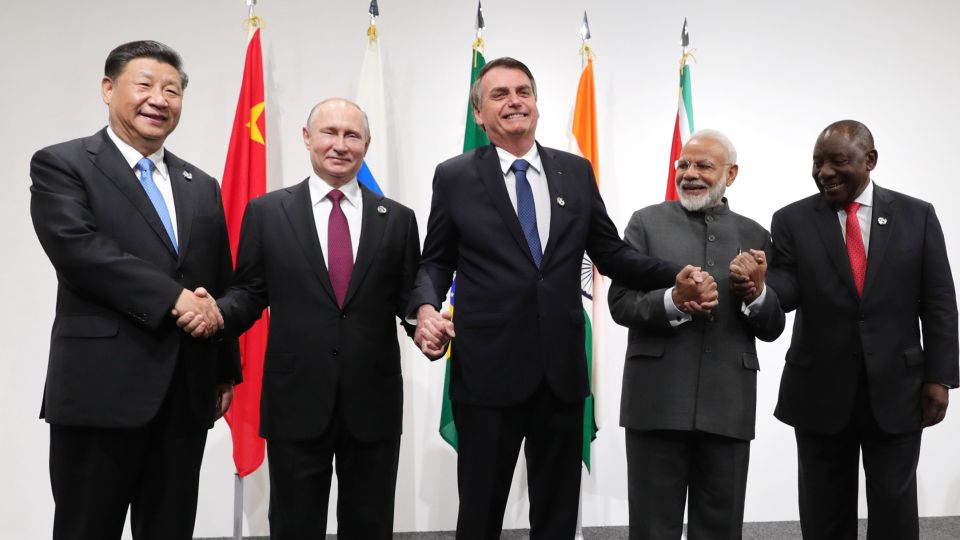
The highly anticipated meeting between president of China Xi Jinping and the Russian President Vladmir Putin at the Shanghai Cooperation Summit (SCO) took place in Uzbekistan on the backdrop of deteriorating relations between the two leaders and the collective west. President Xi and Putin generally showed support for each other and encouraged further cooperation in trade. Moscow is very much in need of a new market for its energy and China welcomes the opportunity to acquire cheap gas. An oil and gas pipeline deal were discussed between Russia, China and Mongolia and it is supported by the president of Mongolia.  Important on the agenda were security concerns for the two nations and their allies. President Putin was more interested in addressing what he considers the unwarranted dominance of the collective west in the international arena and it is no surprise that he is actively seeking for challengers to the status quo.

This meeting, however, is especially vital for a whole other reason since three of the five core members of BRICS were present. It is significant for the future of BRICS, a coalition of five states, namely; Brazil, Russia, India, China and South Africa. In the last BRICS summit hosted virtually by China, BRICS members committed to expanding the bloc and being more inclusive. Notably, countries like Iran, Argentina and other African nations signaled interest to join the bloc. At the moment the future of the bloc seems assertive enough to challenge the dominance of the western coalition led by the United States in global politics. BRICS members have wide and ambitious objectives that surmise into restructuring the current global political and economic order. However, the vital task at hand is that the bloc should not morph into a mere anti-western hegemony coalition and according to the stated objectives of BRICS, the alliance is well poised to aim beyond that.

Therefore, the expansion of BRICS should be strategically based on a careful review of a potential member’s profile. Being hostile to western hegemony should never become the only qualifying quality for any potential member. It is a fact that unilateral decisions by USA with the often-expected assistance from her allies have caused havoc and crippled entire regions, from the Middle East, Eentral and Southern America, Eastern Europe to Northern and sub-Saharan Africa.

These unilateral and sometimes short-sighted actions have earned the United States a fair number of aggrieved enemies seeking to settle scores and they might view BRICS as a stepping stone to that goal. However, this fact may render BRICS a home to less-than-ideal candidates that may not have the long-term interests of the bloc in mind. Neutral states like India are a necessary ingredient for the bloc long-term even though they might seem like a risky partner in the coalition. This is due to India’s close partnership with the collective west.  However, the risk that India poses to the bloc does not lie in her close partnership with the west but in her belligerent and rocky relationship with China. And this relationship is an important chapter in the bloc’s evolution story.

Though leaders of China and India have proven their capacity to address grievances of the two by meeting and talking, a lasting solution to issues of each side’s concern is much needed and will boast the cooperation and trust of the two largest members of the BRICS. Once such differences are sorted, which is not an easy task but it is one task that must be accomplished, then the bloc will have skipped a major hurdle that stifles many promising partnerships in their infancy.

BRICS should make as priority the political and social integration of all its members, moving past the limiting economic partnerships if it is to challenge the west in any meaningful manner. It takes one look across the aisle to notice that most countries in the western coalition, share almost similar socio-political and economic values despites being geographically and ethnically diverse. Avoiding the trap of being merely anti-west is important because, some western allies can be lured into joining the bloc if the latter has a recognizable and meaningful positive impact on global politics. A meaningful impact on the world ranges from having a comprehensive global security framework that ensures world peace, an economic system that is balanced and beneficial to all encompassing detailed and practical solutions to protecting the environment and tackling the crisis of climate change.

Many challenges lie ahead for BRICS in different pockets of the world and members of BRICS+ will need institutions both financial and political to guide in the implementation of the bloc’s policy goals and objectives. This must be done with expected resistance form the western coalition and her institutions. Observing current statements and ambitions of BRICS member states, it is quite clear that in the long-run the bloc must create a separate financial system form the current western one and this involves convincing potential members and the rest of the world that the BRICS alternative is much better. New Development Bank (BRICS bank) can help in selling this agenda by offering financial assistance to different sectors than its current focus of infrastructure and energy.

This is where developing countries in Africa, South America and Asia can play an important role. China has already made significant in-roads on the African continent economically, Russia is making in-roads militarily in places like Mali, Sudan, Central African Republic and in other west African countries.

One key recipe missing is media presence to foster people-to people diplomacy and strengthen cultural ties, an area where the west has excelled. The west has managed to endear herself to Africa despite all their past atrocities on the continent during and after colonialism. The west has achieved this by opening up opportunities within western borders for talented and ambitious individuals from the African continent and overtime this number of western educated and influenced Africans has significantly increased.

When it comes to presence of media from BRICS member states on the continent, there is no competition because the west dominates this area. Though gaining, still China’s CGTN is yet to be felt on ground. For Russia’s RT, arguably, very few know it exist. Advanced Television.com found that in 2020, BBC news in Africa increased its reach to 132 million people a week.

BRICS alliance mechanism aims to promote peace, security, development and cooperation and the surest way to this is through adopting new, unique and innovative approaches to developing alliances and solving problems around the world. This to be felt on ground, as a group or individual member countries, BRICS must invest more in media and sell their ideas of their ideal world they aspire to bring.

BRICS still has an open advantage to expand strategically and create a whole different world, it is made up of emerging economies, a trait that gives its founding members relatability to other developing nations. The alliance, accounts for over 3 billion people which is over 40% of the world’s population and just over a quarter of the global GDP. Therefore, on face value, the alliance has immense potential and this potential has to be realized through strategic expansion. Most importantly, this expansion should not be solely fueled by grievances against the collective west but by a genuine concern for global affairs and a resolute desire to challenge and change the status quo.

By Moshi Israel.

The Writer is a Research Fellow at Development Watch Centre
Ukraine Crisis: China, France and Germany Can Help in Meaningful Dialogue

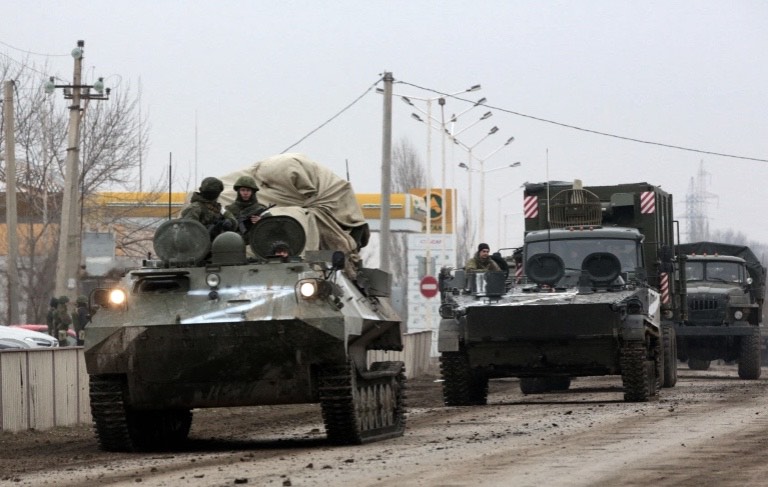
Less than a month since Russian forces invaded Ukraine, over two million five hundred thousand people have fled the country with over two million internally displaced as of today in a war analysts describe as the worst in Europe since World War two, yet there are no signs it is not about to end.

What is clear now is that as politicians in Washington and European Capitals announce back-to-back sanctions against Moscow and threats of total Western isolation against Kremlin, more than politicians, it is ordinary Ukrainians facing the wrath of Russia’s bombs!

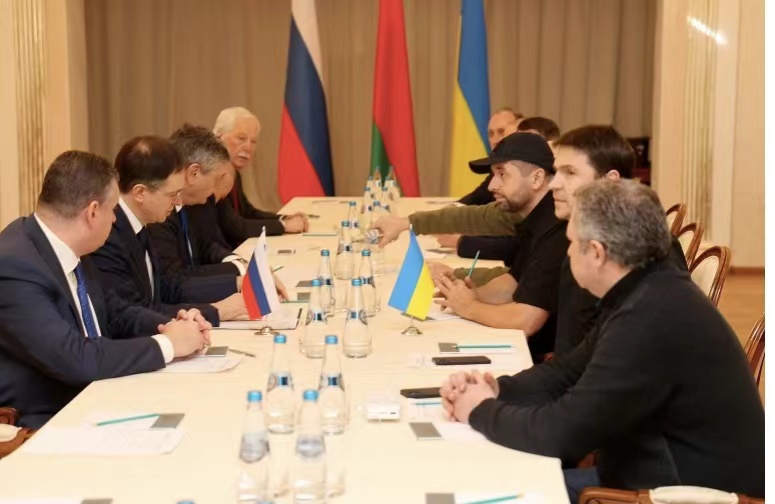
Despite rounds of talks between Russia-Ukraine delegations at Belarus-Ukraine boarders and between foreign ministers of the two countries held in Turkey, not much has been achieved. This does not mean that diplomacy has failed and therefore should be abandoned! Actually, it is the very reason why we should pursue diplomatic path other than Washington’s view of supplying more weapons to besieged Ukraine. This is not to say that like Yemen which has been under Saudi backed coalition bombardment since 2014 with Western supplied weapons be ignored, but to emphasise that continued supplying of weapons to Ukraine will simply prolong the war and suffering of civilians especially that Moscow seems ready to double down attacks! Continued fighting will not end the suffering of people but dialogue in real and earnest terms can easily bring this war to an end.

As suggested by Chinese top diplomat Wang Yi in his 6 points in regard to the Ukraine question: the sovereignty and territorial integrity of all countries should be respected and protected and the purposes and principles of the UN Charter be abided by all in real earnest; security of one country should not come at the expense of the security of other countries; calling on all parties to exercise the necessary restraint; support for all diplomatic efforts conducive to a peaceful settlement of the Ukraine crisis; direct dialogue and negotiation between Russia and Ukraine. Other than using UN to simply condemn Russia without suggesting how to stop the fighting, as Wang stressed: UN Security Council should play a constructive role in resolving the Ukraine issue, and “actions taken by the Security Council should help cool the situation and facilitate diplomatic resolution rather than fueling tensions and causing further escalation”.

While it may not be easy to engage in direct dialogue, signs are that it is not too late! Indeed, on Friday French President Emmanuel Macron and German Chancellor Olaf Scholz had a telephone conversation witht Russia’s Vladimir Putin. Whereas French Presidency says president Putin seemed not ready to announce cease fire which the two leaders demanded for as a condition for talks, the fact that these European leaders are willing to engage Moscow, it is a good start to start a diplomatic path. Therefore, France and Germany having openly declared their support to Ukraine, if joined by a neutral force like China can help to bring the two fighting sides to agreement and silence guns!

While Washington would play a role, one can argue that as of today, the US has no major constructive role to play for it is seen as a spoiler due to their hard stand when it comes to Russia’s security concerns which Moscow claims Washington ignored. In this conflict, the US cannot play a uniting role because Washington sees Russia’s action as Moscow’s direct Challenge to Washington and hence, it is very unlikely that the US would be ready to encourage Ukraine to consider some concession which arguably is key to ending this crisis. Also, shortly after Putin ordered his forces into Ukraine, president Biden announced that Putin’s action had closed any possibility of future engagements. With USA’s self-praise as an indomitable nation, it maybe very hard for them to make a quick U-turn and sit on same table, and for example encourage Ukraine where possible to accept concessions.

On the other hand, France can play a positive role considering the fact that even when Paris joined other countries in sanctioning and condemning Moscow, Paris has always suggested there is still possibility of diplomacy to work. Also, president Macron’s personal negotiation skills and influence in Europe can see him constructively playing a much-needed role. After all, while President Joe Biden once told us that there are no secret codes to foreign policy, that it is all about personal relationships, and about human nature. Equally, from the start, Germany was clear and against anything with potential of escalating the situation. Therefore, one can argue that they are ready to do whatever it takes to cool the situation.

Also, China can play a better role. Historically, when it comes to peace and security, China has the best record among major powers. It has never invaded other countries or engaged in proxy wars, nor have they ever participated in military bloc confrontations, according to facts and words of foreign minister, Wang Yi. Other than opposing power politics, and hegemonies, China has always campaigned for equality urging great powers to respect and uphold legitimate rights and interests of developing countries-be small or medium-sized. Beijing argues this is the sure way the world will achieve lasting peaceful and development stressing it as the best way of building of a community with a shared future for mankind.
If we critically analyse, words of president Zelensky, while responding to David Muir of ABC News on 08th who asked him: “What is your message to Vladimir Putin right now?” Muir had asked president Zelensky that to cease hostilities, Russia was demanding that Ukraine change its constitution to reject any intention to enter NATO and also to recognize Crimea as part of Russia as well as the other two breakaway regions of Donetsk and Luhansk as independent states. Though president Zelensky did not directly say he was willing to compromise, his response suggested a change of tone responding that he was “ready for a dialogue.”
On Ukraine joining NATO, president Zelensky sounded ready for concession stressing that, “I have cooled down regarding this question a long time ago, after we understood that … NATO is not prepared to accept Ukraine. The alliance is afraid of controversial things and confrontation with Russia.”
While, answering the question of if Ukraine was ready to let go the two self-declared republics of Luhansk and Donetsk, if compared to pre-war, president Zelensky appeared somehow reconciliatory noting that: “I think that items regarding temporarily occupied territories and pseudo-republics not recognized by anyone but Russia, we can discuss and find a compromise on how these territories will live on,” Zelensky said. “What’s important to me is how the people in those territories who want to be part of Ukraine are going to live.”

Looking at Ukrainian government’s official released full interview, president Zelensky noted he was ready for what he called a “collective security agreement” that would include Russia. If well analysed, all the above signals it is possible to have successful talks and hence, China, France and Germany should make quick steps in this direction.

Allawi Ssemanda is the Executive Director of Development Watch Centre; a foreign policy think tank.

Russia-Ukraine Peace Talks: Neutral Parties Needed to Leverage Negotiations.

Today marks the 6th day since Russian forces invaded Ukraine in what Russian President Vladimir Putin described as a “military action” aimed at protecting Moscow supporters from a supposedly “genocidal” regime.

The war has already claimed over 200 lives, and forced tens of thousands to flee their homes to neighbouring countries and destruction of properties is on-going. From the look of things, the war is not about to end and Russia seems determined as it advances toward Kiev.

In same way, Western countries are increasing pressure against Moscow with different western Capitals slapping sanctions against Russia. While sanctions may have an impact against Russia in the long run, drawing examples from North Korea, Iran among others countries the West has sanctioned, it is clear that sanctions hardly bring about desired changes and sometimes they severe already poor relations among countries. In this case, dialogue and negotiations remain the best option in addressing challenges among countries.

Indeed, Ukrainian president Volodymyr Zelenskyy after repeatedly expressed willingness to enter dialogue with Russia and addressing president Putin via a recorded video message: “I would like to address the President of the Russian Federation once again. Fighting is going on all over Ukraine. Let’s sit down at the negotiating table to stop the deaths of people,” talks finally started at the Ukraine-Belarus border where both sides agreed to resume them after consultations from their capitals.

Despite Ukrainian president saying he does not expect much from these negotiations, the fact that the  two sides met is a good sign and should be encouraged. Nonmatter how cliché it may sound, talking with each other is better than talking at each other. However, it is evident that unless the two sides and Ukraine’s backers are not ready to compromise, these negations may stale prolonging the war and suffering of people in Ukraine.

To safeguard these talks, a neutral country which has not shown side and with a good record as far as observing international laws such as respecting territorial boundaries of sovereign countries is concerned is a better option and has moral authority to facilitate such negotiations. A neutral guarantor is key for success of negotiations to move well. China among all major powers, only China qualifies. This does not mean other major powers cannot help, but considering that many especially the US and EU have shown sides, they can only watch and perhaps encourage the them than acting as spoilers or continuing with statements that may escalate the situation.

On the other side, China has not shown side and has been calling for diplomacy as the best way of resolving this crisis. Indeed, China’s State Councillor and Foreign Minister Wang Yi has been categorical explaining in five points China’s stand in regard to the Ukraine question maintaining that: the sovereignty and territorial integrity of all countries should be respected and protected and the purposes and principles of the UN Charter abided by in real earnest; stressed that security of one country should not come at the expense of the security of other countries; encouraged all parties to exercise the necessary restraint; expressed support for all diplomatic efforts conducive to a peaceful settlement of the Ukraine crisis; encouraged direct dialogue and negotiation between Russia and Ukraine,  and stressed its belief that UN Security Council should play a constructive role in resolving the Ukraine issue, stressing that “actions taken by the Security Council should help cool the situation and facilitate diplomatic resolution rather than fueling tensions and causing further escalation.”

Even in UNSC emergency session, while the West voted and campaigned for the resolution to condemn Russia, China used that chance and argued concerned parties to consider dialogue and abstained. If critically analysed, this alone is a score that Beijing is neutral on this issue and if given opportunity, Beijing can help to have the two worrying sides resolve their disagreements peacefully and silence guns in Ukraine.

From historical perspective, China’s intention to ensure a peaceful world where countries observe and respect international laws is solid. Beijing has been very consistent with a view of maintaining global security and saving people from suffering due to wars. For example, after France, US and NATO allies invaded Libya in 2011 arguing they wanted to protect civilians from government forces under UN resolution 1674 – Responsibility to protect, after allegations that NATO forces were involved in operations that left civilians injured and others dead, Brazil and China came up with a proposal to ensure protection of civilians and introduced the idea of Responsibility While Protecting (RwP). Because at this time France and NATO allies were the invading forces, they refused to support RwP. China proposed some changes and named a new draft Responsible Protection (RP) which was again rejected by France, US and UK and hence, left plight of civilians during invasion at the mercies of invading forces with little or no hope of ever getting justice.

While some western pundits have claimed that Russia’s invasion of Ukraine gives China a chance to invade and occupy Taiwan, it is important to note that Ukraine Question is very different from Taiwan. While Ukraine is a sovereign country with its territories protected international laws, Taiwan is China’s territory that suggesting China will invade it is like saying China will invade herself. For Taiwan’s case, it can only be unification but not invasion.

Again, as Chinese Foreign Minister observed, when it comes to peace and security, China has the best record among major powers. It has never invaded other countries or engaged in proxy wars, nor have they ever sought spheres of influence or participated in military bloc confrontations.

On top of opposing power politics, and hegemonies, China has always campaigned that great powers respect and uphold legitimate rights and interests of developing countries-be small or medium-sized. Beijing argues this is the sure way together we can achieve a peaceful development and building of a community with a shared future for mankind where small, big, weak and powerful countries all live in harmony.

The writer is the Executive Director of Development Watch Centre; a foreign policy think tank and author of Global Governance and Norm Contestation: How BRICS is Reshaping World Order.  Twitter @AllawiSsemanda


RUSSIA’S GROWING INFLUENCE IN AFRICA & ITS IMPLICATIONS.

During Vladimir Putin’s state of nation address in April, he warned the west that there would be severe consequences if the west had crossed Russia’s red line. This statement not only proved the narrative of a new 21st century cold war, but also showed the confidence of the Kremlin as a potential and confident new global power.

After the fall of the Soviet Union, Russia’s global power dwindled especially in the first decade since soviet collapse (1991-2001). The move from a Communist Style Economy to a somewhat Capitalist economy coupled with a weak drunk leader in Boris Yeltsin, the Russian bear at the dawn of the 21st century was a shadow of its past. Then came Vladimir Putin, who transformed Russia and wanted the fatherland to regain its lost global influence.

In 2007, Times Magazine voted Putin person of the year, crediting him for returning his country from chaos to “the table of world power.” He was also voted World’s Most Powerful person four times between 2013 and 2016 for leading his country into global affairs. He is further credited for revolutionizing Russia’s economy and bringing stability in the country after defeating Chechnya rebels. Arguably, Moscow’s push in World’s affairs portraying Russia as a new Global player has had some positives such as enabling Russia host the 2014 Sochi winter Olympics and 2018 FIFA world cup but also rekindled some old cold war wounds with the western powers.

Russia and Africa: A new frontier?

Unlike Britain, France and Germany and other European powers, imperial Russia didn’t take part in the scramble for Africa nor had any colonial possessions. Fast forward to the cold war, Soviet Russia was a main supporter of revolutionary conflicts on the continent and played a big role in some of the major events on the continent during that period.

But in Putin’s Russia, Moscow is increasingly having a major role on the continent as it tries to compete with other Global Powers such as; China, United Kingdom, France and U.S.A. for the African slice of the cake.

In October 2019, Russia hosted its first ever Russia Africa summit which was attended by 43 African heads of states, and more than 3000 delegates from across Russia and Africa. During the summit, president Putin pledged Russian support to the continent in terms of aid, arms and political support without strings attached. This summit was seen as a statement by the Kremlin to try to restore the old influence the Soviet Union had on the continent. Some analysts argue that Russia is still lagging behind on the continent in terms of influence. Despite this, Moscow’s influence is on rise.  For example, Russia has sent mercenaries to Central African Republic to support the U.N backed government and has also backed the Haftar’s faction against UN backed Libyan government in the now slowing Libyan conflict. Also, Russia is playing a key role in the implementation of nuclear energy on the continent having signed deals with about 12 countries to operate their nuclear facilities whilst Russian state owned and private companies are cutting mining deals in countries such as Angola, Ghana, Cameroon etc. this is a clear indication, that with time, Russia aims at having a foothold on the continent.

Russia has also been in talks with a number of African Countries including among others Sudan and Djibouti to establish their military bases. In Djibouti’s case, analyst attribute Russia’s interest in the country to its strategic location which has made it an area of interest for greater powers with many opening their military bases there. Russia’s interests in Djibouti started way back in 2012, and held talks between 2012 and 2013 on same matter. However, after Russian-Ukrainian crisis over Crimea in 2014, the U.S pressured Djibouti to pause Russia’s advancement which many saw as rivalry against Washington’s interests in the region. Though Russia’s military installation base project seem to have lost momentum, the two countries are still working together in containing piracy.

Though Moscow missed out on Djibouti deal, it has found other potential candidates in Africa to host its military base(s) along the Red Sea, with the most receptive being Sudan. Indeed, in 2017, the then Sudan’s dictator and strongman Omar Al-Bashir, travelled to Sochi where he met his Russian counterpart and the two leaders discussed among others growing the two countries’ cooperation in areas like defence and security. Though signed documents did not include establishing a military base, the Putin – Al-Bashir meeting discussed the subject. In 2020, Russian government published information on its website confirming Moscow was in final stages of building a naval base along Sudan’s Red Sea coast. Moscow explained that a “logistical Support Centre” would be set up in Sudan stressing details of an agreement signed between Sudan’s Prime minister Mikhail Mishutin and Russian side.

However, one can argue that the prospect of establishing a permanent Russian military base in Sudan is now uncertain. The collapse of Sudan’s strongman, Al-Bashir regime in April 2019 and now improved diplomatic relations between Khartoum and Washington in October 2020 arguably makes Russian “protection” to Khartoum less important. In this case therefore, though the need for defence cooperation between Sudan and Russia may still be key, one can argue that the plans for a military base in Sudan are now in limbo since Khartoum is steady courting the Western for a more friendly diplomatic relationships – a journey that started with Washington removing Khartoum from its list of countries that sponsor terrorism and consequently removed the country from sanctions.

Russia’s Eritrean card and game.

Analysts and International Affairs strategists have in recent argued that changes taking place in Eritrea point at possibility of long-term Russian military presence in that country. After the country gained independence in 1991, Eritrea became one of the world’s most closed countries  and one of worst dictatorship on the continent. Important to note is that since the signing of a peace treaty with Ethiopia in and the lifting of UN sanctions late 2018, the once closed country has been on a somewhat diplomatic charm looking for opportunities to break out of its isolation and attract foreign investors.

Consequently, Asmara approached Russia and has been more actively since 2018. In August of that year, Russian foreign minister Sergei Lavrov announced that Russia and Eritrea were negotiating the opening of a “logistics” base on the Eritrean coast.

Other evolutions followed. In preparation for the lifting of UN sanctions, Russian and Eritrean delegates met in October 2016 to discuss their future bilateral relations. Besides which, July 2019, Moscow announced it was lifting its own sanctions against Eritrea which set a stage for the two countries to relate after nearly a decade of sanctions.

However, as things now stand, there is no proof that the plans for a Russian logistics base on Eritrean territory are still pending. Indeed, the closed nature of Eritrean politics and the strategic nature of this type of negotiation make any interpretation hazardous. But in any case, the exchanges between the two countries on matters military continue as before. Indeed, early 2020 Russian defence officials revealed that Kremlin and Asmara had signed the first defence cooperation for Russia to deliver two Russian Ansat helicopters purchased as part of the development of military cooperation with Russia.  “This country is no longer under sanctions. In 2019, a contract was signed with Eritrea on the delivery of two Ansat helicopters in a military modification to transport personnel. The deal is to be fulfilled 2020,” noted Russian defence official.

Russia-Somaliland Option.

Somaliland which belongs dejure to Somalia but is de facto independent since 1991, has been referred to on several occasions as a possible Red Sea host for Russian armed forces. For decades now, Somaliland has been seeking recognition as a full-fledged member of the international community. And it is therefore on the lookout for foreign partners, especially among the great powers who could settle the issue of its status.

In 2017, the possibility of a Russian military base in Somaliland resurfaced. In the same year, while at the Russian embassy in Djibouti, an emissary from the Somaliland government offered to grant Moscow the right to build base at Berbera and if Moscow agreed to reorganize Somaliland as an independent country.  Then, in January 2020, there were reports of the imminent opening of a Russian military base in Somaliland.

However, a month after these reports, Russia’s ambassador to Djibouti described these reports and false denying Russia had plans of recognizing Somaliland as an independent country. If analysed critically, one can conclude that despite having interest in red sea, Russia which has always shown stance against great powers openly intervening in internal affairs of other countries may not be ready to make a U-turn on this by reorganizing Somaliland which Somalia would consider as Moscow interfering in her internal affairs. With that in mind, a conclusion can be made that the future of a Russian military base at Berbera is uncertain and it remains unknown fact.

Broadly, an argument can be made that Russia’s intervention in Middle East particularly in Syria has opened up other possible opportunities for Moscow to enter the Middle East and East Africa. Indeed, since 2015, Russia has been trying to gain more influence in the region and contacts between Russia and those two regions have grown considerably. However, it is important to observe that the limits of Moscow’s diplomatic influence become fairly evident whenever Russia’s ambitions to establish military base on the Red Sea are on the table. In many ways, Moscow’s diplomacy finds its initiatives somewhat baulked by what they see as region’s instability and by the fierce competition offered by the other major powers such as U.S and China.

Therefore, one can conclude that despite Kremlin’s undying interest to have more military bases in strategic areas like the red sea, the chances of a Russian military base seems to be slim and indeed are arguably the object of what should be termed as unreliable reports. However, important to note is that Russian ambitions in Africa and in the Middle East continue unabated. Even with challenges such as the slowdown of diplomatic exchanges forced by the Covid-19 pandemic and its far-reaching economic consequences, Kremlin hopes for a base near the Straits of Bab El-Manded and the Red Sea will remain a priority on Moscow’s regional agenda over the next few years and as night follows the day, one can safely say president Putin will try to achieve this today or “tomorrow”.

Conclusion.

It’s clear that since the rise of Putin in Russia, the country’s global presence has risen to somewhat resemble the global influence of its soviet past. Her rise has risen eyebrows among western powers such as the united states, NATO and even Great Britain. The actions of the Kremlin over the past 20 years such as the annexation of Crimea, alleged poisonings of dissidents in the U.K, alleged cybercrime and election meddling in the U.S have given left rise of the Russia bear a negative outlook in the western world.

Needless to say, Russia has played a major role in global affairs. Through its diplomatic role in major international organizations, it has managed to push through agendas or reject agendas that seem to be pro-western. Russia, being founding member of the BRICS, has used its position to foster development in the developing world. During the ongoing covid 19 pandemic, Russia was the first country to manufacture and distribute its vaccine, Sputnik V Vaccine, which it has shared with other countries and helped in the global fight of the pandemic.  Presently, tens of African countries are expected to receive over 300 million doses of Russians Covid-19 vaccine – Sputnik V Vaccine.

As of now, from security to economic and diplomatic perspective, Russia’s match to Africa seems unstoppable – matching towards achieving Moscow’s ideal world Putin dreams of. A world where Russia is seen as a major player in Global affairs.  However, what is not clear is whether Moscow can achieve her ambitious goals in a short or long run especially with economic challenges occasioned by Covid-19 pandemic and slow economic growth in Russia.  However, no matter the challenges such as mistrust especially from the West and other challenges Moscow may meet along the way, Putin’s Russia has proved to be resilient to emerge victorious in dealing with challenges and criticism from the West.

By Allawi Ssemanda and Rugaba John Paul.


Covid vaccines: Russia, China, India…Who is supplying Africa?

By Marie Toulemonde, The Africa Report. 

Covid vaccination campaigns have kicked off across the globe. But while many developed countries are busy inoculating their populations, the continent is grappling with growing bilateral agreements with foreign laboratories and mobilising its health professionals.

Western countries, perhaps hit harder by the virus, but above all richer, are creating a traffic jam by securing, like Canada, enough vaccines for up to three times their population.

In Africa, deliveries of the vaccines promised by the COVAX aid programme for developing countries are still behind. Faced with the urgent need to contain a second wave that is much more virulent than the first, notably with the South African variant, the AU is releasing funds and some countries are negotiating directly with foreign laboratories.

Vaccine diplomacy

At the end of December, the NGO Oxfam estimated that 70 poor countries would only be able to vaccinate one in ten inhabitants in 2021. Under these circumstances, China and Russia have once again shown themselves to be particularly attentive to the continent’s needs. As early as June, China’s number one, Xi Jinping, expressed his “generosity” at the China-Africa summit by promising African countries that they would benefit from advantageous conditions during the massive distribution of Chinese vaccines.

Unlike Pfizer-BioNTech or Moderna, China and Russia pride themselves on having developed vaccines that are accessible, can be stored in the refrigerator (making them easier to send and store in poorer regions) and, above all, are available.

The majority of the Maghreb countries, due to these numerous advantages, have already ordered several million doses. But concerns about the real effectiveness of Chinese vaccines are growing and Russian deliveries are slow. AstraZeneca’s vaccine, produced by the Indian laboratory Serum Institute of India, is also planning to supply 200 million doses as part of the Covax.


  Countries that have signed bilateral agreements with Laboratories. Map by The Africa Report.

Source: By The Africa Report


Outside Powers Are Making the Conflict in the Central African Republic Worse

Proxy wars pitting France and Chad against Russia and Rwanda threaten to destabilize the entire region while subjecting Central Africans to more violence and instability.

By John A. Lechner, Alexandra Lamarche.

BANGUI, Central African Republic—Citizens of the Central African Republic (CAR) went to the polls on Dec. 27 to select their next president and legislature. But even after the announcement of preliminary results in the early evening of Jan. 4—President Faustin-Archange Touadéra, the incumbent, secured a second mandate with 53 percent of the vote—an enduring sense of vulnerability continues to permeate the country, culminating in numerous attacks from armed groups on key cities including the capital, Bangui.

Just days before the elections, CAR’s constitutional court invalidated former President François Bozizé’s candidacy, leading to the sudden emergence of a rebel alliance that quickly captured towns near Bangui. The military response from Russia and Rwanda on behalf of the Central African government rapidly internationalized the conflict, while the G5—composed of the African Union, United Nations, European Union, United States, and France—finds itself in an awkward position, championing elections that many believe were neither safe nor fair. Touadéra has declared war on the rebel alliance, but many question whether his government represents all Central Africans, and if it has the ability or willingness to take on armed groups.

As a result, the conflict in CAR has become increasingly geopolitical—with France and Chad on one side, and Russia and Rwanda on the other. These actors will only intensify a crisis of overmilitarization in a region suffering from the effects of climate change, instability, lack of good governance, and displacement.

Indeed, the geopolitical stakes, and political division in Bangui, have already exacerbated a dire humanitarian crisis. With the security situation deteriorating rapidly, the international community must now focus on providing Central Africans with desperately needed aid and supplying peacekeeping operations with the funds they need to protect citizens.

Tensions had been mounting between Touadéra and his former boss-turned-rival, Bozizé, since the latter’s contentious return from exile in late 2019. In 2013, a Muslim-majority rebel alliance, Séléka, ousted Bozizé’s largely Christian-dominated government. Before Bozizé fled, he and his government mobilized predominantly Christian self-defense groups—known as anti-Balaka—to arm and resist Séléka’s advance. The result was a brutal civil war, followed by a “stalemate peace;” Bangui signed the latest version with 14 rebel groups in 2019, the Khartoum Agreement. Warlords became advisors to the government, and, despite the parties’ “rejection of violence,” attacks against civilians continued.

In July 2020, Bozizé announced his intention to run for president again—despite an international warrant for his arrest.

But on Dec. 3, CAR’s Constitutional Court ruled against Bozizé’s candidacy. In response, Bozizé called for the opposition bloc—known by the French acronym COD—to put forward one candidate against Touadéra. Then on Dec.19, six rebel groups—3R, the MPC, UPC, FPRC, and two anti-Balaka militias—announced a new alliance, known by the French acronym CPC, and launched attacks on security forces. The next day, the opposition bloc, which includes Bozizé’s party, called for a delay to elections, citing the violence.

The government and the U.N. have linked Bozizé to the armed groups. Indeed, Bozizé has a close relationship with the two anti-Balaka leaders, Maxime Mokom and Patrice-Edouard Ngaissona, as well as MPC’s Chadian head, Mahamat al Khatim. Bozizé met both Al Khatim and Mokom prior to the alliance’s announcement.

The current rebel coalition affirms an important fact in the continuing conflict: “Political and economic power struggles” often trump identity. The CPC, for example, includes 3R—a group founded to “protect Muslims” from anti-Balaka—as well as anti-Balaka responsible for war crimes against Central African Muslims. Many fought against each other in 2013; there is no guarantee that this alliance will last.

The international community was caught off-guard as news of town after town falling to armed groups spread. Russia, Rwanda, and the United Nations Multidimensional Integrated Stabilization Mission in the Central African Republic (MINUSCA) acted quickly. Within days, Russia sent to Bangui 300 “military advisors,” then more troops and helicopters; Rwanda deployed hundreds of troops not “constrained” by U.N. rules of engagement; and MINUSCA received reinforcements, including 300 Rwandan blue helmets stationed in South Sudan.

The result: Most towns were back in government hands. MINUSCA recaptured the town of Bambari, losing three peacekeepers in the process. The country’s armed forces (FACA)—with the support of the Russian private mercenary company, Wagner Group, and Rwanda—retook Mbaiki, Boali, and Bossembélé.

Despite these security issues, the G5 and the government in Bangui pursued a strategy of “elections at all costs.” As a result, the Dec. 27 vote was on schedule, but it was not safe. Electoral convoys were attacked; in some towns armed groups destroyed ballot boxes. In 29 of CAR’s 71 sub-prefectures, no voting took place; six sub-prefectures held only a partial vote.

Still, in many areas Central Africans turned out in surprisingly high numbers to voice their exasperation with armed groups and Bozizé’s attempted coup.

Increased fighting in CAR leads to more displacement and humanitarian crises. At present, more than 2.8 million Central Africans—out of the country’s 4.9 million population—need humanitarian assistance. Recent election violence has forced close to 120,000 to flee their homes—half of which have sought refuge in neighboring countries. Now ordinary citizens find themselves in even greater danger as the delicate balance of power shifts among local politicians, international actors, and armed groups.

Bozizé has been the primary catalyst for this shift.

Since coming to power in 2016, Touadéra has failed to expand state authority much beyond the capital. For Gervais Lakasso, a prominent civil-society leader, “Touadéra doesn’t have support in the provinces. They like opposition candidate Martin Ziguélé because he wants to fight the armed groups.”

But the most recent attacks have shown that the FACA is weak and ill-equipped. Gervais adds, “It’s clear that Russian training did not do much. FACA fled immediately.” Perhaps hundreds deserted in the current fighting. For many in Bangui, this was a shock; it seemed that FACA was becoming a professional force, capable of retaking the country.

Maka Gbossokotto—a CAR newspaper editor—was not surprised: “Three months of training [the standard] is not enough, they aren’t prepared to go to the front.” Viola Giuliano, of the Center for Civilians in Conflict, explains “there are two defense forces. The first is the presidential guard, which has privileged access to equipment and means. The second, ‘normal’ FACA, is deployed outside Bangui in deplorable conditions. No fuel for patrol. Salaries not paid for months and rotations are often delayed.”

And while Russia, Rwanda, and MINUSCA have beefed up their presence, the conflict has long been an international one. It’s clear that proxy wars are a major source of instability in CAR. French and Chadian networks support Bozizé and armed groups such as the FPRC, 3R, and MPC; Russian networks back the increasingly corrupt Touadéra government.

Africa is an important destination for Russia’s defense industry, as Moscow supplies 49 percent of the world’s arms exports to the continent (Algeria and Egypt represent a significant portion of that number). CAR provides Russia the chance to project great power status to both African markets and geopolitical rivals. Most importantly, however, Moscow can achieve this on the cheap. Private military contractors like Wagner Group—funded through local mineral concessions—plant a Russian flag in Africa; Bangui, in turn, receives hands-on assistance for its armed forces that no other country is willing to provide.

France’s economic and political interests in the region reflect a long-standing and deeply unpopular history of colonialism, followed by post-colonial military interventions.

Thierry Vircoulon, an expert at the French Institute of International Relations (IFRI), argues that France and Russia are locked in a proxy war, “but the stakes are not CAR. This war of influence in CAR is part of the bigger picture of Russo-French relations since the crisis in Ukraine.” While other countries may represent more important strategic interests—such as Libya, Syria, or Ukraine—Moscow’s presence in CAR is a cost-effective means to undermine France’s perceived influence over its former colonies.

On a regional level, outside intervention may represent the interests of powerful government officials, but not governments themselves. For example, Chadian involvement in the conflict, according to Gervais, surrounds elites’ investment in cattle.

This is not to say that the conflict in CAR is just a proxy war. At a local level, politicians seek international support for their own individual aims. Touadéra made a political decision when he “surrendered a great part of [CAR’s] sovereignty to pro-Kremlin security emissaries.” But this is nothing new. CAR’s aging politicians—the same faces have been around for decades—have a tradition of outsourcing the security of their politically weak regimes to outsiders.

All participants—from powerful international organizations to ordinary citizens—are now walking a tight-rope.

The G5, according to Thierry, “supported a mockery of an election, and appeared to side with Toudéra. They didn’t say anything when the government decided to withdraw electoral rights for 600,000 (mostly Muslim) refugees” that fled into surrounding countries since the outbreak of the civil war.

In fact, many locals now view Russia, Rwanda, and MINUSCA as partisan supporters of Touadéra. Bozizé, in turn, has little standing following his attempted coup. Viola put it simply: “The fact that he turned to armed groups to undermine the elections suggests that he doesn’t have sufficient support among civilians to mobilize popular uprisings.”

A second round may have been a chance to legitimize a flawed first round. But Touadéra won with just over 53 percent of the vote, in an election in which 40 percent of the country’s regions could not participate. Add to this the opposition’s claims of fraud, and many Central Africans believe, as Gervais notes, “that this was an electoral masquerade, in which the goal was to reelect Touadéra in the first round.”

The results still show, though, that in areas that did vote Touadéra has plenty of supporters. It appears the G5 will accept the results, which the constitutional court confirmed on Jan. 18. Nine opposition leaders, however, have jointly asked for the elections to be annulled.

As CAR enters another crisis, one thing is clear: Elections are not a panacea. Touadéra has promised war against the armed groups. Bangassou, a town in CAR’s southeast, fell to Bozizé’s CPC for two weeks. On Jan. 2, security services repelled attacks on Damara, Touadéra’s hometown, only an hour’s drive from Bangui. Between Jan. 7 and 9, rebels were pushed back as they advanced on Bouar—a key market town along CAR’s main trade route to Cameroon.

Finally, on Jan. 13 rebel groups stormed the capital. National forces and U.N. peacekeepers successfully repelled rebel advances—losing one Rwandan peacekeeper in the effort. But threats still loom as armed factions remain stationed along the outskirts of Bangui.

Armed groups’ attempts to take over Bangui and other towns have terrified civilians, disrupted trade routes, and limited humanitarian access to those in need. They are worsening an already critical humanitarian crisis. An international response, therefore, should prioritize Central African civilians first.

First, concerned governments and donors must address the country’s humanitarian needs; CAR received only 65 percent of its funding needs in 2020, and 51 percent of its COVID-19 related funding needs.

The second priority must be reform. After so many failed attempts at peace, the reality remains that territorial integrity is crucial for CAR’s stability. But FACA’s recent performance shows that they cannot guarantee that integrity on their own and that the international community should continue to push for security sector reform, not simply more arms or troops.

Like other fragile countries, CAR’s government, and its international allies, have failed to fund and enact a comprehensive response in good faith; one that would improve governance, strengthen the FACA across the country, quell armed violence, and protect Central Africans.

CAR is much more than a “security vacuum” in the region; in fact, many of the sources of the country’s instability come from beyond its borders. But the increasingly international nature of the conflict, and the focus on military solutions, will continue to overshadow the socioeconomic roots of CAR’s insecurity. Unfortunately, half-funded programs, and half-hearted reforms will only to result in half-baked solutions that lead to more instability, displacement, and death.

This analysis was first published by Foreign Policy.


Desperate Measures: The Effects of Economic Isolation on Warrying Powers.

Erik Sand.

Scholars and strategists have long debated whether cutting off an opponent’s trade is an effective strategy in war. In this debate, success or failure has usually been judged based on whether the state subjected to economic isolation surrenders without being defeated on the battlefield. This approach, however, has missed a more important way in which economic isolation affects its target: strategy. Economic isolation constrains a state’s strategic choices and leaves its leaders to choose from the remaining options, which are almost always riskier. As analyses of German decision-making in World Wars I and II demonstrate, these riskier strategies often involve escalating the conflict at hand.

How does a state’s access to the international economy affect its strategy to prevail in war? This question bears on some of the most important international challenges facing the United States today. Economic sanctions have become a frequent tool in American foreign policy — witness the current campaigns of “maximum pressure” against Iran, North Korea, and Venezuela as well as increased economic sanctions against Russia and the return of the embargo against Cuba.1 The United States would almost certainly expand such measures as part of its strategy were one of these disputes to escalate into open conflict. More importantly, perhaps, a strategy of economic isolation is already being explicitly discussed as an option in the event of a war between the United States and China. China is highly integrated into the international economy, and some U.S. strategists argue that blocking the Strait of Malacca to disrupt China’s supply of oil would be a good alternative to the “AirSea Battle” concept, whose advocates call for strikes against sensors and long-range weapons located in mainland China to reduce threats to U.S. forces in the region at the start of a conflict.2 On the other hand, not all potential U.S. adversaries are so well connected to the international economy. North Korea, for example, maintains a national ideology of self-sufficiency and does its best to isolate itself from the world, to avoid being vulnerable to such maneuverings. If the United States found itself at war with either of these countries, what would a strategy of economic isolation accomplish? Would it lead to victory?

The traditional scholarly answer is “no”: Industrial economies are sufficiently robust and economic isolation is sufficiently difficult such that states facing economic isolation can easily adapt, except in extraordinary circumstances.3 This article challenges that claim. While economic isolation alone may not lead directly to defeat, it places important constraints on a power’s strategic decision-making by limiting the options that are available. Economically isolated powers tend to pursue riskier strategies, often launching attacks that expand the conflict at hand. These broader conflicts then frequently end in defeat. Moreover, this effect holds regardless of a state’s prewar level of economic integration.

In the first section of this article, I begin by reviewing the debate surrounding the potential U.S. strategies in the event of a conflict with China, before discussing the principal existing arguments about how prewar economic integration affects wars and the effects of economic isolation during war. In section two, I develop a theory of how economic isolation leads to risky decision-making, identifying two ways in which economic isolation impacts a country’s decision-makers as well as two types of obviously risky strategies. I briefly discuss case selection before exploring two critical examples of economic isolation in sections three and four: Germany in World Wars I and II. I conclude the article with a discussion of the relevance of these two cases today and the implications of my analysis.

Source: Read full article on Texas National Security Review.