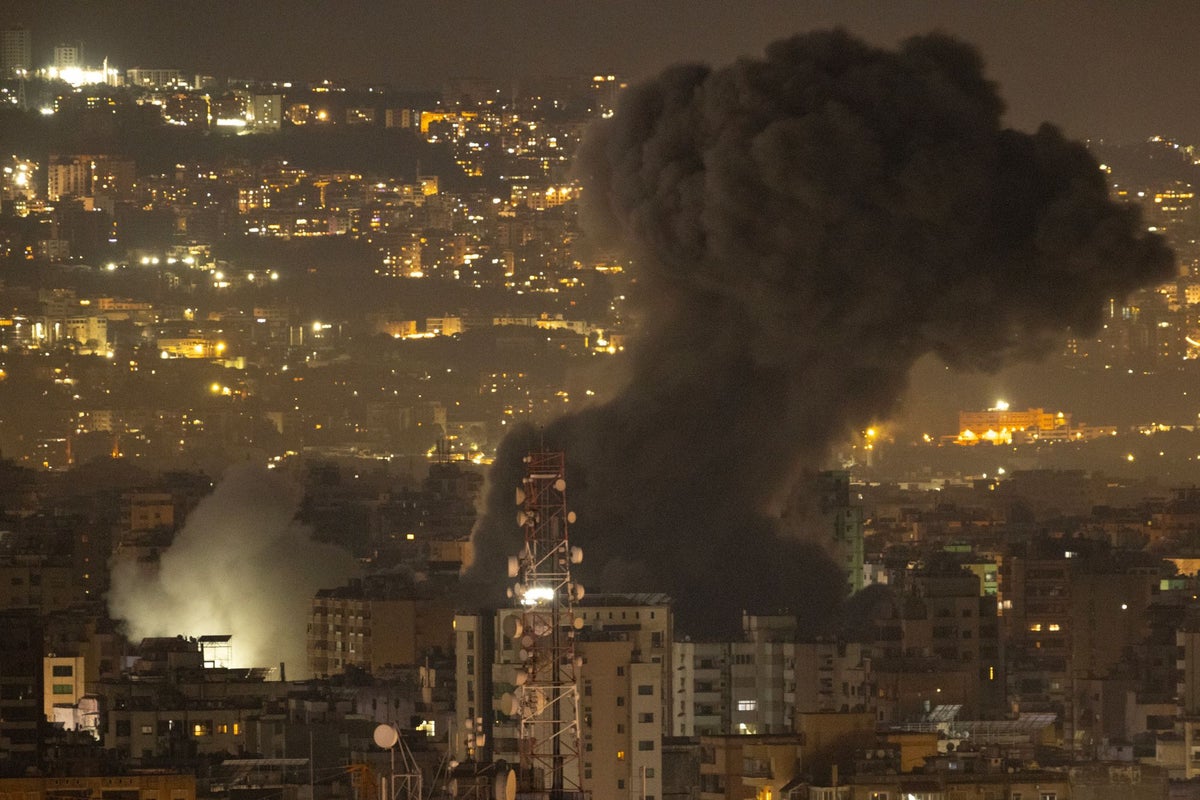
USA-Israel War Against Iran Is Ilegal & Sets Cements Precedent  

In 2019, as a doctoral student of International Relations, I read the United States of America (USA) media coverage of the 2003 Iraq invasion. I read all the USA major print media outlets’ coverage of the war starting from a month before the USA invaded Iraq until their withdrawal  (20th February 2003- December 2011).

I was reading for my research which focused on America’s securitization of foreign policy to legitimize Washington’s extraordinary measures during the USA’s illegal wars. From the said coverage, it was clear: Op-Eds and editorials in American media  justified USA’s invasion of Iraq framing it as “liberation” of the country.

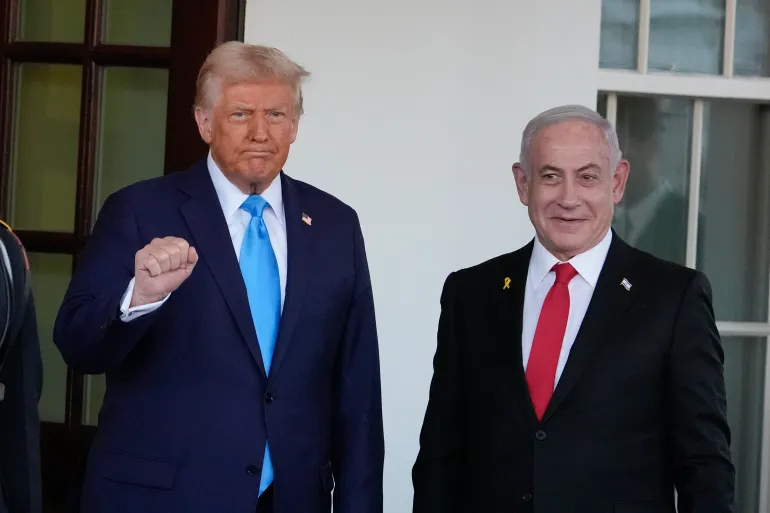
Twenty-three years later, we are watching news especially on American Televisions networks, where men and women in suits continue to tell us that the America-Israel invasion of  Iran is liberation of the country.  Never mind that this so-called liberation launched by President Donald Trump and his friend, Israeli Prime Minister Benjamin Netanyahu claimed the lives of at least 168 innocent school children aged between 7 and 12 years when the U.S bombed Shajareh Tayyebeh girl’s school on the first day of the war!

The unique part with this war is that it is not only an  illegal war but its elements of war crime are publicly advertised on social media by the U.S president before and after committing them. For example, the U.S president Donald Trump has severally boosted after US forces targeting civilian infrastructure such as bridges and energy which experts assert is against international law.  Indeed,  over 100 International Law Experts including former government legal advisors and academics from institutions such as Harvard, Yale, and Stanford among others warned that the war violates the UN Charter and constitutes war crimes.

The United Nations Charter — a document the USA helped draft and solemnly ratified — prohibits, under Article 2(4), the use of force against the territorial integrity of any sovereign state. This Charter gives very limited exceptions where a country would launch an invasion against the other. These exceptions are: where a country is exercising self-defense under Article 51, and this is triggered only by an actual armed attack, or explicit authorization from the UN Security Council under Chapter VII.  For this war, neither of these condition exist. What exists instead is a manufactured urgency — intelligence assessments of intent, threat projections. Even the USA intelligence confirmed that Iran was not a threat to Washington. Just days after USA and Israel launched their war against Iran,

Tulsi Gabbard, the director of US National Intelligence, referring to USA’s June 2025 strikes against Iran’s nuclear facilities, Gabbard told Senate Intelligence Committee hearing that “as a result of Operation Midnight Hammer, Iran’s nuclear enrichment program was obliterated…There have been no efforts since then to try to rebuild their enrichment capability.” With this, one can confidently say Iran was not a threat to the USA and hence, the claim that Washington and Tel Aviv attacked Iran as a preemptive option cannot stand.

Targeting Civilians Infrastructure: A Rhetoric of War Crimes

Bombing a hospital is not a strategy. It is a war crime. Common sense is, calling the target ‘dual-use’ does not change the bodies in the rubble.

Since the start of this war,  we have watched and with mounting horror the rhetoric from Washington regarding this war. From the President of the USA to his Secretary of War, Pete Hegseth, explicitly floated the idea of targeting civilian infrastructure inside Iran. “Tuesday will be Power Plant Day, and Bridge Day, all wrapped up in one, in Iran. There will be nothing like it!!!” Trump posted on Truth.  From an international law perspective, such threats are not a military strategy but a textbook definition of war crimes.

The USA which has always presented itself as a guardian of international law must understand that International humanitarian law, enshrined in the Geneva Conventions of 1949 and their Additional Protocols of 1977, are not a mere suggestion but a binding law. The principle of distinction — one of the oldest and most fundamental rules of armed conflict — requires warring parties at all times to distinguish between combatants and civilians. They must distinguish between military objectives and civilian objects.  These are not aspirations but legal obligations that carry individual criminal responsibility under the Rome Statute of the International Criminal Court.

In this war, we have already seen the USA and Israel bombing Iran’s universities, and hospitals. Personally, when I watch such news, I think of the students cramming for exams in libraries. When I read about bombing Iranian hospitals, what comes into my mind are nurses, doctors and the patients who cannot evacuate. When research hubs and scientific institutions are designated as threats, I think of the scientists — the oncologists, the climate researchers, the engineers — who are civilians by every measure of international law. Targeting them is not collateral damage. It is a deliberate attack on protected persons and protected sites, which constitutes a grave breach of the Geneva Conventions.

Africa: To Pay for Trump -Netanyahu’s War of Choice

From history, we have seen that Africa often times absorbs the shock-waves of conflicts it had no hand in starting.

Aware that Iran sits astride the Strait of Hormuz, through which roughly 20 percent of the world’s traded oil flows daily, any sustained military disruption to that passage guarantees disruption.

Countries like Uganda, Kenya, Tanzania, Senegal, Ethiopia, Ghana, etc will suffer  fuel price shocks that cascade through every all other sectors namely: transport, agriculture, manufacturing, etc. Consequently we will see inflation rising which will add to the suffering of ordinary families, already stretched due to slow economic recovery thanks to covid-19 pandemic and Trump’s tariffs.

USA-Israel’s Illegal War, A Bad Precedent

For smaller and middle-power nations, this war must be a wake up call. Just months after threatening to take over Greenland which shocked most European powers, Trump invaded Venezuela – a sovereign country and abducted the president and his wife and took them to the U.S as he boasted how he will own and control Venezuela’s oil! While many countries gave this issue a blind eye, Trump decided to invade Iran.  Should the world normalize this law of the jungle?

For decades, Western countries demanded as they lectured smaller states to respect the sovereignty of others, submit to international courts, and comply with UN resolutions. Sadly, when smaller or middle powers are attacked by Western powers in violation of the said rules, we see no opposition from European friends!

It is this double standard that erodes the confidence of the Global South in the rules-based order. The West’s response to Israel’s war against Gaza and their response to the Russia-Ukraine crisis exposed the West greatly. If the West is not careful, America-Israel’s war on Iran may complete this erosion. Does this matter? Yes. A world without enforceable rules, the powerful do not become safer — they become lonelier, and eventually, more vulnerable. History does not reward empires that mistake impunity for strength.

The writer is a senior research fellow at the Development Watch Centre.

Over 100 International Law Experts Warn: U.S. Strikes on Iran Violate UN Charter and May Be War Crimes

The United States and Israel initiated strikes on Iran over one month ago, on February 28, 2026. The attack was a clear violation of the United Nations Charter. The conduct of the war, and statements of U.S. officials, also raise serious concerns about violations of international humanitarian law, including potential war crimes. We have written the below statement together with over 100 U.S.-based international law experts, to detail our profound concerns about the war. The letter is signed by international law experts across the United States, including senior professors; leaders of prominent international law associations, non-governmental organizations, and legal clinics; former government legal advisors; and military law experts and former Judge Advocates General (JAGs).

We, the undersigned U.S.-based international law experts, professors, and practitioners write to express profound concern about serious violations of international law and alarming rhetoric by the United States, Israel, and Iran in the present armed conflict in the Middle East.

Due to our connection to the United States, our focus here is on the conduct of the U.S. government, but we remain concerned about the risk of atrocities across the region including the continuing risks posed by the Iranian government to Iranians through violent crackdowns on dissent, and to civilians across the Middle East through Iran’s ongoing unlawful strikes on civilian infrastructure using explosive weapons in densely populated areas.

One month has passed since the United States and Israel launched strikes across Iran. The initiation of the campaign was a clear violation of the United Nations Charter, and the conduct of United States forces since, as well as statements made by senior government officials, raise serious concerns about violations of international human rights law and international humanitarian law, including potential war crimes.

We collectively affirm the importance of equal application of international law to all, including countries that hold themselves out as global leaders. Recent statements from senior U.S. government officials describing the rules governing military engagement as “stupid” and prioritizing “lethality” over “legality” are profoundly alarming and dangerously short-sighted. These claims, particularly in combination with the observable conduct of U.S. forces, are harming the international legal order and the system of international law that we have devoted our lives to promoting.

The war, which is costing U.S. taxpayers between $1-2 billion each day, is imposing significant harm to civilians in the region, has resulted in the loss of hundreds of civilian lives across the Middle East, and is causing serious environmental and economic harms.

We write to express our concern about 1) jus ad bellum, or the decision to go to war, 2) jus in bello, or the conduct of hostilities, 3) rhetoric and threats from senior U.S. officials and their allies, which portend further abuses, and 4) the decimation of civilian harm mitigation structures within the U.S. government as a part of U.S. Secretary of Defense Pete Hegseth’s “gloves off” approach to warfare.

  1. Jus ad bellum concerns: The strikes launched by the United States and Israel on February 28, 2026 clearly violated the United Nations Charter prohibition on the use of force. Force against another state is only permittedin self-defense against an actual or imminent armed attack or where authorized by the UN Security Council. The Security Council did not authorize the attack. Iran did not attack Israel or the United States. Despite the Trump administration’s varied and sometimes conflicting claimsto the contrary, there is no evidence that Iran posed an imminent threat that could ground a self-defense claim. Many international law experts have concluded that Israel and the United States’ actions violate the UN Charter, including the President and President-elect of the American Society of International Law, and the President of the American Branch of the International Law Association; UN Secretary-General António Guterres also condemned the attacks as undermining international peace and security.
  2. Concerns about violations of international humanitarian law: The laws of armed conflict constrain the conduct of hostilities of all parties to the ongoing conflict. We are concerned that these fundamental rules may have been violated, including in the context of reported strikes on civilians and civilian objects such as political leaders who have no military role, oil and gas infrastructure, including South Pars, and water desalinationplants. On March 19, UN High Commissioner for Human Rights Volker Türk condemnedstrikes on energy infrastructure, noting their “disastrous” impacts for civilians.

We are seriously concerned about strikes that have hit schools, health facilities, and homes. The Iranian Red Crescent reports that “67,414 civilian sites have been struck, of which 498 are schools and 236 health facilities.” A report by leading civil society organizations found that at least 1,443 Iranian civilians, including 217 children, were killed by U.S. and Israeli forces between February 28 and March 23.

The strike on Minab primary school is particularly concerning. On February 28, Shajareh Tayyebeh Primary School in Minab, Iran, was struck, resulting in the deaths of at least 175 people, many of them children, according to Iranian officials. Based on easily accessible online information and commercially available satellite imagery, it appears the building had been used as a school for a decade. President Trump denied U.S. responsibility, falsely stating that “It was done by Iran.” However, a preliminary investigation by the Department of Defense reportedly determined that the U.S. conducted the strike, and the targeting had been based on outdated intelligence. The strike likely violates international humanitarian law, and if evidence is found that those responsible were reckless, it could also be a war crime. The strike is among the deadliest single attacks by the U.S. military on civilians in recent decades.

  1. Concerns about rhetoric and threats from senior officials. We are deeply concerned about the dangerous rhetoric government officials have engaged in during the war, including:
  2. Threatened denial of quarter: On March 13, Secretary of Defense Pete Hegseth stated“We will keep pushing, keep advancing, no quarter, no mercy for our enemies.” In international law, it is “especially forbidden” to “declare that no quarter will be given,” a prohibitionalso set out in the Department of Defense’s own law of war manual. Hegseth’s statement likely violates international humanitarian law as well as the U.S. War Crimes statute 18 U.S.C. 2441. Ordering or threatening no quarter is a war crime.
  3. Dismissal of rules of engagement and international law: Secretary of Defense Hegseth’s “no quarter” statement followed similarly alarming statements by the Secretary, including on September 25, 2025and March 2, 2026that the U.S. does not fight with “stupid rules of engagement.” On January 8, 2026 President Trump had made the disturbing comment that “I don’t need international law.” On March 13, he stated that the U.S. may conduct strikes on Iran “just for fun.”
  4. Threats on energy infrastructure: President Trump threatenedon March 13, 2026: “I could take out things within the next hour, power plants that create the electricity, that create the water… We could do things that would be so bad they could literally never rebuild as a nation again.” International law protects from attack objects indispensable to the survival of civilians, and the attacks threatened by Trump, if implemented, could entail war crimes. On March 21, President Trump further threatenedto “obliterate” power plants in Iran. U.S. Ambassador to the United Nations, Mike Waltz, defended power plant attacks the next day, and also said that striking nuclear power plants was not off the table. It is prohibited to attack civilian energy infrastructure. If a power plant has both civilian and military purposes (“dual-use”), it may be considered a military objective where it makes “an effective contribution to military action” and the attack “offers a definite military advantage.” However, any strike must respect the principles of proportionality and precautions in attack. The proportionality principle prohibits attacks expected to cause incidental civilian harm that would be excessive in relation to the military advantage. The civilian harm to be considered includes foreseeable reverberating or indirect harm. In any attack, “all feasible precautions” must be taken to avoid civilian harm.

Attacks on nuclear power plants, even if they have a military purpose, require particular care because of the high risk of releasing radiation and radioactive material and consequent severe harm to the civilian population. Such a strike could harm the health and safety of millions of civilians.  On March 23, 2026, the ICRC President Mirjana Spoljaric Egger expressed her deep concern, noting that “War on essential infrastructure is war on civilians” and described threats to nuclear power plants as “Most alarming.”

  1. Concerns about institutional safeguards against further violations: Since the start of the second Trump administration, the Defense Department under Secretary Hegseth has deliberately and systematically weakenedthe protections meant to ensure compliance with international humanitarian law. This includes removing senior military lawyers without publicly citing misconduct, and replacing the Army, Navy, and Air Force judge advocates general, directly undermining legal oversight of combat operations. It has also abolished “civilian environment teams” and other mechanisms specifically designed to limit harm to civilians during operations. The 2026 National Defense Strategy omits references to civilian protection and international law entirely. These changes are especially concerning in light of Defense Secretary Pete Hegseth’s comments that rules of engagement interfere with “fighting to win.”

We are gravely concerned that the conduct and threats outlined here are causing serious harm to civilians in the Middle East, and that they also contribute to escalating the conflict, damaging the environment and the global economy, and that they risk degrading the rule of law and fundamental norms that protect every nation’s civilians. Public statements by senior officials indicate an alarming disrespect for the rules of international humanitarian law accepted by states, and which protect both civilians and members of the armed forces.

We urge U.S. government officials to uphold the UN Charter, international humanitarian law, and human rights law at all times, and to publicly make clear U.S. commitment to and respect for norms of international law.

We remind all states of their legal obligations not to aid or assist the United States, Israel, or Iran in the commission of internationally wrongful acts, as well as to cooperate to bring to an end through lawful means serious breaches of peremptory norms of general international law (jus cogens) including the prohibition of aggression and the basic rules of international humanitarian law.

We also urge the U.S. governments’ allies and cooperating partners to take steps to respect and ensure respect for international humanitarian law, in line with Common Article 1 of the Geneva Conventions and associated customary international law. The United States has itself acknowledged that states should seek to promote adherence by others to international humanitarian law. The International Committee of the Red Cross 2016 Commentary on the First Geneva Convention of 1949 provides that a state is “in a unique position to influence the behavior” of partner states where the state “participates in the financing, equipping, arming or training of the armed forces of a Party to a conflict, even plans, carries out and debriefs operations jointly with such forces.”

Source: Just Security

Thought Iraq was a blunder? Iran is far worse

EDITOR’S NOTE: Ivo Daalder, a former U.S. ambassador to NATO, is a senior fellow at Harvard University’s Belfer Center and host of the weekly podcast “World Review with Ivo Daalder.” He writes politico‘s From Across the Pond column.

Trump’s decision to join Israel in a war against Iran is a far bigger strategic error, and one with far bigger strategic consequences.

Like many, I used to believe that former U.S. President George W. Bush’s decision to invade Iraq in 2003 was the biggest strategic mistake America had made, at least since the Vietnam War.

That is, until now.

U.S. President Donald Trump’s decision to join Israel in a war against Iran is a far bigger strategic error, and one with far bigger strategic consequences. The reasons for this are many, ranging from the immediate impact on the region and the global economy to the longer-term upshots for Russia and China, as well as the repercussions for U.S. alliances and America’s global standing.

That much is already clear — and we’re only three weeks in.

Let’s start with the similarities: Much like the Iraq War, the war against Iran began based on the presumption that the regime in power would swiftly fall and that a new, more moderate and less antagonistic one would take its place. In both instances, the idea was to remove the greatest destabilizing threat in the Middle East — Saddam Hussein’s regime in the initial case, the theocratic dictatorship in Tehran in the latter — through the swift and decisive use of military force.

But while Bush understood that defeating a regime required ground forces, it seems Trump simply hoped that airpower alone would suffice. As a result, Hussein’s regime fell swiftly — though Bush did vastly underestimate what would be required to rebuild a stable, let alone a democratic, Iraq in its place. But the Iranian government, as U.S. intelligence officials themselves have testified, “appears to be intact” despite Israel killing many of its key political and security leaders through targeted strikes.

Focusing on the region at large, Bush’s misjudgment eventually contributed to a large-scale insurgency, which strengthened Iran’s influence in Iraq and the wider Middle East. In contrast, Trump’s miscalculation has left in place a regime that, aside from assuring its own survival, is now singularly focused on inflicting as much damage on the U.S. and its allies as it possibly can.

Iranian drones and missiles have already attacked Israel and the Gulf states, targeted critical energy production facilities and effectively closed the Strait of Hormuz, which hosts one-fifth of the world’s oil and gas export transits.

Less than a month in, the world is now witnessing the largest oil and gas disruption in history. And as the fighting escalates to include gas and oil production infrastructure, the global economic consequences will be felt by every single country for months, if not years, to come — even if the conflict were to end soon.

The damage that has already been inflicted on the global economy is far greater than the economic consequences of the Iraq War in its entirety.

But that’s not all. Geopolitically, the U.S.-Israel war with Iran will also have far greater reverberations than the war in Iraq ever did.

For one, the Bush administration spent a lot of time and effort trying to get allies on board to participate in and support the war. It didn’t fully succeed in this, as key allies like Germany and France continued opposing the war. But it tried.

Trump, by contrast, didn’t even try to get America’s most important allies on board. Not only that, he even failed to inform them of his decision. And yet, when Iran responded predictably by closing the Strait of Hormuz, the U.S. president then demanded allies send their navies to escort tankers — despite the U.S. Navy so far refusing to do so.

And while it’s true that Iraq left many U.S. allies — even those that joined the war, like the U.K. — deeply scarred, Iran has convinced U.S. allies they can no longer rely on the U.S., and that Washington is now a real threat to their economic security.

That, too, will have a lasting impact well beyond anything the war in Iraq did.

Finally, the fact remains that when Bush decided to invade Iraq, Russia and China were still minor global powers. Russian President Vladimir Putin was only just starting his effort to stabilize the economy and rebuild Russia’s military power, while China had just joined the World Trade Organization and was still a decade or more away from becoming an economic superpower. In other words, America’s blunder in Iraq occurred at a time when the strategic consequences for the global balance of power were still manageable.

Trump’s Iran debacle is occurring at a time when China is effectively competing with the U.S. for global power and influence, and Russia is engaged in the largest military action in Europe since the end of World War II.

US-Israel Attack on Iran: Time to Implement the Global Security Initiative

Starting on 28th February 2026, the United States of America working hand-in-hand with Israel have been striking at Tehran with heavy military artillery in an operation that has come to be dubbed “Epic Fury.” Less than a day in, several high ranking officials in Iran’s establishment had already lost their lives most notably, the country’s Supreme Leader Ayatollah Ali Khamenei, the Islamic Revolutionary Guard Corps commander Gen Mohammad Pakpour, the Defence Minister Brig Gen Aziz Nasirzadeh, and the Defence Council secretary Ali Shamkhani.

With the Red Crescent reporting that at least 200 Iranians have already lost their lives too and more than 700 injured, the US-Israel assault has undoubtedly raised questions pertaining to its legitimacy under international law.

Per the United Nations Charter (Article 2(4)), it is established that states are to refrain from the use of force targeting other sovereigns. What Washington has sought to do then, is argue that its mission in Iran is covered by the exception of self-defence provided for in the said instrument’s Article 51. In their public statements, they have described the attacks as “pre-emptive.”

In the history of warfare however, one will hardly find a party who upon resorting to violence does not bother to justify their conduct as warranted. Consequently, standards have been devised overtime for the international community to test claims of this nature. For self-defence, as Marko Milanovic a public international law scholar at the University of Reading has explained, the party seeking to rely on it must provide unambiguous evidence either of the harm already caused or destruction likely to have been caused if the measure in question had not been taken. In other words, they cannot rely on speculation or generalizations.

Unfortunately, all that President Trump has said so far falls short of this bar. The American leader for instance, has purported that Tehran is pursuing development of Nuclear weaponry something that is not only denied by the Middle Eastern nation but is also disputed by third parties. The International Energy Atomic Agency thus, has severally retained that there is no information supportive of Washington’s assertions. Oman’s Foreign Minister who also doubles as the chief mediator of the US-Iran talks coming immediately before all hell broke loose has equally confirmed that Iran had committed to “never, ever have nuclear material that will create a bomb.”

What these developments appear to be depicting then is but an extension of aggression that has come to be the hallmark of Trump 2.0. Think here about the tariffs regime that even his own Supreme Court declared illegal, the threats to forcefully takeover Greenland and Canada, the invasion of Venezuela etc. If the world does not wake up to the new reality in time, we risk plunging ourselves in a global order ruled by the laws of the jungle where survival for the fittest becomes the order of the day.

In response to this state of affairs, one of the most convincing alternatives is the Global Security Initiative (GSI) put forward by President Xi Jinping of China in 2022 at the Boao Forum for Asia Annual Conference. In part, the GSI can be understood as a modification of Beijing’s broad approach to foreign policy to fit the needs of international peace. Three of its six core tenets thus (i.e. “respecting the sovereignty and territorial integrity of all countries”, “peacefully resolving differences and disputes between countries through dialogue and consultation”, and “taking the legitimate security concerns of all countries seriously”) directly replicate the principles of “win-win” and “mutual respect” that the global power has championed elsewhere.

At the same time, GSI seeks to reimagine norms devised many years ago in order to suit the changing times. Emphasis on “abiding by the purposes and principles of the U.N. Charter” is one such example the other being “commitment to the vision of common, comprehensive, cooperative and sustainable security.” The latter also best understood as the principle of indivisible security (IS) goes back to the Cold War particularly upon the entry into force of the Helsinki Final Act. What the Communist Party of China (CCP) has done for IS is to contend that a country’s security interests are not only inseparable from those of her immediate neighbours but also those of the rest of the world just as much. This becomes especially important given how much globalization has taken effect.

Crucially, GSI has proven itself to be thorough including through Beijing’s position papers on Afghanistan and the Israel-Palestine war as well as mediation that the CCP has done between Iran and Saudi-Arabia, Fighting factions in Myanmar, Thailand and Cambodia etc. If the world could build on this momentum, there is a good chance that the voices of hegemony and repression will be defeated.

Joshua Kingdom is a Research Fellow at the Development Watch Centre.
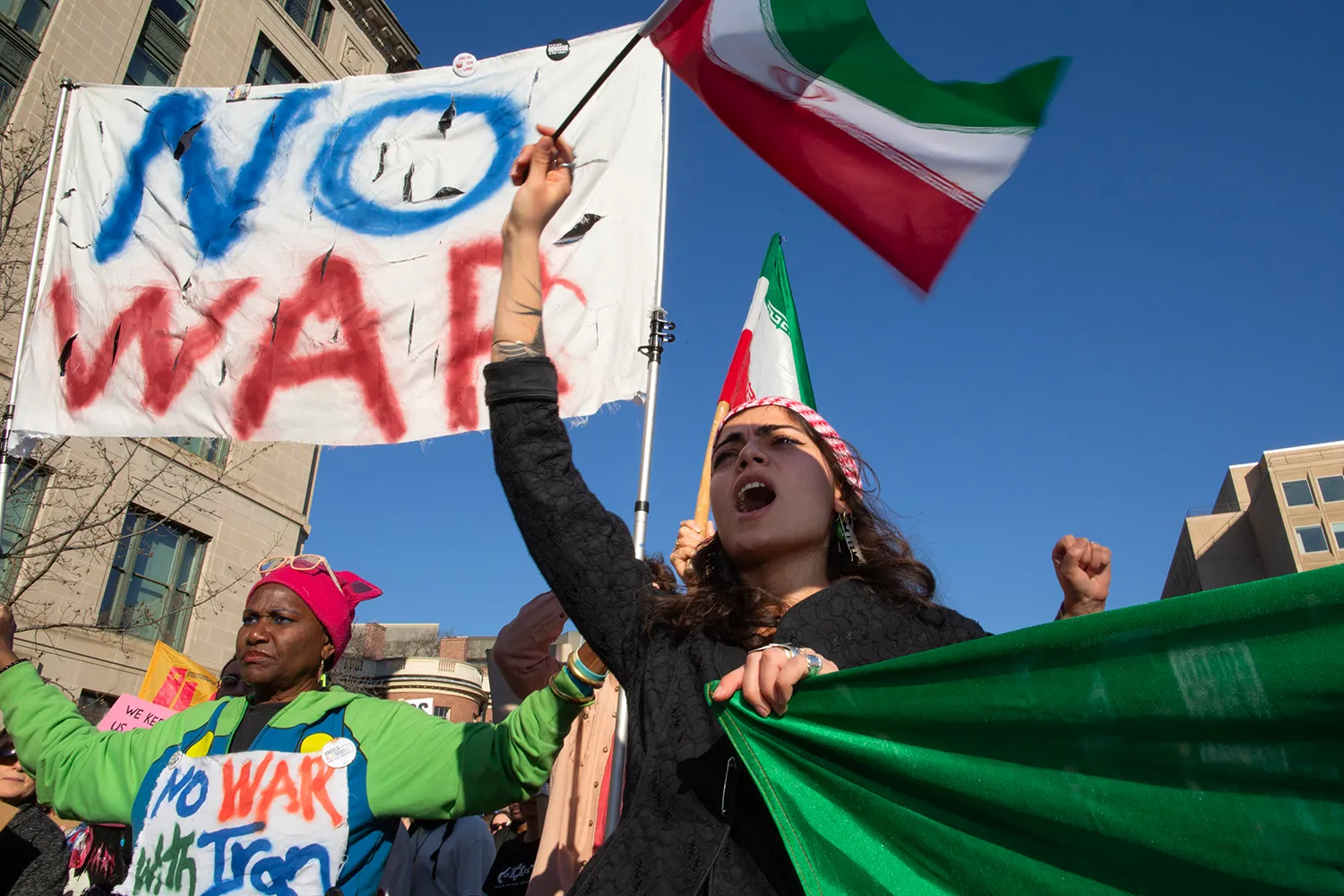
 

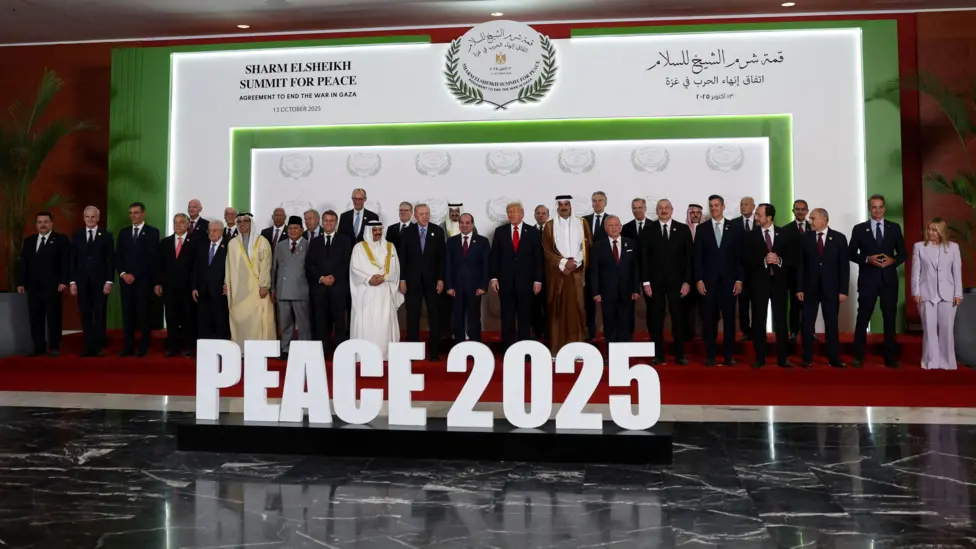
ISRAEL-HAMAS DEAL: SHORT TERM FIXES TO EVADE PERMANENT SOLUTION

The deal. One that has been of global interest, but not the deal the world has for decades sought – a permanent solution. War is cruel. The ultimate price has until 11th October, 2025, been paid. Death has been the final price paid for the decades Israel and Palestine have had a stand off. And what was thought would be a ‘mere’ weeks’ conflict, has dragged on for over 2 years. It is still thought by some observers that the war could be revived shortly after the call-off by the two adversaries. The number of children reported dead during the conflict have roughly been estimated beyond 20,000 children. More than 28,000 girls and women have been reported killed in the conflict coming to the ceasefire, while the numbers of men have by many observers ceased to count, and are only aggregated on percentage of the total deaths recorded – at approximately 40% of total deaths reported. The numbers matter. Yes they do because every life matters, and as such, it should be regrettable that the war ever happened. The ultimate price that is (has been) paid.

But in every war comes a victor. Not always, but mostly as history observes. And sometimes the victor is not the actual bearer of the primary loss. President Trump has a feast of the year 2025 to assert the heroics. “I delivered as promised.” He has been vocal since taking office for his Second Term as President of the United States of America about the subject of ‘war’. The Israel-Palestine conflict got high value in the White House ahead of the Russia-Ukraine war because of the obvious interests Washington under President Trump’s reign holds. It should not come as a surprise because it was not different from his first term. Israel has always been the infallible darling of the U.S. And while the world in recent months took steps of account towards the excesses of war such as South Africa’s claim against Israel in the International Court of Justice, the UN Human Rights Council sessions on the Gaza Question, and open calls by various States globally for an end of the assault occupation, much of it have received disregard from a U.S’s mouthpiece perspective.

The cease fire deal, now in effect, had at its centre, release of hostages that have been held by both sides. Thus the deal saw partial withdrawal of Israel’s forces from major areas such as the Rafa Border Crossing which will ease access to medical treatment on the Egyptian side for some casualties, and the access to humanitarian aid within the wrecked region. A sigh of relief perhaps, but for how long. The two-State solution as proposed decades ago has been maintained for some critics as the only longlasting solution. Indeed, a number of countries have in 2025, especially in Europe, declared total recognition of the Independent State of Palestine. On all occasions, even before the U.N, the U.S has either shown regret or exercised its veto right. One Country in the extreme parallel. Interests. So who are the winners?

Certainly after the first phase of the deal, the lingering question is “What does the future of Gaza look like? And who decides the future?” By now the short answers must already be clear. Coming this far, the shaping events have turned the eyes to the White House. It all got sealed by the bidding of Gaza to real estate conversations – a future likened to ‘paradise’. That will definitely not be received without resistance. The wider international community remains optimistic. In fact, even within Israel, protests have been reported of some sections of the country’s citizens that believe the war’s agenda was never as sold to them earlier. They call for a total end to the war. The winners? That is only a question that can be answered in time. The next phase of negotiations complicates the conversation more.

The solution of the Israel-Palestine question should not be a reserve of the very country that vetoed severally in the past efforts to straighten the situation by the wider international community. The solution is ultimately one that should lie to the member States of the U.N as a collective. Equal decision making. Equal bearing in the rebuilding. The U.S keeps steering away from engaging other States and as such, plays a part in the extension of the conflict. The whole idea has been to avoid the resurrection of the two-State  solution. Back door negotiations for example are neither going to answer the proposed terms of disarming Hamas, nor provide the leadership that is the imagination of the U.S in Gaza. Of course the desire of Israel is to fully alienate Gaza without question. But that will not come without resistence. It remains an unavoidable trip back to the U.N resolutions over time that have suggested interesting, but reasonable solutions. Without doing so, the U.S and Israel will only see themselves in an illusion as winners for a short time, but in reality, losers too for a long time.

The writer is a Senior Research Fellow, Development Watch Centre.

Russia-Ukraine War Vs Israel’s Genocide in Gaza: A Tale of Diplomatic Coverup and Hypocrisy in Western Capitals

Are Washington and Brussels overreacting toward Russia when it comes to it’s actions in Ukraine? There is a high likelihood that the European Union and the United States are very biased with how they have handled Russia since the escalation of the situation in Ukraine in 2022. At the moment, there are about 57 major Conflicts in the world, for example, the Sudan Civil War that has claimed about 13,000 lives in just 2025, in places like Myanmar, Sahel insurgency, Ethiopia and Eritrea, Somalia, and Eastern DRC, where multiple armed factions are operating. But the Ukraine situation is getting more diplomatic and media attention.

For a moment, let’s take a closer, critical look at the EU and the US’s very contrasting approaches to various conflicts worldwide. Their response to Ukraine and Palestine seems like there is an alternative universe with a rule based order that is applied selectively, on one end, as Russia faces isolation and accountability for its invasion of Ukraine, Israel is enjoying full impunity despite evidence of an active genocide and apartheid.

The two situations have put out the double standards of the West, which in the long run is going to undermine the credibility and legitimacy of the already failing multilateral organizations, as they perpetuate violence against Palestinians or any other race that is not white. When there is no consistent application of international law, screams of justice and human rights are becoming hollow and are setting a blue print of future massacres.

When Russia matched into Ukraine, Western powers right away started providing weapons, intelligence and security guarantees to Kiev, NATO swung into a logistical mode to ensure the resistance of Russia’s campaign was armed to the teeth. After October 7th 2023 when Hamas mounted a major resistance campaign against the Israeli blockade of Gaza, Israel was given the greenlight to kill everything living in what Tony Blair the former British Prime Minister referred to as an open air prison and many experts have referred to as a concentration camp.

Russia has faced sanctions that now number in tens of thousands for being an aggressor while in the case of Palestine, the Western powers led by Washington decided to defund UNRWA a vital aid agency in Gaza, Israel has not even for a single day faced any arms embargo or conditions, but instead the United States has rewarded them with United Nations Security Council vetoes to avoid Ceasefire opportunities.

Every aspect of the Russian society has been sanctioned, from its massive oil sector, to its financial system and trade cutting it off from the rest of the world. Russia was even suspended from international forums like cultural events and sports organizations while Israel is sending singers to the Eurovision and it’s football clubs tour Europe week in week out. When South Africa was still under apartheid they were suspended from the Olympics, in the case of Israel, they are getting more sports events invitations.

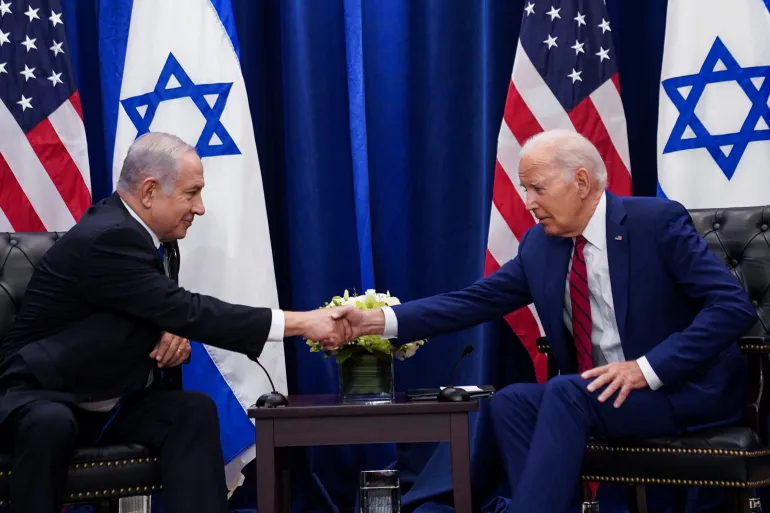
US President Joe Biden (right) holds a bilateral meeting with Israeli Prime Minister Benjamin Netanyahu on the sidelines of the 78th United Nations General Assembly in New York City, the US, September 20, 2023

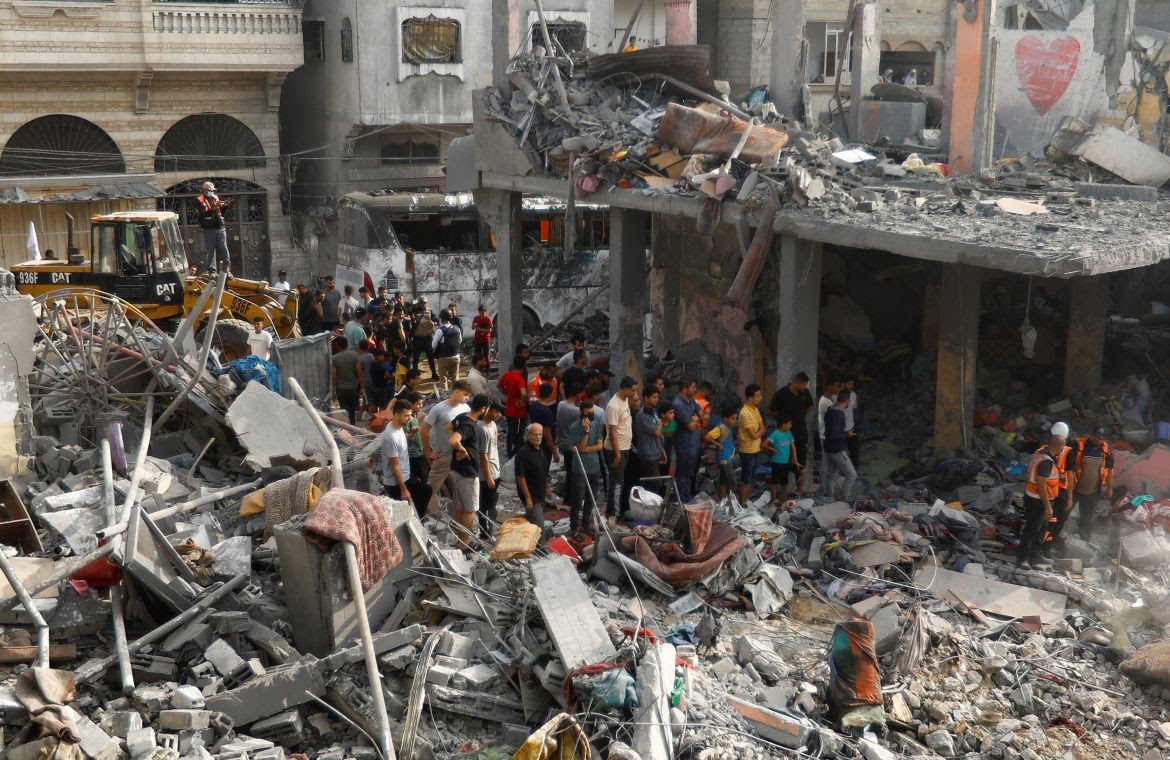
Every Western capital has ordinary people protesting Israel’s actions in Gaza and the occupied territories of Palestine, but their governments have decided to pay no attention to them. In the United Kingdom organizations that stage protest events are being labeled terrorists organizations. When Russian drones strike civilians infrastructure in Ukraine, every EU member will put out a condemnation statement, but Israel in Gaza has bombed all Universities, all schools, and all hospitals with weapons being provided by the West.

When the ICC put out an arrest Warrant for the Russian President, the United States and European Union welcomed it, and fully supported the move, the then President of US Mr. Biden called it “justified.” When the same court put out the arrest Warrant for the Israeli Prime Minister Benjamin Netanyahu, the Same powers rejected it and went ahead to call it “outrageous” and denying the courts’ jurisdiction. The United States has gone ahead to retaliate against the ICC by sanctioning key members of the court and through Congress they have even invoked the Hague Invasion Act to protect Israeli officials.

The United States has even decided to make enemies of countries like South Africa that took Israel to the ICJ that ruled that Israel’s occupation of Palestinian territories is illegal and found plausible evidence of genocide. President Trump has decided to hike trade Tariffs on South Africa and gone ahead with a counter accusations of genocide of whites.

As the European Union and the United States have resolved to be steadfast with a comprehensive diplomatic condemnation of Russia and rapid military aid for Ukraine, when it comes to Israel’s “apocalyptic” actions according to the UN Special Rapporteur Francesca Albanese the reaction has been completely different in the two similar situations. She has even accused Israel of using Gaza as a testing ground for new weapons without restraint as she has recommended for an arms embargo that the West has ignored and instead slapped her with Sanctions.

Western backed main stream media has put forward a narrative of Ukraine being a democracy that is resisting Russian Tyranny with the whole population suffering against Moscow’s atrocities. On the other end Palestinian causalities that are in 60,000+ are being decontextualized as collateral damage for self defense to justify the Israeli genocide and all this is being done while echoing Israel’s mage world wide web of propaganda that paints Palestinians as collectively guilty.

One thing is profound out of all this, the hypothetical stance on global conflicts in the face of Washington and Brussels is clear and the Russian, Ukrainian situation with the Israeli genocide in Gaza makes the writing on the wall clear, as one side is dealt with condemnations, massive sanctions and functional legal mechanism the other catastrophe of our time is being greenlighted with active diplomatic cover never seen before. There are double standards and they are very much based on race as certain lives are given more value than others.

The writer is a research fellow at the Development Watch Centre


China On Proposed Gaza Takeover By US: War Should Not Have The Last Word

The Gaza question seemed at first to be an easier one to answer on the side of Israel, but that could not have been the case. It seemed justified at the time, but as of today, events have continuously taken different turns and twists. Much as solutions from declaring the Gaza strip a no man’s land, to executing a two state treaty, Israel maintains that Gaza should not belong to Palestine, and that Palestine is not recognized as a country. And now, the USA has joined the choir of Israel’s song. Same song, “Gaza is Israel’s territory.” As of July, 2024, Palestine has been recognized as an independent state by over 75% of the world countries. Such is the status of Palestine in over 146 countries globally. The USA that has recently joined the band has been a stumbling bloc in the exercise of its veto powers as a permanent UN Security Council. But that has not gone unnoticed since there have been instances when other UN member states have questioned the high handed approach that is sometimes used by the USA in doing so.

China has maintained that war should not have the last word. In this, it has consistently welcomed solutions that do not entail exchange of arms because of the adverse effects already observed. Besides the growing concerns that China wants to outdo USA’s global dominance, it has come off as a shock to many persons that it was welcoming to the USA cease fire agreement proposal between Israel and Hamas. As of the end of January, 2025, the USA was on the forefront of this conversation and the Trump administration spotlighted to have more intentions than expected however. This unfolded on 05th February, 2025 when Trump after meeting the Israel Premier unveiled the plan for Gaza. In his words, “The U.S. will take over the Gaza Strip, and we will do a job with it, too.” This development came up as shocking to the world because later statements showed that the USA would be using real estate companies to complete the works, but the question remained on where the Gaza residents would end up.

A quick look of what the response was, is rather shocking. To evict them and have them assigned to neighbouring countries. In a migratory language, that would be termed as forced displacement. This does not rule out the fact that it is foreseeable that more USA troops would be introduced to the area. This would be foretelling after the Afghanistan campaign that did not go well. War would be inevitable. Hamas are not going without a fight. This is expected. China is opposed to this. As proposed, China will have to be part of the engagements and the rest of the world nations as proposed by China.

China’s focus on the Gaza situation is to rule out an isolationist solution where other important stakeholders are ruled out. One to do with the USA playing as the arbiter and yet its interests have been publicly come to be known. It has even taken strange responses like the USA sanctioning officials from the ICC for issuing arrest warrants on Benjamin Netanyahu. But as China notes, even then, dozens of countries stood firm on the side of ICC despite the threats. China has with unison of many other countries worldwide maintained that Gaza is integral to Palestine and should be left independent to decide its future.

The Arab League met on 21st February, 2025 to have a discussion on the future of Gaza, and as China, rejected the displacement plan that is being proposed by USA. They too maintain that Palestine deserves autonomy and has seen much bloodshed and destruction already. Interesting to note is that there has been a back and forth by other global residents on who had an opportunity to weigh in on the risks and mitigations of both. Clearly, the odds have not been on the US side of proposal. Compared  with the Egypt drafted proposal to rebuild Gaza that was endorsed by the Arab leaders and the US proposal, the European Union major powers agreed towards the Arab leaders’ proposal. The simple reason that countries like Britain, Germany, France, and Italy have given is that the Arab proposal of rebuilding Gaza, compared to US’s, is that it does not seek to illegally evict and displace the residents of Gaza. It has much of Gaza residents’ interests at the centre. As the body to their agreement to the Arab proposal, they used the words, “it is realistic.” Such unfortunate times, require realistic responses.

To them, Trump’s proposal is directly undermining over 7 decades of works of the Arab League in supporting the Palestinian independence efforts and rather, would glorify the USA as yet again, the saviour in the story. That is typical power greed and overlap. The Gaza question today remains unresolved because the USA had maintained its subjectivity towards Israel. It is understandable to what it would lose or gain in terms of trade and security cooperation but that would not overlook the fact that with its support, the war has been extended overtime. And now, that plan would be a masterstroke of the USA re-entry into the middle-east. That is the ultimate plan.

It would be a strategic move to keep active monitoring of the Arab trade window in disguise of peacekeeping. Similar USA involvement in the past did not ever end well. And so won’t this. Such is the ground of China that there should be a limit to diplomatic rifts. A ceasefire is a warrant to that, and China is not backing down. A Gaza takeover should not be an option, except a takeover by the Palestinian people whose rightful home is Gaza.

Alan Collins Mpewo is a Senior Research Fellow, Development Watch Centre.

When Self-defense breaches its bounds and why it will take the West to settle the Israel-Palestine Question

The situation in Gaza has been progressively deteriorating since last October. Yet even after a phone conversation with president Biden, Prime minister Netanyahu went on to make a televised statement in which he asserted that Israel could not defeat Hamas without marching on Rafa, alluding to the existence of battalions of Hamas operatives “among the city’s 1.4 million residents.” The impending offensive sets a couple of challenges including; where the 1.4 million people will go having seen the destructive nature of these operations, whether they will be allowed time to get to safety,  and weather the IDF will take the imperative to avoid civilian casualties this time. It is important to note that The United States has since the Carter administration acknowledged that lasting peace in this region could only come from a two state solution. However, for some reason the United States and the West in general have not used their influence over Israel to deliver on this goal, which should, undoubtedly  be within the power of their foreign policy machinery.

The Israel-Palestine conflict is among the world’s longest running conflicts, going back to the creation of the state of Israel on May 14th 1948.  The conflict started with the Arab-Israeli war which had displaced over 700,000 Palestinians by 1949 culminating into the division of this territory into the three parts we know today as Israel, The west Bank and the Gaza Strip.

Prof. Miershimer describes this terrible situation by referring to Palestine as the world’s largest open-air prison. However, judging by what has been going on in Palestine, this may be an understatement because never before, in its 75 year history  has this conflict nor any other conflict had such levels of destruction over such a short period; with millions displaced, tens of thousands dead and entire cities razed to the ground. While this has been so, the Western stance on this conflict particularly over the past four months but also during previous episodes has been non-committal in as far as calling Israel to order; always asserting Israel’s right to self-defense, while vilifying any differing views at times. Let us not forget that the Camp David accords of 1979 delivered gains in resolving tensions between Israel and Egypt alongside Syria. Moreover, the Oslo accords were viewed with much anticipation only to collapse with the assassination of former Premier Rabin Yitzhak in 1995 by elements opposed to the signing of the accords that fronted a two-state approach to this conflict. Attempts to resurrect these efforts through the Abraham accords brokered by the US are already coming under threat with Morocco seemingly decided to pullout from whatever concessions were reached in 2021. Nevertheless, the major flaw with this approach is that it attempts to create ties between Israel and Arab nations with the implicit aim of isolating Palestine.

What the world seems to ignore in this entire melee is that the Palestinians want the same thing the Israelis want. Meanwhile, the West has overseen the growth of a Militarily powerful and technologically advanced nation of Israel next door to Palestine. Creating a very powerful state of Israel that is not willing to afford the Palestinians most of the rights and freedoms that it wants for its own people, a deviation from the position of the Universal Declaration of Human Rights, which asserts the recognition of inherent dignity and of equal and inalienable human rights as foundations of…global peace.

Regardless, the occasional rockets fired into Israel and such horrendous attacks as the one of 7 October 2023 are evidence that this has not been without consequence. Moreover, this can be argued to have fueled the rise to prominence of extremist groups such as Hamas over the rather moderate PLO and Fatah.  The Israeli run apartheid state in Gaza has provided the necessary conditions for the raise of Hamas. More so, while this went on, the United States throughout the currently raging conflict has continuously stressed through the president its alignment with Israel amidst worldwide lamentation over the worsening situation in the region. President Biden has also argued that if there had been no Israel, The United States would have had to create one to protect US interests in the Middle East.

This goes to tell how the Biden administration views the situation in Gaza as long as Israel seems to be winning. It remains unpredictable the scale of destruction the offensive on Rafa might have. However, one can argued that this conflict is at a point where people may not necessarily fall to shelling or small arms fire. As the author Allan Weiss point out, you do not have to shoot songbirds out of the sky, sometimes all it takes is destroying enough of their sustenance and they will voluntarily start to drop dead on their own. Such has been the nature of Israel’s offensive against the Gaza strip; destroying  homes, schools, cutting  power and water supply, denying  or rather complicating (through countless checkpoints and deliberate sabotage of public infrastructure) the delivery of  food and essential medical supplies or setting troves of people on an exodus amidst stampedes and bombardment.

A glimmer of hope for world peace:

Emulating Chinese leadership is not a new concept; in fact, the French enlightenment period philosopher Voltaire, in one of his letters expressed his great admiration for the Chinese culture and praised the Confucian ideas of universal morality and good governance. At a time when conflicts are sending shock waves rippling through the world in the form of economic downturns, hunger etcetera, China could still have wisdom to share with the world. China is on record for being a strong advocate of noninterference in other countries internal affairs, and finding negotiated solutions to differences and conflicts. In the face of a tumultuous global peace landscape, President Xi Jingping in his opening address at the Boao conference for Asia, 2022 proposed for the first time the Global Security Initiative (GIS) as a response to global peace challenges.  China further elaborates a road to sustainable world peace and security in six key commitments under the GIS. These commitments include; common comprehensive, cooperative and sustainable security, Respect for the sovereignty and territorial integrity of nations, Respect for the purpose and principles of the UN charter,  Taking seriously the concerns of all countries,  Peaceful resolution of differences and disputes through dialogue and consultation  and Maintaining security in all domains. As a country committed to shared global prosperity, China understands that prosperity cannot happen in the absence of peace. Moreover, with the GIS, president Xi reaffirms China’s mindfulness  of the UN charter whose overarching goal is to save future generations from the scourge of war and the resulting devastation,  which today, the world needs to work double-shift to return a lid on.

Seventy years of the Israel-Palestine conflict is proof that cease-fires are not what we need in this volatile region. Frozen conflicts are constantly at the risk of eruption and with many militant groups itching to take a reprisal jab at Israel; finding a lasting solution to this conflict would certainly be in the best interest of both the Israeli people and the world. In fact, the West may be the only party that could call Israel to order but for as long as we remain adamant to recognize Palestinians as humans deserving of the same rights and freedoms as everyone, we can continue to expect this conflict to carry on, only intermittently!

George Musiime is a research fellow at the Development Watch Centre.


Israel at the International Court of Justice: A Stern Test for the United Nations and its Institutions

The year 2024 promises to be yet another interesting one if the events that transpired at the close of the past year are anything to go by.

On the 29th of December 2023, the government of the Republic of South Africa formally filed a case against the state of Israel with the Hague based International Court of Justice, (ICJ) where renowned Ugandan legal brain, Mrs. Jalia Ssebutinde, sits as a judge. The application to institute proceedings, is in relation to the Israel’s conduct in its ongoing war against Palestine.

The eighty-four paged application filed in court lists a number of grounds for their complaint but perhaps the flesh to their application is their reference to the acts performed, condoned and threatened by the state of Israel to the Palestinian people as genocidal in nature – essentially contravening the principle of self-determination.

South Africa argues that such acts are genocidal as they are intended to bring about substantial destruction of the Palestinian national and ethnic community in the Gaza strip. The African nation points out further that such acts are in direct contravention of various provisions in the 1948 Convention on the Prevention and Punishment of the Crime of Genocide (Genocide Convention). South Africa further prays that the ICJ outlines provisional measures to be adhered to by Israel to stop the continued abuse of human rights in its ongoing war on Palestine before the situation becomes irreparable.

To scholars of international law, relations and diplomacy – and perhaps all objective peace-loving global citizens, this new development could be a major test of the objectiveness, impartiality and independence of the UN and its institutions in particular the ICJ.

I therefore highlight why it is important, in light of the current global reputation of the UN, for the court as scheduled between the days of 11-12th January, to swiftly and justly handle the application, if the global peace-keeping organization is intent on achieving its major aim and preserving its significantly damaged credibility.

It is additionally important to also note that much as the decisions of the ICJ are not binding and are more like advisory opinions, their relevance in influencing a global push to take further action against Israel in more appropriate forums like  the ICC must not be wholly dismissed like many already are.

Speaking plainly, the credibility of the UN has long suffered significant damage over the years and one may perhaps rightfully argue that confidence in the capability of the organization to execute the given mandate as established in its founding charter is waning fast.

Research into public confidence of the UN has produced statistics that do provide some insight. The World Value & European Value Survey (WVS/EVS) conducted between 2017-2022 in over 90 countries representing all geographical regions, indicated only about half of these countries maintain confidence in the organization.

Furthermore, more intriguing revelations from the WVS/EVS data indicate that confidence in the UN has been on a consistent decline since the 1990s in the Middle East, Northern Africa, Eastern Europe and Latin American regions. To anyone with keen interest in global events, it is quickly ascertainable that these are particularly the conflict-stricken areas, hence their low confidence in the global peace-maker is damning, if anything.  Obviously, this has not occurred in a vacuum as justifiable reasons do exist.

The peace-keeping body has generally failed to remain impartial and independent in its application and implementation of international law principles.

If anything has significantly contributed to the organization’s declining popularity of late, this has to be top of the list. Overtime, the world has witnessed major global superpowers especially and quite ironically, members of the Security Council influence the organization to condone or refrain from taking action on their abrasive and wanton abuse of said principles.

The organization has repeatedly appeared to have its hands tied as superpowers go about antagonizing world peace through various wars that align with their own selfish interests and not world peace.

Additionally, the organization has been ambiguous and unclear in its response to various conflicts all over the world that have drastically claimed civilian lives. There has generally been strong criticism and punishment for African war lords by the UN but often times, it has remained shockingly complicit when Western led actors such as the U.S and allies with their so-called anti-terrorism campaigns in the Middle East kill millions of innocent civilians due to reckless actions that are in their entirety, gross violations of international laws of war.

In essence, such tactics of selective application of the law, similar to the setting in George Orwell’s classic the Animal Farm, do not inspire much confidence in a body charged with promoting equality in the quest for world peace.

In the case at hand, the ICJ ought to decisively and objectively assess the case before it, and pronounce itself accordingly. It is in the interest of the court to ensure that its decision is as rational and just as it can be, free from any overt or covert influence. The court must strive to steer away from the precarious position, its sister institution, the International Criminal Court finds itself. The court’s independence and credibility are increasingly questioned yet it is supposed to play a major role in promoting world peace.

Comments from then National Security Advisor John Bolton in 2018 to the effect that the White House would no longer cooperate with the ICC, and would block any efforts to pursue U.S. or Israeli citizens, must only drive the ICJ to remain objective and not bow to any external pressure in the instant case.

The massacre of over 22,000 people including women and over 7,000 children in the Gaza should be reason enough for a swift and unequivocal response to the situation. It regrettably took weeks of back-and-forth discussions at the UN, just to secure a humanitarian ceasefire to ensure delivery of food and medical supplies to the Gaza population. The ICJ is hereby tasked with remaining extremely objective and delivering justice, restore confidence in the public as well as offering the much-needed relief to the Gazans.

It is important that the court duly assesses the overwhelming evidence of mass human rights violations as laid out in the application and take a step to address this. The applicants rightly note in their application that there is no attack on a state’s sovereignty, no matter how drastic, can be used to justify and defend breach of the Genocide convention. There is absolutely no moral or legal ground upon which the state of Israel can rely on to justify the massacre of children and families or razing down of homes, schools and hospitals.

At the 78th UN general assembly last year, part of the event’s theme reiterated the need to rebuild trust and reignite global solidarity. Before global states can trust each other, their unwavering trust in the UN as the body uniting them must be assured and confirmed. Additionally, in his 2022 address to the UN general assembly, the organization’s chief Antonio Guterres rightly cited geopolitical tension and lack of trust as the factors that poison the dream of international co-operation. He must have borne it in mind that recent developments have plunged public trust in his institution, hence action must be taken by its institutions to counter that.

On the other hand, as a parmanent member of the UNSC, the U.S must act responsibly and support upholding international laws. For this to happen, U.S officals like White House National Security Council spokesman John Kirby who told press that South-Africa’s suit against Israel is “meritless, counterproductive, and completely without any baisis,” must be called to order to let ICJ determine the case without such prejudice.

Also, there is need for all UN member states especially the Parmanent Security Council Members (P5) to strongly advocate and support dilague and diplomacy as a way of ensuring peace and tranquility globally. On this note, one can argue that today, more than ever, China’s proposed Global Security Inititive which seeks to address global security throgh dialogue, diplomacy, consultantion and respect of international laws is relevant and should be embraced by the entire world.

In conclusion, the UN and the ICJ, if desirous to further exert global influence, may borrow from the words of former US secretary of state and diplomat, Colin Powell that; credibility is built upon trust, integrity and consistency, as it goes about its business of hearing the application and pronouncing itself on the matter. It should be in the minds of all the judges that the world is watching with keen interest, how the court will conduct itself in the grand scheme of global peace and protection of human rights.

The writer is a Law scholar at Johannesburg University and a research fellow with Development Watch Centre.

Is the Israeli-Palestine conflict the graveyard of international relations or its rebirth?

In the world of international relations and diplomacy, the Israel-Palestine conflict holds immense global significance. This enduring conflict has involved various players over the decades. Diplomatic failures in this situation can have far-reaching global consequences. The Israel-Palestine conflict draws comparisons to the Ukraine-Russia conflict due to its intensity and the involvement of global players. Diplomatic failures have played a role in both conflicts. Russia’s dissatisfaction stems from perceived broken promises regarding NATO expansion.

The recent round of fighting, starting on October 7, 2023, saw unique tactics by Hamas, including land, air, and sea attacks on Israeli cities and largely in Israel occupied territories. The U.S. and EU consider Hamas terrorists, while Russia advocates for a Palestinian state. China seeks a two-state solution which the UN general assembly approved 65 years ago. It should be recalled that on 29th November 2012, the UN General Assembly overwhelmingly voted to recognise Palestine as approved by UN within the 1967 borders as a non-member state with observer status. 138 countries voted in favour, 41 abstained and only 9 voting against it. One can argue that, as one of the five UNSC permanent members, China’s stand to side with Palestine calling for a two-state solution is not a selfish move but as a responsible member of the international community, China is simply calling for observance and respecting of international laws.

Also, China is currently playing a positive role in advocating for a peaceful world. China’s involvement in global security, known as the Global Security Initiative (GSI), seeks to create conditions for a peaceful world where issues and misunderstandings are resolved through dialogue as opposed to the U.S which that fronts block formation and power politics as a solution. China has shown mediation skills in conflicts, including the rivalry between Iran and Saudi Arabia. Major energy players like Iran and Saudi Arabia further complicate the situation, impacting energy markets and global supply chains. China expresses deep concern over the conflict, advocating for a two-state solution.

On the African side, the AU has done its bit even if Egypt a member country is a joint party in the Gaza siege but they have a reason for it. But the greatest diplomatic efforts in this round of fighting have come from South Africa. South African government has long expressed solidarity with the Palestinian people, this time it went ahead to establish a diplomacy channel when Naledi Pandor held a call with Hamas leader Ismail Haniyeh at his request to discuss getting humanitarian aid into Palestine, the foreign minister also reiterated South Africa’s solidarity and support for the Palestinian people and expressed sadness and regret for the loss of innocent lives on both sides. This phone call went beyond pro-Palestinian protests in the country and ANC’s efforts to organize a Palestinian Solidarity March outside the Israeli Embassy in Pretoria. This changes diplomatic tides for an organization that is considered a terrorist outfit. It may eliminate third parties in peace talks and bring about what happened when Nelson Mandela started to talk to the apartheid government in South Africa.

The Israel-Palestine conflict has once again laid bare the challenges facing the United Nations Security Council. Despite multiple attempts to secure a ceasefire, the most recent on October 18, 2023, all efforts have faltered. In a striking move, the United States utilized its veto power in the Security Council to thwart a humanitarian resolution, which had been proposed by Brazil. The resolution sought to condemn the ongoing violence and encouraged the prompt release of all hostages. It also called for humanitarian halts to guarantee the unrestrained delivery of relief to civilians in Gaza. The situation underlines the thorny dynamics at play within the Security Council when it comes to addressing conflicts like the one between Israel and Palestine.

Israeli forces continue their operations in Gaza, resulting in casualties, with approximately 5,087 Palestinians declared dead, 50% of whom are children. In Israel, the death toll has reached 1,200 people. Officials in Gaza have warned of a humanitarian crisis as the power plant has completely shut down due to fuel depletion. 62 attacks by Israel for the 13th consecutive day (since Oct 11) are on health care (including Al Ahli hospital) as per the World Health Organization.

The Israeli army the IDF ordered Palestinians to move south of Gaza leading to 1.4 million internally displaced persons. The United Nations Security Council criticized the order, warning of a humanitarian crisis. Israel is planning to enter Gaza from the north for a ground offensive and its main goal seems like an attempt to empty the strip of Palestinians forcing them to enter Egypt as refugees, Tel Aviv has the backing of the United States and the European Union.

As of 24th of October 2023, speaking before the 15-member UN Security Council on Tuesday, the UN Secretary-General Antonio Guterres pleaded for civilians to be protected and warned that the fighting risked a wider conflagration in the region he added that “It is important to also recognize the attacks by Hamas did not happen in a vacuum. The Palestinian people have been subjected to 56 years of suffocating occupation,” The Secretary-General underscored that the conflict posed a significant risk of further escalation, potentially leading to a broader regional crisis. He emphasized the importance of recognizing that the actions taken by Hamas are not isolated incidents, emphasizing that the Palestinian people have endured a stifling occupation for so long.

The Israel-Palestine conflict remains a is thorny and explosive issue with far-reaching outcomes for global diplomacy, economics, and stability. The ongoing brutality and the failure to secure a ceasefire underscore the pressing need for reforms within the United Nations Security Council to enhance its effectiveness in resolving such conflicts. The historical context of the conflict and the involvement of major global players make it a critical matter for international relations and the world’s stability. The humanitarian effects are dire, and there is an urgent need for international intervention to protect civilians and work towards a lasting solution in the region.

Musanjufu Benjamin Kavubu is a research fellow at the Development Watch Centre