Trump’s Economic McVeighism: Another Gamble with the Global Economy

This month opened in typical Trump-fashion, with Washington imposing blanket tariffs on imports to the US. Following the announcement, markets from New York through Shanghai witnessed severe shockwaves.  Subsequently, the internet was awash with Trump supporters celebrating the effect particularly on the Shanghai and Hong Kong stock markets; praising Trump’s ingenuity. However, a week later, Washington announced a 90-day pause on all tariffs above 10% for imports from all territories except China. Be this as it may, experts have continued to rank Trump’s trade policy as the least friendly in 100 years.

Whereas some commentators argue that the pause was a response please to negotiate, reciprocal tariffs quickly set ‘Trump’s genius move’ and the US economy on a crash course. Moreover, the escalation involving China-the supplier of nearly 40% of American’s imports would mean that: either the 125% tariff gets transferred on to the American consumer or a reliance on alternative sources creates gaps in supply elsewhere. More importantly, the emergent supply deficits would likely create new market opportunities for China while the US risks forfeiting the 1.4 billion strong Chinese market. However, regardless of how this goes, Trump doesn’t seem to have a winning hand, at least not in the short term.

In my opinion, China-US trade tensions are not about China but rather the US’ strong belief in its legitimacy as the sole global power. However, the foundations of this belief ignore the fundamental fact that growth isn’t always infinite or uninterrupted. Indeed, it is for this simple reason that global dominance has always switched hands throughout history. Therefore, from this we can infer that China’s legitimate right to development has always been seen as a threat to this privileged position. Further, this is exacerbated by the US’ deteriorating economic footing seen from a $295 billion trade deficit and close to a trillion dollars of US debt to China. Without the significant progression through time, Trump might have tried the method the British used in 1833 or in 1856 using battleships to enforce “fair trade”; luckily these methods are buried 192 years deep.

The innovation, learning curve theory synergy; China’s engine of growth. Trump during his second state of the nation address in 2019 blamed China of ‘stealing American jobs’ and intellectual property. But in a highly interconnected and interdependent world, how is this to be avoided? Besides, this has always been the way of development. Trailblazers lowering entry barriers for those that follow. History shows that even before Robert fortune went to China disguised as a native to steal the secret of Chinese tea making, corporate espionage was a crucial stage on the path to modernisation. Indeed, Germany would never have replaced Britain as Europe’s industrial power early in the 20th century. Not even the American industrial revolution would have been as successful without both European immigrant capital, skills and knowhow. But more key in China’s rapid growth has been the learning curve theory and innovation; its ability to master cost efficient production.

Away from that, not even the 90-day pause on tariffs on certain countries targeted in Trump’s economic aggression changes the general outlook. In fact, Bloomberg economics projects the general US tariffs to only come down from 27% to about 24%. Despite the three-percentage point reduction, this will still be the highest in 100 years. Moreover, this does not take into account the 125% tariff on China hitherto the source of over 40% of all US imports. However, this can have any or a combination of a number of implications. In one scenario, the tariffs are endured but the products arrive at a much higher price with the America consumer having to bear the burden or, targeted territories seek alternative markets. However, when this happened in 1982 with Japan reducing car exports, the domestic automotive industry produced even less cars making it even harder for the ordinary American to own a car as a result of high prices.

The other possible outcome is that a move is made to readjust supply-chains which might require intensive investment in infrastructure, skills development and new technology in the short to medium term. Some experts are already expressing concerns that it could take decades for America to produce all it needs domestically. In the meantime, this certainly creates a supply deficit. On the other hand, if the US is to source these products from alternative sources, the deficit could potentially emerge elsewhere, likely creating a market opportunity for China given China’s relations with much of the developing world where this deficit is likely to manifest.

Until this point, the discussion has been about China and the US but what does Trump’s economic McVeighism mean for the rest of the world. Normally in such economic conflicts, when a major power faces off with a smaller nation, the outcome is more certain unlike when two major powers face off. In the former, the smaller nation loses badly but in the latter, the whole world suffers.  Moreover, when all other sorts of nations are tossed into the mix, the situation becomes even more complex and could have far reaching consequences. For example, as reciprocal tariff walls sprout in different targeted territories this phenomenon poses a significant threat not just to the US but also to global trade. This situation however seems to isolate the US signalling the potential for serious adversity for the domestic economy.

On the contrary, China has over the recent decades build strong and reliable logistic and infrastructure networks through the Belt and Road Initiative (BRI) cooperation. In addition, the Chinese have through innovation been able to master efficient production. These combined do not merely mean China’s supply-chains may not require much readjusting but rather making it more of a reorientation. The logistic and infrastructure network and efficient production methods also imply that China will be more ready to capitalize on any supply deficits should they occur, but what does this mean for the US?

White House data as of April 10 indicated that China’s share of total US imports had dropped sharply from 34% to just 13.4%. Moreover, with further hiking of the tariffs to 145%, one can expect this to regress even further. NVIDIA for example expects to take a 5.5 billion hit in charges on account of the limiting chip exports to China the company’s biggest market for AI chips. Indeed, economists concur that besides affecting American companies, consumers will also have to deal with soaring prices as firms pass on some all their extra costs not to mention the loss of jobs as was the case in 2018 when Trump first made this gamble. According to the WTO, the resulting contraction of bilateral trade between the world’s two biggest economies will certainly be felt in many places as well.

What is happening in the world today is a stark reminder of the potential damage that could arise at any time from the unchecked trade powers of the US president. President Trump’s free-range to gamble not just with the US domestic economy but also the entire world economy underscores the urgent need for resilient trade systems that will shield global trade when God’s diplomacy becomes weaponised like it is being used against China, Canada, Mexico and others. Further, whereas China has done significant work in this direction, there is a need for Africa and the global south to do more in this regard. Albeit not being proof against trade uncertainties, relative economic peace can be guaranteed through building resilient regional ecological supply systems that that are self-sufficient to counteract instances of economic McVeighism and bullying from without.

George Musiime is a research fellow at the Sino-Uganda Research Centre.


US Tariffs Contradicts WTO Rules on Fair Trade and Non Discrimination

The current US administration has continued the rhetoric of the previous Trump administration (2016-2020) which includes placing trade barriers against China amongst a litany of actions including barriers on Chinese EVs entering the US market (carefully avoiding placing tariffs on Chinese rare earth metals critical to US defense and aviation industries). This time round, the current administration has opted to place tariffs on all nations and territories  across the planet (with the exception of Russia).

These actions contradict World Trade Organisation agreements on Trade Without Discrimination which asserts equal treatment for all parties under said rules that the US is party to.

Freer Trade through negotiation is equally envisaged by said rules. These rules equally desire gradual and progressive liberation. Something the current US administration is rallying against by putting America First.

Predictability through transparency is equally significant amongst trade partners. Uneven tariffs can be viewed as acting against stated principles and creates strain on well established trade relations.

The Uruguay round of talks therefore placed a ceiling on custom tariffs which would avoid any form of unpredictability that causes strain on global supply chains and unnecessarily raises the coat of doing business.

The current American administration thus disregards the rules based order and seeks to act in her own interests while affecting global trade as a whole, subsequently causing price hikes for American citizens as well as creating shocks on global stock markets.

It should be noted that global supply chains are dependent on free trade. Not the restriction of it with tariffs. Tariffs only act to protect one party while causing economic slowdown.

In an economic war, there are no clear winners. Any form of concession another party seeks to achieve will be offset by losses incurred through higher production costs and strains on the end consumer who foots a higher bill to buy the same commodity.

China’s complaints at the World Trade Organisation are done in an effort to promote fair trade amongst a comity of nations. China doesn’t actively seek to antagonise other nations. Rather, to promote her own interests while building her trade and industrial capacity in a dynamic world.

China equally has bilateral trade agreements with a variety of nations across the globe. This means that countries are aware of China’s competence and willingness to trade. These include Austria, the Belgium-Luxembourg Economic Union, Canada, France, Germany, Italy, Japan, South Korea, Spain, Thailand, and the United Kingdom.

China has built these relationships through her culture of mutuality and trust. A culture deeply embedded in China’s millennia old cultural fabric and permeates throughout her society and international relations.  It is no surprise that many nations are seeking trade relationships with her. China is equally the leading trade partner with the MERCOSUR regional bloc with the Uruguayan President seeking to fast-track negotiations on a free trade area with China.  This includes 30 free trade agreements with a variety of nations across the planet. Aside from the more dominant states, China is equally a dominant Economic and regional player in the Pacific region.

American tariffs underestimate China’s resilience, adaptability and the versatility of Chinese supply chains and her global trade apparatus. Any pain the US hopes to inflict on China is grossly overestimated as China has shown throughout her history a capacity to withstand greater pains.

US Tariff hikes can also be seen as a deprivation of the Global South’s right to development as asserted by the Chinese MFA Spokesperson. Developing states utilise WTO Rules to negotiate global trade through negotiation and deliberation. The actions by the United States signal eonomic coercion and exceptionalism which contradict the desire for a fair system that promotes growth and development of all nations in line with the UN 2030 Agenda for Sustainable Development.

Furthermore, it should be stated that WTO Rules promote fair competition which protectionism stands antithetical to. Protectionism limits innovation and dulls an economy’s ability to challenge itself in the face of competition from other global players.

Protectionism isolates a nation from the rest of the world and causes possible stagnation in the face of changing trends in consumer preferences.

A nation only thrives when it acknowledges competition in all its forms. Not close itself to it.

The writer is a research fellow at Sino-Uganda Research Centre.

Trump’s Tariffs  Have Nothing to Do With a Fair World; It’s A Boomerang Trick to Contain China

The United States President, Donald Trump’s relentless habit of slapping tariffs on other countries has created what I can without doubt call “the politics of beam balance”—with Trump’s tariff situation on one hand and China’s President, Xi Jinping’s inclusivity on the other. In other words, Trump’s tariff situation lands us in a more direct situation of “protectionism” versus “inclusivity” in which the president of the U.S is hungry and longs for a solution that can at least cause equilibrium—a sigh of relief from China’s ever growing economic prowess as the world’s second largest economy which even threatens the United States’ long-term known superiority which politicians in Washington wrongly believe is a preserve of only the US!

Ever since the liberal French economist and businessman, Jean-Baptiste Say, coined the term “protectionism.” President Trump’s tariffs on other countries have given the term a fresh breath of practical existence with a great force even much more than the term had gained widespread use in the mid-20th century during heavy industrialization, trade agreements and economic nationalism.

However, from my angle of perspective, to break China’s economic backbone and strength, trade tariffs against China cannot be a viable solution but rather an economic self torment on Trump’s side. His tarifs which are in all design a gamble to contain China’s rise will certainly boomerang! China is not only the second-largest global power but also a mirror that plays a role in exposing the US indirectly across the globe. Whichever steps Trump takes against China, they leave the US isolated and bare. Secondly, it is not about just tariffs that China’s economic power can be realized. However, it requires a deep analysis of the core factors that made China achieve its position today. Such a core factor is inclusivity.

Just like the prominent American poet and novelist, Henry Wadsworth Longfellow, asserted that, The heights by great men reached and kept were not attained by sudden flight; but they, while their companions slept, were toiling upward in the night, China’s rise to global prominence should not be viewed as a sudden and an unexpected phenomenon. As such, no country should be tempted to believe that the same country’s prowess could be taken down suddenly by tariffs. There is a dire need to closely examine China’s foreign policy in which the major tenet is building a community of shared future for mankind, mutual respect and win-win cooperation with the rest of the world.

To realize this, a quick dive into China’s history clearly shows that from Deng Xiaoping’s economic reforms in the 1970s to Xi Jinping’s Belt and Road Initiative (BRI) today, China’s leadership has consistently pursued a long-term vision for the country’s global engagement and building a world where every country thrives with others in harmony rather than hegemony. This is the starting point of “inclusivity” which from the beginning was and is still deeply rooted in China’s steps to her development.

In just two years after the death of Chairman Mao, China’s Deng Xiaoping introduced a number of reforms but the most intriguing one among all was the Economic Liberalization reform. This was meant to revive China’s economy from shambles and shift it from centrally planned as it had been stagnated by the Gang of Four, to a market-oriented economy through the 1978 policy “Reform and Opening-Up.” Under this policy, Deng Xiaoping encouraged private enterprise, foreign investment and trade.

Soon after 1978, in his opening speech at the twelfth National Congress of the Communist Party of China on 1st September 1982, Deng Xiaoping emphasized the policy of “Opening to the outside world.” This was the kick-start to inclusivity. In his own words, he remarked that “We shall unswervingly follow a policy of opening to the outside world and increase our exchanges with foreign countries on the basis of equality and mutual benefit.” It is from this point that terms like “win-win” cooperation gained observance on the international scene especially with their roots traced not elsewhere but from Asia and China in particular. This is so simply because China started identifying itself with the rest of the world. It realized that it could peacefully and harmoniously develop and coexist with other nations.

China’s intensified spirit of inclusivity gained much momentum with Deng Xiaoping’s era. For example, on May 7th 1978, amidst the struggle to achieve four modernizations, Xiaoping remarked that, “Once we have accomplished the four modernizations and the national economy has expanded, our contributions to mankind, and especially to the Third World, will be greater. As a socialist country, China shall always belong to the Third World and shall never seek hegemony. This idea is understandable because China is still quite poor, and is therefore a Third World country in the real sense of the term. The question whether or not China will practice hegemony when it becomes more developed in the future. My friens, you are younger than I, so you will be able to see for yourselves what happens at the time. If it remains a socialist country, China will not practice hegemony and it will belong to the Third World. Should China become arrogant, however, act like an overlord and give orders to the world, it would no longer be considered a Third World country. Indeed, it would cease to be a socialist country.

That enough, indicates how China had set itself to coexist with the world, identify itself with the rest parts of the world and foster development for all. Most especially, the development of Third World countries was given much attention. It is thus not surprising that by 1976, as poor as China was and economically staggering, the Tazara Railway—linking Dar es Salaam in Tanzania to Kapiri Mposhi in Zambia had been completed. This railway, one of China’s most iconic early projects in Africa, remained a focal point of Sino-Africa cooperation during 1982-1990.

In the most previous days, President Trump branded China “the biggest abuser of tariffs.” This is part of the reflection that he is realizing the impracticality of his tariffs. Moments before, we had witnessed China, Japan and South Korea reaching an agreement to jointly respond to US tariffs. This further reflects the spirit of inclusivity for which China has groomed in other countries it operates with.

It is worth noting that by 2024, Africa-China trade reached USD 300 billion while that of Africa-US hit USD 72 billion. This serves to reflect China as the biggest African trade partner over the US. This clearly shows that China is not relying on exports to the US as a sole consumer and market. It learned so quickly that the US is a camouflaging economy especially one that prides in tariffs and sanctions. As a result, China intensified her spirit of inclusivity and shifted her goal posts to other countries like in the Association of Southeast Asian Nations (ASEAN), in Africa and in the Middle East. Her foreign policy has heavily built on principles of mutual respect, amity, win-win cooperation and China has been a firm supporter of other countries’ development efforts emphasizing the need to support and build a community of shared future and prosperity for mankind.

The writer is a research fellow at the Development Watch Center.


Why America Will Lose Tariff War Against China

It is impossible to make any assessment of economic growth worldwide without coming face to face with the contribution of China, in any country’s economic growth. But America is also the world’s largest developed country. It is impossible to point at any nook or crevice of the world and not find American capital or financing doing something. Because of this, a tariff war between the world’s largest developing country, China, and the world’s largest developed country, the USA, would have effects resonating with every country in the world. They are two elephants. We are grass.

When Deng Xiaoping succeeded Hua Guofeng and opened up China to international trade in 1979, the volume of trade between China and the USA stood at a paltry US$2.5 billion. Recent figures for 2024 show that there has been an increase of that trade volume to US$688.3 billion! This expansion of trade between the two countries can never be said to have benefited only one country. I think Trump is blinded by sheer prejudice in the belief that China is ripping off America in their balance of trade.

America has increasingly grown to be a protectionist, yet it is the birthplace of free-market Mujahideens like Milton Friedman. It has in total imposed over US$500 billion of tariffs against China between 2018 and now. Given China’s high resolve to peacefully settle all kinds of conflicts, it invited the U.S. into several rounds of trade and economic negotiations to stabilize the two countries’ bilateral trade relations over the years, to no material success.

America, in its typical coercive American style, has recently passed the “America First Trade Policy Memorandum” in which they targeted China with a number of tariffs in complete usurpation of the principles of the market economy and multilateralism which henceforth were indistinguishable from America itself – American being the beacon of free-trade values.

The entire global supply chain is disrupted when America imposes such arbitrary trade restrictions on China. So, it is no longer just China’s problem, we all must be concerned. It is even false for Trump to claim China is ripping off the U.S. In fact, ever since the Bretton Woods system was established in 1944, it has been the U.S. ripping off the entire world because the American dollar was made the world’s primary reserve currency, pegged to gold and used as the standard for international trade and foreign exchange – a position that Americana has heedlessly exploited to its selfish benefit. It is this economic history that has given the U.S. significant economic leverage over other countries which have to hold dollars to stabilize their currencies, yet the U.S. can simply print dollars at no cost to settle its foreign debts and pay for material goods in international trade. America’s biggest export today is capital because it can literally print money to cover its budget deficits, effectively exporting inflation while other countries bear the cost of maintaining dollar reserves.

I do not understand why Trump or his economic and trade policy advisers seem to think that for America to be succeeding and something, its rivals must lose. It should be obvious to anyone that cooperation between China and the US does benefit both sides. And the opposite is true.

As already explained above, the volume of trade between the two countries has grown 275 times since 1979, reaching $688.28 billion in 2024.

It is difficult if not impossible to find any ratio of trade relations between the two nations where the U.S. does not benefit more than China. And this is why I argue that America stands to lose the tariff war. Whereas the US is China’s largest goods export destination, it is also the second-largest source of imports. Therefore, if China tits for tat for every increment of tariffs America makes, American citizens will either pay much more for basic goods or even fail to afford them at all. China is also the U.S.’s third-largest export destination. This means American companies will find it crazy expensive to export goods and services to one of their largest markets. Besides, America’s exports to China have been increasing faster than their exports to any other country in the world, because of China’s purchasing power.

According to UN figures, in 2024, America exported US$143.55 billion worth of goods to China, representing a 648.4 percent increase from US$19.18 billion in 2001. Additionally, this exceeded its overall export growth of 183.1 percent during the same period. China is also the largest export market for US soybeans and cotton, the second-largest export market for integrated circuits and coal, and the third-largest export market for medical devices, liquefied petroleum gas, and automobiles.

This aerial view shows the Port of Baltimore on April 10, 2025, in Baltimore, Maryland. US President Donald Trump’s 10 percent tariff for almost all countries except China will likely remain in place going forward, his top economic advisor Kevin Hassett said Thursday. Jim Watson/AFP/Getty Images

According to the US Department of Commerce (USDOC), the American service industry is also highly dependent on the two-way trade in services with China. Between 2001 and 2023, China-US services trade expanded over seven times from US$8.95 billion to US$66.86 billion. In 2023 alone, the U.S. registered a surplus of US$26.57 billion in service trade with China, highlighting a significant advantage for the U.S.

Into the bargain, in 2022, American-owned enterprises in China earned total revenue worth US$490.52 billion, significantly exceeding the US$78.64 billion in sales revenue generated by Chinese-owned enterprises in the U.S. The gap of US$411.88 billion critically underscores the profound advantage of American enterprises in international trade, even against a strong economy like China. The number of trade areas which can be cited as examples to show how America benefits more than China under free trade are countless. The amounts involved are enormous. Doesn’t Trump know this?

It would therefore be foolhardy for Trump to brazenly sideline China economically through imposing crazy tariffs. Over 10 American insurance companies have established subsidiaries in China. American financial institutions, such as Goldman Sachs, American Express, Bank of America, and MetLife, have all invested substantially in Chinese financial institutions. Trump seems to either lack the knowledge or arbitrarily disregard the fact that the trade balance between China and the US is not a malicious creation of China. Instead, it is an independent result of structural factors in the US economy and the natural comparative advantages and international division of labor between it and China.

The writer is a senior research fellow at the Development Watch Center.

Trump’s Tariffs Against China: A Threat To Countries’ Legitimate  Development Rights

For almost four months now, the Trump administration has arguably rattled global trade, economists, shocked business executives and set off heated exchanges with not only the world’s second largest economy – China, but also US’s largest trading partners and allies like Canada and Mexico.

While economists and corporate executives expressed concerns that such shift in Washington’s trade policy was a gamble with potential of causing a ricochets in the global economy, Trump appeared unbothered, selling his tariffs policy with celebratory tone calling tariffs “the greatest thing ever invented,” as he branded the day he announced his now paused tariffs a “liberation day.” “This is one of the most important days, in my opinion, in American history,” noted Trump as he announced imposing a now paused 10% universal tariff on all imported foreign goods in addition to “reciprocal tariffs” on several countries he claims have always “cheated” America.

While he later announced that he was pausing his tariffs for 90 days to allow negotiations, he maintained 145% tariffs on Chinese goods prompting Beijing to announced retaliatory tariffs of 125% onto US goods.

Also, Beijing made its position clear, strongly condemning these tariffs arguing they “severely infringes upon the legitimate rights and interests of nations, severely violates World Trade Organisation (WTO) rules, severely harms the rules-based multilateral trading system, and severely disrupts the stability of the global economic order.”

Further, Beijing noted that the U.S opting to use “tariffs as a tool of extreme pressure for selfish gain is a textbook example of unilateralism, protectionism, and economic coercion.” This, China maintains “violate basic economic laws and market principles, disregard the balance of interests reached through multilateral trade negotiations, and ignore the fact that the US has long reaped substantial benefits from international trade.”

While Trump argues that the US has been “unfairly” treated and “cheated” by other countries, many analysts contend that the tariff man’s main intention is to advance his protectionists agenda which he argues will help revive domestic manufacturing with possibility of re-shoring what he describes as American jobs.

If critically analysed, while Trump claims his tariffs marks  “the beginning of making America rich again,” many economists contend his unorthodox policies will harm global trade supply and also hurt the American economy. Indeed, Larry Summers, treasury secretary under Bill Clinton, branded Trump’s  tariffs “a self-inflicted supply shock.” “This is a self-inflicted wound to the American economy. I’d expect inflation over the next three or four months to be higher as a consequence, because the price level has to go up when you put a levy on goods that people are buying,” stressed Summers. It is not surprising the Wall Street Journal’s editorial described Trump’s tariff policies as the ‘dumbest trade war in history.’

A clear analysis of  Trump’s tariffs makes one thing clear; he wrongfully thinks the US can thrive on her own and that Washington has nothing to gain from global trade. This partly explains why “tariff man’s” administration is insisting on pursuing “American Exceptionalim” and isolation. President Trump ignores the fact that in today’s global village, it is nearly impossible for any single country to embrace isolation policies and succeed without hurting itself.  The Wall Street Journal’s editorial brings this better; “Mr Trump sometimes sounds as if the US shouldn’t import anything at all, that America can be a perfectly closed economy making everything at home. “This is called autarky, and it isn’t the world we live in, or one that we should want to live in, as Mr Trump may soon find out.

The US is one of the main arctetures of the current international economic and trade order and so should embrace the rules entirely other than unilaterally opting to place American interests above the common good of the international community. As China noted in their position regarding Trump’s tariffs, “economic globalisation is an inevitable path for the development of human society. The multilateral trade system, with the WTO at its core and based on rules, has made important contributions to the development of global trade, economic growth, and sustainable development.”

China and some analysts believe Trump’s use of tariffs targeting China is due to Trump’s desire to “counter” China’s economic progress which the Trump administration sees as a threat to the US’s assumed right to dominate the world. Rightly so, China contends by targeting its trade with tariffs, the US is violating WATO rules which Beijing notes undermines the multilateral trading system.

Analysing 1st Trump Administration China-targeted tariffs, a study by the Cato Institute, an American libertarian think tank found that the US’s use of tariffs targeting Chinese trade violated  WTO rules. It further revealed that while Chinese companies were most affected, even American’s citizens were affected as China responded to the Trump administration’s trade tariffs with reciprocal tariffs. The study “Unfair Trade or Unfair Protection? The Evolution and Abuse of Section 301” contends that the laws Trump cites to impose tariffs on other countries “grants the executive branch far too much discretion in defining an actionable foreign trade practice” which may be exploited for political reasons – it allows American President to safeguard America’s trade interests by remedying any “act, policy, or practice of a foreign country [that] is unreasonable or discriminatory and burdens or restricts United States commerce.”

In light of this, as China stated in their position on Trump’s tariffs, “development is a universal right of all nations, not the privilege of a few. There are no winners in trade wars or tariff wars. All countries must uphold genuine multilateralism, jointly oppose all forms of unilateralism and protectionism, safeguard the international system…”

The opposite is disastrous because the use of tariffs to counter  China does not only hinder legitimate development rights of the Chinese people but the entire global south population, especially Africa  whose countries’ both social and economic development have been realized as a result of China’s economic development and Beijing’s selfless policy of building a community of shared future.

Those who can should remind president Trump that, the world needs win-win cooperation and justice, not America’s hegemony!

Allawi Ssemanda is a Senior Research Fellow, Development Watch Centre.

Trump’s Tariffs: As China Retaliates, The World Has Refused To Bend The Knee

Trump’s first weeks in office for his administration’s second term have not been short of interesting news. To his critics he has proved right, and to the U.S allies, he has shocked them. In fact jokes have been filling media platforms, of the tariffs that were slapped on almost the entire world. His administration has recently imposed tariffs on countries’ products entering the U.S market, that it all seems like the U.S has been having it that bad to reckon. To make America great again – either you bend towards our interests or you will be purged. China might be the greatest victim of the levied tariffs. Trump in his first term as U.S president imposed tariffs of over 20% on select Chinese products into the U.S, tariffs that were maintained by the Biden administration. From January to April 2025, the US trade-weighted average tariff rose from 2% to an estimated 24%, the highest level in over a century. Trump escalated an ongoing trade war with China, raising baseline tariffs on Chinese imports to an effective 145% after April 9, 2025.

Explaining that “the US’s imposition of abnormally high tariffs on China seriously violates international trade rules, basic economic laws and common sense,” China reciprocated announcing it was raising tariffs on all United States goods to 125 percent.

The global south countries have been no exception, with a few mentions such as Zambia, Lesotho, Zimbabwe, Mauritius, South Africa, Kenya, and many more. The intention according to the White House media outlets have been to level ground where USA was facing unfair trading terms. The state of affairs led shortly to panic especially in the stocks markets and as noted by numerous economists, JP Morgan Chase warned of possible likelihood of steep recession. But it was all resolute of the Trump administration that be damned, dear world, we are taking back what is ‘rightly’ ours. Long term allies affected. Alliances broken. Panic caused. All in a bid to not only cause alarm and show strategic strength, but to push the countries on whom tariffs were imposed into negotiations, bending the knee towards the U.S, and put the rest on notice of what might happen in future should they not adhere to the U.S terms as they come.

Many years and efforts of diplomacy put to a drain. Diplomacy is expensive. World histories are littered with case examples. But one event can change the course. The European Union had learnt so for decades, and now with a new blow, it still learns of the inadequacies presented from its leniency to U.S supremacy. The results? Now the E.U is realigning its interests. Strange times. China’s reaction does not come off as shocking. Neither does the imposition of stiff tariffs on its products. China equally issued fitting tariffs on US products entering the China market and a limit to access of some rare earth materials, with U.S and Ukraine’s rare earth deal gaining disruptions on possibilities of success. The Canadian Premier also responded in equal measure as the U.S did. And by day, the list of those imposing similar or worse tariffs keeps growing.

In an official response, China stated (among others) in a communique, “by taking such action, the United States defies the fundamental laws of economics and market principles, disregards the balanced outcomes achieved through multilateral trade negotiations,… and weaponizes tariffs to exert maximum pressure for selfish interests – a typical act of unilateralism, protectionism and economic bullying. Under the guise of “reciprocity” and “fairness,” the US is playing a zero-sum game to pursue in essence “America First” and “American exceptionalism.” It attempts to exploit tariffs to subvert the existing international economic and trade order, put U.S. interests above the common good of the international community, and advance U.S. hegemonic ambitions at the cost of the legitimate interests of all countries.” Spot on, because as the communique rightly noted, the World Trade Organisation approach to international trading with a rules based trade system was introduced to ensure balanced economic benefits for all world players. Fair trading and not economic bullying.

But the world has refused to bend the knee. For the global south, with incidents like the suspension of many African countries from AGOA, Uganda inclusive, has opened doors to new diplomacy and alliances. It goes without surprise as to why most countries in the global south are turning their choice of partnership to the East. To them, the US is no longer to be regarded as the decision making commander on all world affairs, or the compass that determines how affairs should run in each country. The window keeps getting opened to new allies, differently this time round, with allies that have some fabric of respect to autonomy and independence in determining internal politics and affairs – a lacking factor with U.S alliance. With the growing tensions, the U.S days off reaping off heaven are reducing. This was made strategically with its withdraw from global commitments under the World Health Organization, International Criminal Court, and other United Nations parastatals.

The defiance has grown, dissent increased, and realities are clearer. To re-echo Kissinger’s quote, “To be an enemy of the U.S is dangerous. But to be a friend of the U.S is fatal.” A country that has run its foreign relations in such ways is not one to keep close. The allies have until this year opened their eyes wider. For Africa, it has been a point of sheer exploitation. From rumored regime change covert missions, to looting of minerals, and a growing lack of boundaries on the extent of meddling by Western powers, the ascension of the East – specifically China – as a parallel competing economy has been a blessing to the global south with alternative implementation of foreign policy and respect of autonomy. A growing admiration of opposition from an ally showcasing the possibilities that lie in concerted neglect of unfair global dominance. What is certain is that the global south will survive and whereas the economic disruptions will cause discomfort, more power lies ahead in turning away from full alliance with the U.S. All thankfully to Trump’s administration.

Alan Collins Mpewo, Senior Research Fellow, Development Watch Centre.

US Trade Tariffs on China and Vietnam Overestimate American Bargaining Power

As of Wednesday 2nd April, 2025, the American President, Donald.J. Trump announced tariffs globally against countries he accuses of benefitting off what he calls American clemency and the ineptitude of the previous administration. In his attempt to usher in a “Golden Age for America” he has announced a broad range of tariffs with particular force being applied to China and Vietnam who have been slapped with 34% and 46% respectively in “discounted reciprocal tariffs. Of worthy note is Cambodia who has equally been hit with a 49% tariff. It should be noted that these tariffs aren’t actually based on actual existent tariffs by said nations but trade deficits divided by actual imports as seen in World Trade Organisation data.

These tariffs are clearly meant to pull American manufacturers utilising low tax and low labour cost jurisdictions to maximise output away from South East Asia to invest in domestic manufacturing and create local jobs as promised by Trump on the campaign trail.

However, none of these promises consider the reality that American manufacturing is often costly as compared to international manufacturing due to higher labour costs in the USA and taxation that pushes American companies to manufacture in South East Asia.

Imagine an American company, let’s call it “TreadsCo,” that makes sneakers. In the U.S., they’d have to pay workers at least $15 an hour (or more, depending on the state) to stitch the shoes, assemble the soles, and package them. That’s because of minimum wage laws and higher living costs. Plus, they’d deal with expensive rent for a factory, strict environmental rules that add costs (like waste disposal fees), and taxes that take a bigger bite out of profits.

Now, picture TreadsCo setting up in Vietnam. There, they might pay workers $5 to $8 an hour because wages are much lower, tied to the local cost of living. The factory rent is cheaper—maybe a tenth of what it’d cost in a U.S. city—and Vietnam’s government offers tax breaks to attract foreign companies. On top of that, regulations on things like emissions or labor conditions are looser, so TreadsCo spends less on compliance. Even after shipping the sneakers back to the U.S., the total cost per pair could drop from, say, $45 to make in the U.S. to $17 in Vietnam. That’s a big savings, especially when they’re churning out millions of pairs to sell at stores like Walmart or Costco.

So, for TreadsCo, Vietnam’s lower labor costs, cheaper facilities, and friendlier business rules make it a no-brainer to manufacture there instead of at home.

Companies cannot abruptly disrupt supply and production chains from which they greatly benefit in terms of reduced cost and therefore, the end consumer carries the increased cost that the manufacturer incurs in tariff barriers.

Trump sees himself embodying the late 19th Century President, McKinley who famously placed wide ranging tariffs on international trade which favoured a nascent industrialising American economy but ignores modern day contexts.

Even McKinley, a pioneer of American protectionism, realized later in his Presidency that high tariffs weren’t perfect. In 1901, he started pushing for trade deals to lower some tariffs and boost exports. He got assassinated before he could do much, but it shows he saw limits. Trump, though, seems all-in on tariffs without that flexibility(premised on a faux sense of American global domination) which could box him in if things go south.

Trump’s McKinley-style protectionism might sound like a bold “America First” move, but it’s a gamble. It will jack up prices, shock and agitate trade partners, and not deliver the job boom he promises—all while ignoring how much the world has changed since 1890. It’s like trying to use a horse and cart fix in a rocket-ship age (which equally relies on global supply chains to acquire rare earth metals like neodymium used to make particular magnets from states like China).

Nations like China and Vietnam can very much rely on their own trade ecosystems to maintain robust trade. The USA cannot simply push them into a position that favours the USA. According to Nikkei Asia and Statista.com, China’s trade with Southeast Asia (ASEAN) surpasses its trade with the US. In 2022, China-ASEAN goods trade reached $722 billion, accounting for nearly one-fifth of ASEAN’s global trade. By 2023, Chinese exports to ASEAN were valued at $523.7 billion.

This dynamic shows a healthy interdependence amongst South East Asian economies outside US Trade.

Trump’s tariffs only hurt American consumers in the long-term who rely on goods produced by American companies that outsource some manufacturing components from China, Vietnam and Cambodia. This is especially in the textile and automotive industry.

If critically analysed, Trump’s use of tariffs as a weapon is not a smart move in a trade sense and will disrupt global chain supply on top of affecting the U.S itself with a risk of plunging it to a resccession. The Wall Street Journal editorial branded the move as “the Dumbest Trade War in History.” Thus, it can be argued that Trump overates the US’ position in the grand calculus of global trade with the only reality being a potentially high cost of living forthcoming for the ordinary American. To sum it up, perhaps quoting former Canadian Prime Minister Justin Trudeau response to Trump’s use of tariffs against countries can explain this; “it’s not in my habit to agree with the Wall Street Journal, but Donald, they point out that  even though you’re a very smart guy, this is a very dumb thing to do.”

The writer is a research fellow at the Development Watch Centre.


Trump’s Commercial Diplomacy is Setting the Stage for a Multipolar World

After the fall of the Berlin wall in November 1989, Washington along with its Western allies was clueless of what would happen next. They had developed their whole systems to rival the Soviet Union, the Central Intelligence Agency (CIA) was no longer worried about the Komitet Gosudarstvennoy Bezopasnosti (KGB), almost overnight the Gosbank State Bank of the USSR and Comecon were gone and the IMF had no opponent, the just ended U.S Agency for International Development (USAID) had a free reign because the Vneshconombank and Soviet Committee for Solidarity with Asia and Africa were no longer in place to further soviet foreign aid programs. For the last three decades, America/West has had no motivation to direct its global influence.

NATO without the opposition of the Warsaw Pact went to a senseless expansion that led to a hot war with Russia in 2014 with Ukraine being the battleground; the security organization accompanied Washington to Iraq and Afghanistan in military campaigns that cost about $ 8 trillion including long term veteran care, interest on the loans and the reconstruction pledges, funding that could have built 6 China’s Belt and Road Initiative. As the United States is leaving Afghanistan and Iraq one thing is clear: all those dollars bills were for nothing because they lost both the wars from a tactical and strategic point because all they did was to lead to deaths of millions of people.

How the west has behaved in the last three decades has only hastened its decline, and diminished Washington’s global influence as Nnando Kizito Sseruwagi a senior research fellow at Development Watch Centre put it in his “A better deal: Why Africa is turning to China for development” pointing out how empires that have tried to dominate the world have all ended up falling. The reality is that as Americas’ decline happens there is a gap being created, a gap to reshape the world order.

The undertakings of Trump 2.o are all being a catalyst to the decline of the west, he has officially decided to put an end to USAID after its 6 decades throwing away what looks like Washington’s biggest soft power tool. It’s becoming more and more evident that the African Growth and Opportunity Act (AGOA) will not survive as commercial diplomacy is being President Trump’s path of international relations. Washington through its America first policy is rolling out Tariffs even towards its long standing allies like Canada, a member of NATO and G7 an indicator that AGOA is in its last days.

President Trump has always been unconventional and in his first term in office he went ahead to meet the North Korea leader for talks that never materialized into anything, he also negotiated the withdrawal of the American and NATO troops from Afghanistan and handed the country back to the Taliban an event that showcased America’s weakest point. Lately Israeli news outlets broke the news that Trump was in direct talks with Hamas, an organization that Washington officially considers as terrorists. In his many unconventional approaches to diplomacy he has sent a letter to Iran’s supreme leader regarding a deal on Iran’s nuclear program after he withdrew from the Joint Comprehensive Plan of Action that had seen Iran only use its nuclear program for peaceful purposes at the same time opening up the country to the world. Everyone knows the Iranians can never negotiate from a position of disrespect as though they are selling their country in a real estate deal. During his campaign to return to the white house Mr. Trump on the Joe Logan Podcast said America got nothing from protecting Taiwan, he linked the whole situation on how the Mafia offer’s its security, his commercial diplomacy then took the Mafia diplomacy outlook. It’s the approach he has taken to the Ukraine situation, after the shouting match in the oval office with the Ukraine president, Washington froze it’s military support to Kiev and further went ahead to stop any intelligence sharing with Volodymyr Zelenskyy’s government until a deal promising $ 500 billion rear earth minerals to USA is signed. He is basically setting NATO to Auto pilot and the European Union knows it has to step up on its security. On security the African version of NATO AFRICOM survived being axed during Trump 1.0 but with developments coming from White house the writing is on the wall according to a scenario plan report by a French think tank Institut Monteigne.

In October of 2020 China’s President introduced the saying “the East is rising and the West is declining” words that resonated with the global south because of what is unfolding, currently BRICS is giving the G7 a run for its money, when it comes to demographics that define markets and labor force and on a bad day fighting force in terms of war. The manufacturing capital of the world is in the east, South East Asia are taking up their place on the global stage and they are influencing organizations like the G20. Beijing has put in place its Global Security Initiative (GSI), Alan Collins Mpewo a senior research fellow at Development Watch Centre outlines how the GSI can fill the security void in places like Africa in his piece titled “D.R Congo Problems: Time to try China’s Global Security Initiative?” a piece that can mirror the situation in both the Sudans, for Beijing it has also been its official approach to the war in Europe and it’s the framework that was used to restore diplomatic channels between Saudi Arabia and Iran.

China is better placed to fill up the gap left by the west but being on top of the world doesn’t mean it will necessarily run and police the world since it has invested in the global south through FOCAC and Belt and Road Initiative to have equally developed partners not allies to reshape the future of the planet, through multilateralism in a multipolar setting that respects all cultures and civilizations.

The writer is a research fellow at The Development Watch Centre.


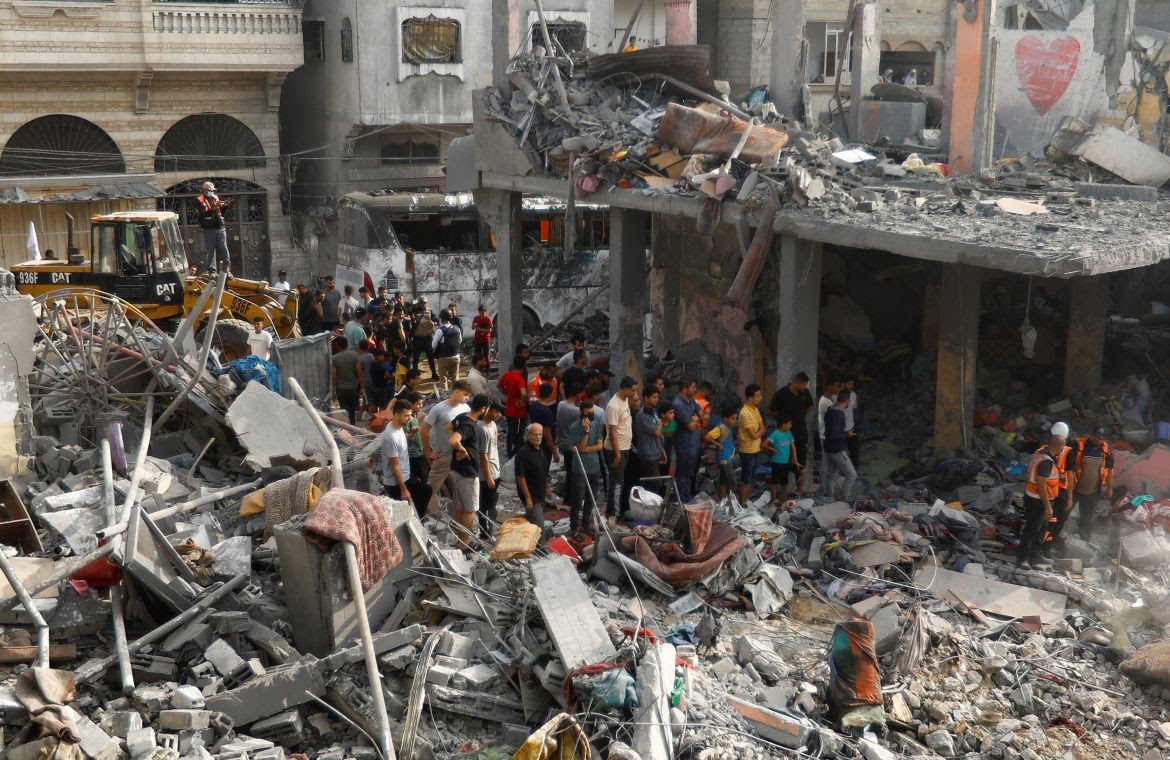
China On Proposed Gaza Takeover By US: War Should Not Have The Last Word

The Gaza question seemed at first to be an easier one to answer on the side of Israel, but that could not have been the case. It seemed justified at the time, but as of today, events have continuously taken different turns and twists. Much as solutions from declaring the Gaza strip a no man’s land, to executing a two state treaty, Israel maintains that Gaza should not belong to Palestine, and that Palestine is not recognized as a country. And now, the USA has joined the choir of Israel’s song. Same song, “Gaza is Israel’s territory.” As of July, 2024, Palestine has been recognized as an independent state by over 75% of the world countries. Such is the status of Palestine in over 146 countries globally. The USA that has recently joined the band has been a stumbling bloc in the exercise of its veto powers as a permanent UN Security Council. But that has not gone unnoticed since there have been instances when other UN member states have questioned the high handed approach that is sometimes used by the USA in doing so.

China has maintained that war should not have the last word. In this, it has consistently welcomed solutions that do not entail exchange of arms because of the adverse effects already observed. Besides the growing concerns that China wants to outdo USA’s global dominance, it has come off as a shock to many persons that it was welcoming to the USA cease fire agreement proposal between Israel and Hamas. As of the end of January, 2025, the USA was on the forefront of this conversation and the Trump administration spotlighted to have more intentions than expected however. This unfolded on 05th February, 2025 when Trump after meeting the Israel Premier unveiled the plan for Gaza. In his words, “The U.S. will take over the Gaza Strip, and we will do a job with it, too.” This development came up as shocking to the world because later statements showed that the USA would be using real estate companies to complete the works, but the question remained on where the Gaza residents would end up.

A quick look of what the response was, is rather shocking. To evict them and have them assigned to neighbouring countries. In a migratory language, that would be termed as forced displacement. This does not rule out the fact that it is foreseeable that more USA troops would be introduced to the area. This would be foretelling after the Afghanistan campaign that did not go well. War would be inevitable. Hamas are not going without a fight. This is expected. China is opposed to this. As proposed, China will have to be part of the engagements and the rest of the world nations as proposed by China.

China’s focus on the Gaza situation is to rule out an isolationist solution where other important stakeholders are ruled out. One to do with the USA playing as the arbiter and yet its interests have been publicly come to be known. It has even taken strange responses like the USA sanctioning officials from the ICC for issuing arrest warrants on Benjamin Netanyahu. But as China notes, even then, dozens of countries stood firm on the side of ICC despite the threats. China has with unison of many other countries worldwide maintained that Gaza is integral to Palestine and should be left independent to decide its future.

The Arab League met on 21st February, 2025 to have a discussion on the future of Gaza, and as China, rejected the displacement plan that is being proposed by USA. They too maintain that Palestine deserves autonomy and has seen much bloodshed and destruction already. Interesting to note is that there has been a back and forth by other global residents on who had an opportunity to weigh in on the risks and mitigations of both. Clearly, the odds have not been on the US side of proposal. Compared  with the Egypt drafted proposal to rebuild Gaza that was endorsed by the Arab leaders and the US proposal, the European Union major powers agreed towards the Arab leaders’ proposal. The simple reason that countries like Britain, Germany, France, and Italy have given is that the Arab proposal of rebuilding Gaza, compared to US’s, is that it does not seek to illegally evict and displace the residents of Gaza. It has much of Gaza residents’ interests at the centre. As the body to their agreement to the Arab proposal, they used the words, “it is realistic.” Such unfortunate times, require realistic responses.

To them, Trump’s proposal is directly undermining over 7 decades of works of the Arab League in supporting the Palestinian independence efforts and rather, would glorify the USA as yet again, the saviour in the story. That is typical power greed and overlap. The Gaza question today remains unresolved because the USA had maintained its subjectivity towards Israel. It is understandable to what it would lose or gain in terms of trade and security cooperation but that would not overlook the fact that with its support, the war has been extended overtime. And now, that plan would be a masterstroke of the USA re-entry into the middle-east. That is the ultimate plan.

It would be a strategic move to keep active monitoring of the Arab trade window in disguise of peacekeeping. Similar USA involvement in the past did not ever end well. And so won’t this. Such is the ground of China that there should be a limit to diplomatic rifts. A ceasefire is a warrant to that, and China is not backing down. A Gaza takeover should not be an option, except a takeover by the Palestinian people whose rightful home is Gaza.

Alan Collins Mpewo is a Senior Research Fellow, Development Watch Centre.

Policy Volte-Face In Washington as The U.S Validates China’s Position on the Ukraine Conflict

The principles of mutual respect, peaceful coexistence, common development and political settlement of conflicts have always been a hallmark feature of Chinese diplomacy. For China, this position meant more than just rhetoric; extending  into policy implementation with the principles built into all of China’s partnerships. China resolutely chose to uphold these principles when it declared the “friendship with no limits” with Russia in 2022 which some western commentators argue is behind China’s stance on the conflict in Ukraine. China and Russia however, maintain that this friendship was not intended as  a direct challenge to the current global order but those that governed for always using it for their own geopolitical gains. Nevertheless, some commentators always  paint this friendship as an Anti-West alliance. Coming out of the Biden Administration which only  purposed to replenished Ukraine’s capacity to fight on not withstanding of the gravity of the crisis, China advocated for a negotiated end to the conflict from the start. This is why a policy volte-face on Ukraine in the US  is such a significant development in the global effort to restore peace in Eastern Europe.

The NATO alliance; a rigid anti-Russia stance and the brightest of all red lines. Russia has maintained, its interests in this conflict were purely self-defense unlike the West describing it as aggression or invasion. Albeit the different points of view, this essay is not dedicated to delving in the technicalities of this nomenclature. However, it is worth mentioning here that the push of NATO towards Russia’s doorstep has been highlighted as a strategic threat both from within Russian and the west alike. The expansion has been criticized in the West,  among others by,  Biden CIA director Bill Burns who referred to it as “…needlessly provocative at worst during the Clinton administration in 1998. He also went ahead to describe NATO Expansion in a 2005 letter to Secretary of state Condoleezza Rice as “the brightest of red lines.” Moreover, French president Francois Mitterrand, had earlier in the 1990s proposed dismantling the alliance after it had served its purpose following the end of the cold war. While different scholars have faulted this sustained expansion of the Alliance as a key factor in this conflict, the Validation of China’s position on the conflict could imply fresh hope for the region.

During a period when the world is dealing with a diversity of security concern, China is proposing The Global initiative is built on the principal pillar of security of all nations regardless. Therefore, with Trump’s reversal of Biden era policy on Ukraine, the world can expect to see progress in efforts to find a solution to this conflict. Indeed, were are at that point where a world weary of the prolonged conflict can expect to see some progress in as far as bringing the conflict and its associated negative impact on the world to an end. Additionally, president Trump has been moving first in this direction having already had a high level meeting involving secretary of state Rubio and Russian PM Sergei Lavrov in Riyadh, coinciding with restoration of diplomatic relations between the two nations. On the other hand,  parallel meetings with the Ukrainian have happened, putting together the conditions for a peace deal. The holding of parallel meetings also signifies a commitment to reaching a deal as the absence of both Ukraine and the EU in Riyadh might be interpreted as a move seeking to avoid stalemates characteristic of having NATO members-some of whom might still harbor the rigid anti Russia sentiments. Critics of this approach, have thus been,  those outspoken about the wanting to see the conflict going until Ukraine attains Victory, something Trump clearly does not see as a viable outcome, at least not in the short or medium term.

More so, the presidents view is not one shared by everyone of uncle Sam’s partners as expressed by frustration of some white house staff. Amid these frustration, Ukraine and some EU presidents have been faulted for attempts to denigrate President Trump’s peace efforts. However, his resolve to find a solution to this conflict at any cost has been demonstrated by his implied proposal that saving the lives of innocent civilians might even be so important to justify Ukraine ceding some territory. Additionally, Trumps earlier expressed position on the implications of  the “NATO burden” on the United States economy could be another factor informing his policy reversal. This with the fact that The US has been Ukraine’s biggest backer in the war also signal how room little President Zelensky might have to wiggle out of the deal especially that the US is considering scaling back its European deployment which would directly affect NATO deployment as well.

Obviously, one cannot deny the fact that ‘war fatigue’ started setting in as early as the second half of 2024 with Poland and Czechia among the first professed EU supporters of Ukraine to want out. Despite promises to support the war effort for as long as it took, the withdrawal of significant US backing would most like dent and eventually dwindle European interest in the war even further- making continued fighting unsustainable. Moreover, a poll by the Council on Foreign Relations in Feb 2024, indicated most Europeans anticipating the conflict ending in a compromise. In addition, the same poll also put at 10% the chance that Ukraine might emerge triumphant. Consequently, this dynamic will have a direct bearing on the outcome of the new US led peace efforts. Conversely, for those that might be against the concessions by the US regarding its military presence in Europe, NATO and consequently the war in Ukraine, this might be a start of a possible reorientation of Europe’s security strategies. However, this development is also likely to relax tensions on the continent and Russia’s urgency to develop security capabilities against the threat from NATO.

When president Xi Jinping first proposed the Global Security Initiative in April 2022, he envisioned global security in the sense of a balanced security landscape, one where the security of one does not threaten that of another. This is what makes US validation of China’s initial position on the Ukraine conflict, a huge prospect for peace in the region. Therefore, a peace deal in Ukraine, should it go through would be a right step in the direction a stable Europe, and here is why. In what seemed like giving a nod to the propositions of President Mitterrand and Bill Burns from decades ago, Trumps defense secretary Pete Hegseth told NATO allies that it was unrealistic for Ukraine to join the alliance. Albeit not being a direct support for the GIS, this position gives props to the cardinal principle of the GIS that advises against promoting one’s security by threatening another. Hence halting NATO expansion keeps the threat to Russia at a safe distance and, just this is a positive move towards not just US-Russia relations but also global peace.

Georgemusiime@dwcug.org

The writer is a senior research fellow at the Development Watch Center.