An electric car, on average, has over 10,000 parts. If we take the example of the Tesla Model Y, its key parts are in the rear drive unit, weighing about 194 pounds, constituting less than 5% of its total weight. The rear drive unit carries magnetic motors, which are the fulcrum around which the mobility of the vehicle revolves. Required for the manufacture of these magnets are rare earth minerals/metals. Experts posit that without these key ingredients, Teslas/EVs would be less powerful, less efficient, more expensive, and more complex.
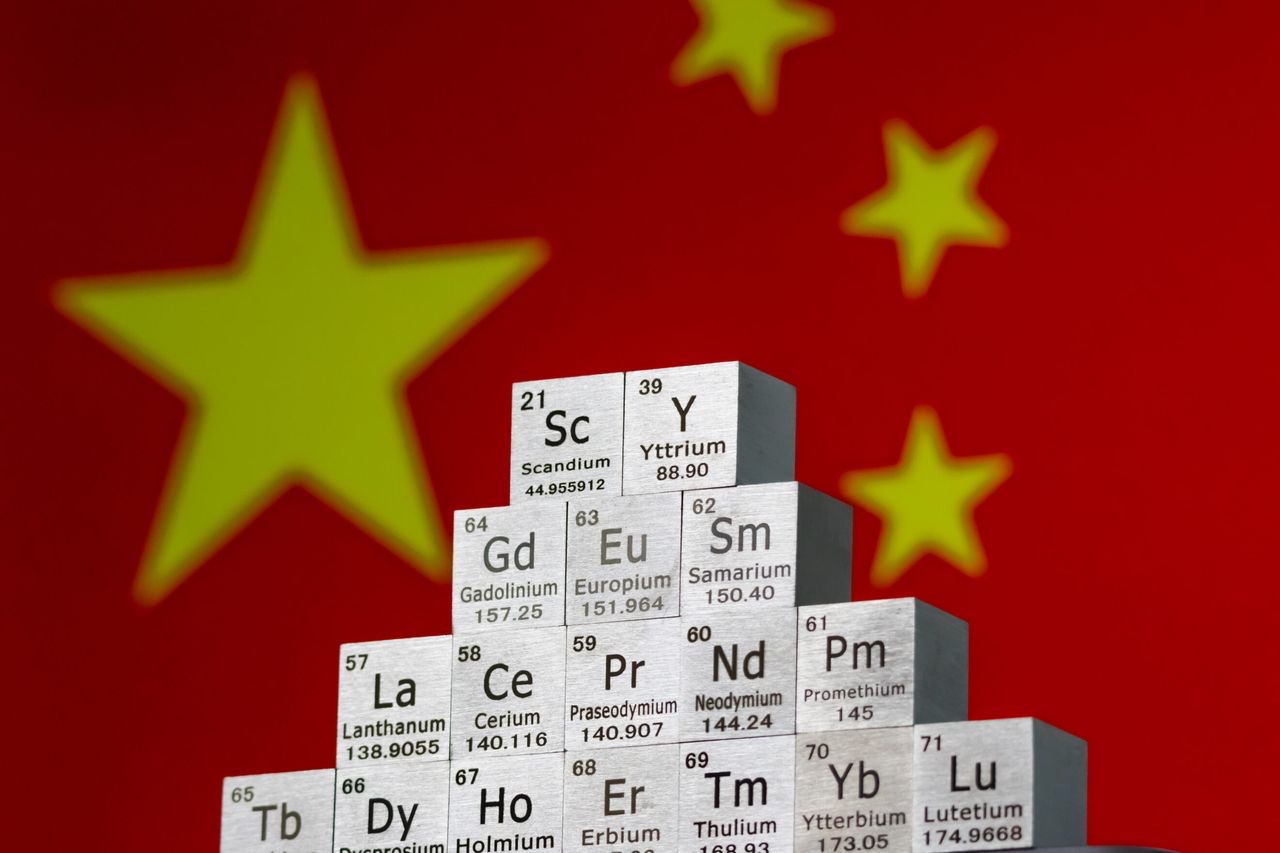
China produces about 70% of all rare earth metals in the global circulation. America produces just about 12%. Ironically, rare earth minerals are not called rare because of scarcity. They can be found in large deposits in many parts of the world. The rarest aspect about them is the ability to extract and refine them. That is where China comes in, unparalleled.
To produce magnets out of rare earth materials, you have to significantly refine them. To refine them, you need to have great amounts of energy and advanced mechanisms of managing hazardous waste, since the process involves heavy pollution. China has the ability for both, making it the global leader in rare earth refining.
Simply put, without China, there would be no Electric Vehicles. The EV revolution is revolving around China’s industrial scale in refining rare earths. Besides EVs, many other technologically advanced industries consume rare earths.
In the military, advanced aircraft, precision-guided munitions, naval systems and submarines, Tanks, soldier gear, e.g. night vision goggles, and many other equipment need rare earths to be made.
AI data centers also rely on rare earths in data storage hardware, fiber optic communications, power infrastructure and component miniaturisation.
China accounts for 92% of the global supply of all the refined rare earth materials necessary for these industries, which are key to global domination. If China cut its supply, America’s appetite for imperialism would be fundamentally destabilised.
Indeed, China has, over time, taken some steps to control the market. In October 2025, China announced new rules that require foreign companies to gain approval to export products where rare earths account for just 0.1% of the goods’ total value. Washington panicked. Trump threatened to impose an additional 100% tariff on Chinese goods.
But how did China come to have almost a complete monopoly on rare earths? For decades, China quietly learned that rare earths were the backbone of America’s most important industries, including petroleum refining, precision hardware, metallurgy, and especially, military hardware.
Armed with that knowledge, the PRC established a national Rare Earth Development and Application Leading Group in 1975, which multiplied research and development funding in the field. As a part of this, Chinese scientists studied nowhere but, in the US, where the largest rare earth mine was located at the time. They studied ore composition, mine design, and processing techniques, and even reportedly took rock samples home. A complacent global giant, America made no fuss about it.
It is difficult to explain why rare earths have always been a small segment of mining until China took it on at a grand scale. It’s not like America did know how important they were, but probably they could not commit to paying the price for refining them, as we saw at the beginning of this article. China, patient and strategic as history, were quietly ramping up skill and scale to outproduce any other country, knowing how important rare earths would be to industries of the future.
It is reported that in 1995, the American government approved the sale of Magnequench, the rare earths and magnet division of General Motors, to Chinese companies. Initially, the companies maintained some US factories, but later rapidly built up factories in China and eventually shuttered all U.S. facilities, effectively shifting the capacity, know-how, and innovation to China.
As early as 1991, China passed a law calling rare earths strategic and restricting foreign companies from working with Chinese companies. Additionally, it introduced tax rebates to encourage domestic production. The effects of these early policies were already apparent in the early 2010s, whereby OPEC controlled around 40% of global oil production, and China controlled 90% of refined, rare-earth production, making it the peerless world leader in the sector.
It is obvious that the global demand for rare earths will continue to increase over the next few decades. Experts clarify that the value of rare earths is not in them as a commodity, but in what they enable. Without them, we cannot have EVs, robotics, AI, defence systems and many more technologically advanced products. If nothing happens, China is likely to remain in a distant lead ahead of the West. With America and its European cousins now focused on bombing the Stone Age into Iran, I don’t see how they will focus on constructive things like rare-earth refining to compete against their true opponent, China.
The writer is a senior research fellow at the Development Watch Center.