Editor’s note: The writer, Izza Fatima, is a junior researcher at the Development Watch Centre. The article reflects the author’s opinions and not necessarily the views of DWC.
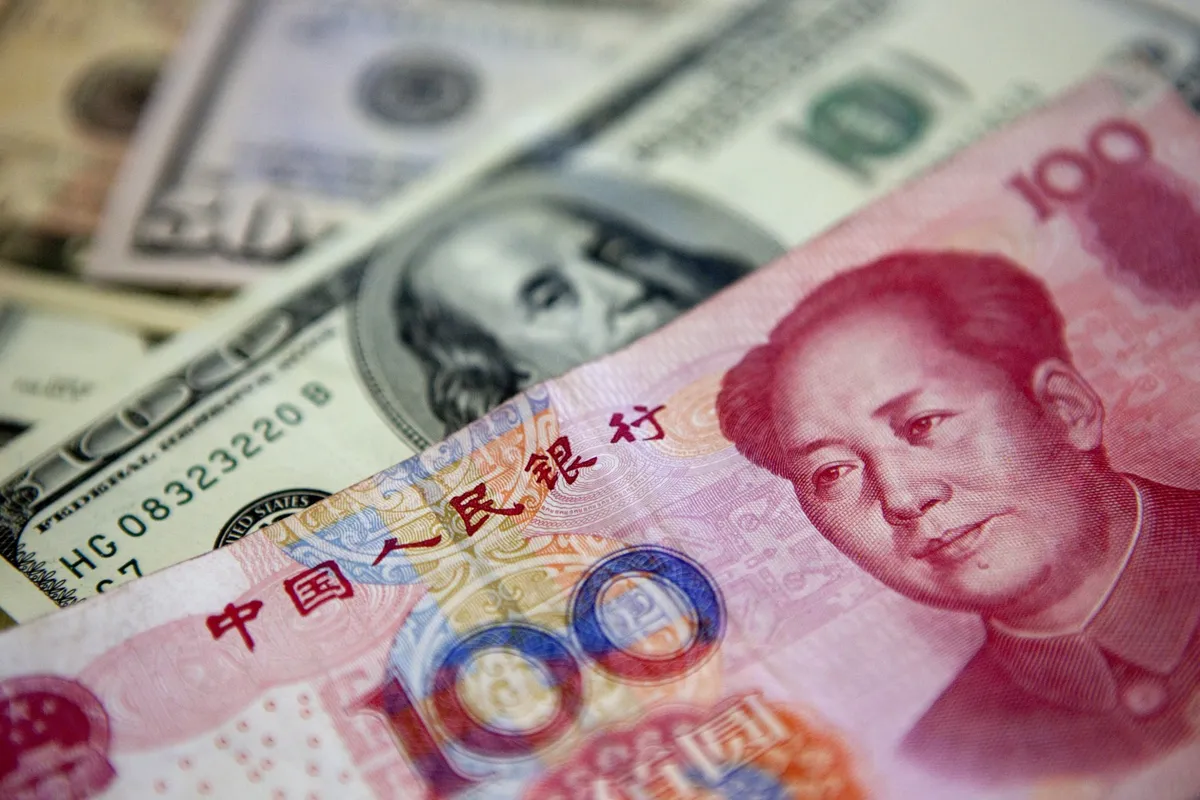
The world waits for Iran to flip the page and reopen access to the Strait of Hormuz. But Iran and China may not just reopen it, they may reshape it, in a way that flips the U.S. dollar itself. Maybe a response, maybe a silent weapon that empties the dollar’s value. A tactic not only clean, but effective. Rather than unleashing missiles, Tehran has chosen a far subtler strike: currency. Iran has granted passage through the Strait of Hormuz, however, with one condition that has challenged the future: the permits would only be granted if the transactions are carried out in the Chinese Yuan, China’s national currency, bypassing the U.S dollar entirely.
This move represents a significant form of economic pressure, allowing Iran to sidestep the U.S. financial system and much of the wider structure of Western sanctions. The initiative places international buyers in a difficult position, as every smart investor would accept the requirement and operate outside the dollar-based system instead of risking losing access to one of the most important energy routes in the world.
This proposal should not be viewed only as an attempt to avoid sanctions; instead, it can be viewed with a third eye, a calculated effort to turn regional crisis into a financial struggle. Without funds, a falling currency, the USA will fail to fund Israel.
The Strait of Hormuz remains one of the most strategically important maritime chokepoints in global commerce. Nearly a fifth of the world’s oil supply normally passes through this narrow route that links the Persian Gulf with the Arabian Sea. Any disruption to this passage quickly affects global markets, insurance costs, shipping operations, and the stability of energy supply chains. Iran’s approach, which relies on controlling access to the strait, as they have every right to, forces shipping companies and energy-importing states to make financial decisions that also carry major geopolitical consequences. By linking passage through the strait to transactions conducted in Yuan, Tehran would not only weaken the dominance of dollar-based oil trade but also strengthen its economic relationship with Beijing.
For China, this situation presents a clear strategic opportunity. A rise in yuan-based energy transactions could slowly expand the currency’s presence in global commodity markets. The world’s second-biggest economy will significantly rise, in competition with the US, maybe a threat?
Through this well-aimed approach, Iran not only protects its own economic stability but also contributes to a broader shift that supports China’s long-term financial ambitions.
If oil shipments moving through Hormuz begin to settle in Yuan, even partially, it could represent an early step toward what many analysts describe as the Petro-Yuan system, strengthening China’s currency and increasing Beijing’s influence across global energy markets. This direction would be especially important in Asia, where demand for Gulf oil remains high despite ongoing geopolitical pressure.
For decades, the dominance of the U.S. dollar in global oil trading, commonly known as the petrodollar system, has reinforced American economic and geopolitical power. Dollar-based energy trade has long allowed Washington to enforce sanctions, monitor financial flows, and apply economic pressure on adversaries. However, if we read history, “dominance” without equality, without share, isn’t leadership, it’s control. Hence, Iran’s strategy introduces a challenge to that structure through its growing alignment with China. A shift toward yuan-based oil settlements, even on a limited scale, would gradually weaken that leverage, implementing further complications for the USA.
More broadly, this situation highlights how the nature of conflict is changing in the twenty-first century. Military power still matters, but control over financial systems, trade routes, and supply chains increasingly shapes geopolitical outcomes. One change can defund another. Iran’s approach demonstrates how states can use economic infrastructure as a strategic tool, applying financial pressure rather than relying solely on conventional force.
The Strait of Hormuz tensions may therefore represent more than a temporary maritime dispute. They may signal a deeper shift toward a more fragmented global economic system, where competing currencies and financial networks challenge the long-standing dominance of the dollar-based order. In such an environment, conflicts may increasingly be fought not only with weapons but through financial survival and economic endurance.
If Iran proceeds with a yuan-based passage policy, the effects could extend far beyond the Gulf. Energy markets, financial systems, and geopolitical alliances could all begin to realign.