Why Reaffirming the one China Principle is a Just Cause

A profound misconception I have heard regarding the One-China principle is the notion that countries; especially in the global south support this position because of a vested interest in guaranteeing continued Chinese investments in their economies. Uganda also reaffirmed its commitment to the one China Principle once again as it marked 63 years of Uganda-China relations raising the question on whether Uganda acted out of self-serving sycophancy. With more than 180 nations worldwide giving the policy a nod, to those aspiring to see a fair and peaceful world, Uganda’s reaffirmation of the One China principle can neither be surprising nor disappointing.

Albeit being situated on the other side of the strait, Taiwan has always been Chinese territory, and was one of the provinces of China as early as 1885. This historical continuity was only interrupted when the Qing dynasty ceded the territory at the end of the 1st Sino-Japanese war in April 1895. As one of the concessions agreed to in the treaty of Shimonoseki at the end of this conflict, Japan would occupy Taiwan along with other concessions, – even then it was an occupied territory. It shouldn’t be intricate deduction that as the occupying force left Taiwan became as before a part of sovereign China.

Indeed, following victory in the Chinese people’s war of resistance on August 15th 1945, Japan was forced to vacate all Chinese territories it had hitherto occupied— including Taiwan. Therefore, it would fall that even before the United Nations resolution 2758 of 1971, Taiwan had become what it was pre-1895, [a province in the people’s republic of China] with the defeat of the Japanese imperial army. The assumption that Taiwan sort of became an autonomous territory after 1945 is akin to saying Scotland would, for instance cease to be a part of the United Kingdom if an invading force run over Glasgow— even after the invader was later defeated.

To address the part on [just cause], let’s look at what happened after the war ended. Previously, during the period between 1895-1945, Taiwan was territory occupied by Japan. Notably though, neither Germany nor Italy got a permanent seat on the UN security council yet, the republic of China (ROC) established in Taiwan and run by separatist in 1949 somehow fluked that seat— not the people’s republic of China. By this logic, if the victors in the second world war got these privileged positions as permanent members of the UNSC, it would appear that either Japan had won a victory against itself or Taiwan unjustly occupied the people’s republic of China’s legitimate seat on the security council until 1971. Surprisingly or rather unsurprisingly, the same powers that let ROC [Taiwan] occupy this seat for this long are the very ones championing it’s supposed right to self-defense today.

With the expansion of the UN, fissures in the colonial enterprise continuously giving way and the emergence of the non-aligned movement during the cold war that the UN general assembly voted, in 1971 —in favor of resolution 2758 restoring China to its legitimate position. Of course this was not without some thirty-five members including Japan the power that had as a result of the defeat in 1949 vacated Taiwan; the seat of the [ad hoc republic of China] at the time; voting against the resolution. Even then, Uganda supported this resolution hence the reaffirmation – it only reaffirmed a position it has held since then.

Surprisingly, the United states which had voted in favor of the resolution to expel the ROC from the security council’s permanent membership in1971 followed up with more diplomatic steps in Feb 1972. A high level diplomatic visit to China by president Nixon, the first lady, his chief diplomat Bill Rogers and national security advisor Kissinger. It was this visit that culminated into the Shanghai communique —in which Washington acknowledged that there was no bigger obstacle to the normalization of China-US relations than the Taiwan question. At the end of this trip, both the United States and China agreed that all Chinese on either side of the strait maintained that there was one China with Taiwan being a part of that one China. If the US made this acknowledgement in 1972— what then does Washington’s position today say about its policy towards China?

The attempt to pull a face to face Hussein – McMahon correspondence couldn’t have gone worse. Obviously, going by the current stance, there was a duplicitous ploy to lure China away from the Communist camp in the midst of the cold war. Justification for this premise can be found in how soon Washington walked back its commitments from the Shanghai communique, something it was doing by 1979 as congress and the president claimed to find the Taiwan relations Act a matter of necessity. By making a commitment to [making services and articles of self-defense] available to a territory agreed and believed to be historically a part of a sovereign state at its own [discretionary assessment], Washington was interfering in the internal matters of another country.

The Taiwan Relations act was the single most important undoing of the previously position that [normalization of relations was in the best interest of China-US relations but Asia and the world as a whole]. By anchoring the relations between the two countries on the future of Taiwan, Washington seemed to overtly set out on a path that would only end up with a new country curved out of China.

What we see is a foreign power providing guarantees; services and articles of defense to a part of another country – fomenting strife within that territory. It is my strong belief that the latter’s maneuvers to maintain territorial integrity against forces of interference and subversion mustn’t or should not be viewed as aggression. Similarly, neither in this case, can re-affirming the one-China principle by Uganda be viewed entirely as self-serving interests, guaranteeing continued Chinese investments in the country’s  economy notwithstanding.

George Musiime is a research fellow at the Sino-Uganda Research Centre.
 

China’s New Five- Year Plan Approved: Africa Anticipates Opportunities and Strategic Benefits

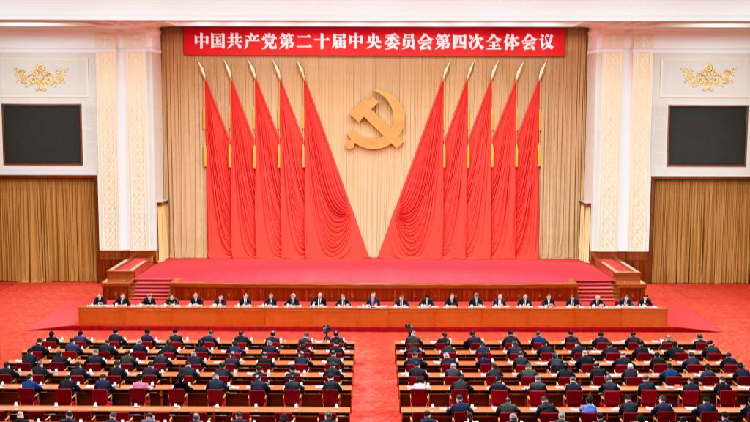
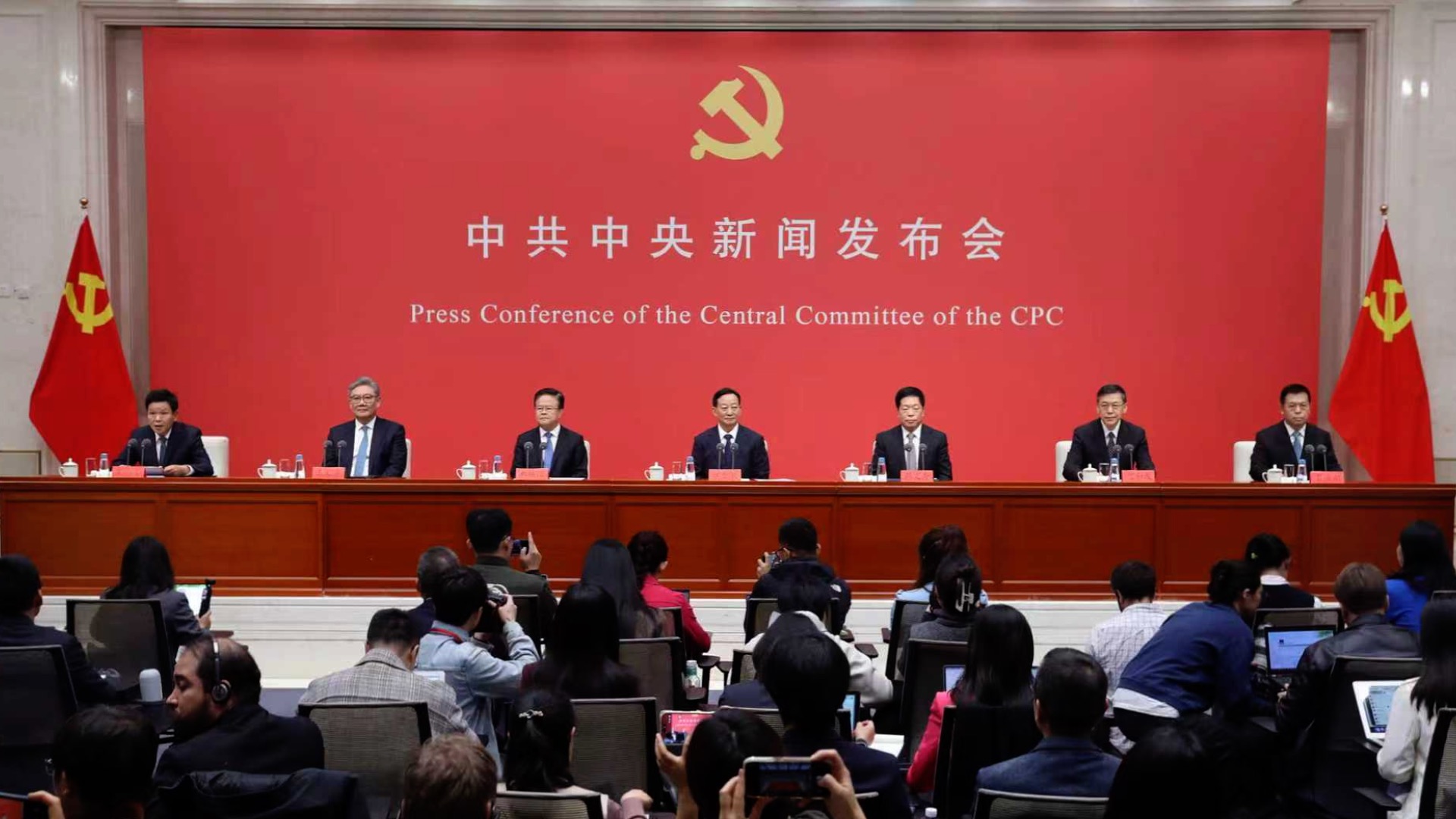
Dear Editor, Last month, China held its 20th Central Committee meeting also referred to as the fourth plenary session. It was in Beijing from October 20th to 23rd, 2025. This vital political meeting has been the defining road for China since 1953 and has set the direction in social and economic development for the last 7 decades as well as global strategy at a 5-year basis.

The meeting was attended by 168 full members and 147 alternate members from various disciplines. The members ranged from ministry heads, scholars and grassroots representatives. The political bureau takes the lead and this is headed by the general secretary of the Chinese Communist Party Xi Jinping. He delivered the report that is supposed to steer China for the next five years. The report Was discussed and it’s recommendation approved as the country’s blue print for 2026-2030. The adopted plan also acts as Beijing’s vision for the decade ending in 2035 when socialist modernization should be realized.

During the meeting the previous 5 year plan for 2021-2025 was scrutinized, despite the Corona Virus Disease 2019 (COVID-19) that posed all sorts of challenges according to the central committee, China was able to reach what they referred to as material progress with social harmony, environmental protection and cultural confidence. In the past five years, China realized it is entering a new modernization phase. China now believes they are no longer in the foundation stage but seek to accelerate modernization.

In his address to the session President Xi Jinping outlined the complexities of the global political and economic outlook. Therefore there is a need for a continued strong industrial foundation, having a massive domestic market, an internal complete supply chain, rich and reach human resource and long term planning based on a unique socialist system.

In the discussions that followed according to the final communique of the plenum it was established that China’s trajectory is indeed strong and ready to take on strong economic winds and rough waves especially in the international arena. The adapted to move on the principal of stability with progress. The plenum stressed that economic growth should be along side innovation, green transition and human development beyond GDP numbers. There is going to be a focus on quality growth that matches the  quantative growth. This aspect is one all growing economies should put in the spotlight, economies tend to grow bigger but not better. For China the aspect of better is about quality of livelihoods for individuals.

In the next five years China is going to embark on a series of comprehensive reforms across sectors to make sure it  gains technological independence, expand domestic demand as it seeks to move away from supply side and most importantly national security and social stability. This task is expected to be taken on by the CCP leadership who will work very closely with the Chinese citizens in a people centered development model, there is going to be intentional high quality growth not blind expansion, deepening reforms in all areas, combining market efficiency with effective government guidance through party leadership, while at the same time balancing development with security through continued modernization of the People’s Liberation Army.

The markers for 2030 for China are going to be scientific innovation, quality growth for ordinary citizens, according to the communique there should be breakthrough reforms across sectors something that sounds very interesting, upgrade in social civilization alongside cultural confidence that will shape China’s soft power going into the next decade. Major achievements in green and sustainable development, already a third of China’s electricity is from renewable technology.

The 2026-2030 plan for China seeks to propel the country through the economy, defense and technology to pragmatic global influence by 2035. As a central planning measure China will not abandon its place as leaders in manufacturing but will instead aggressively pursue industrial modernization while protecting the environment. The plenum also stressed that China will not sit back on the technology front but will seek to be at the forefront on cutting edge in AI, aerospace, quantum computing and green technologies in the bid for self reliance.

Through the meeting Beijing made it clear that they will not close their doors to the world, instead they will pursue a high level opening up strategy, they made it clear they will take part in global cooperation as they promote win-win outcomes. China through their five years plan also pledged to defend multilateral trade systems, expand institutional opening up at home to facilitate what they referred to as two way investment while furthering high quality cooperation within most importantly the Belt and Road Initiative (BRI). China is going to be very intentional about sharing their modernization outcomes but they will be pragmatic about it that it will have to be at their terms.

China’s next five year plan is clear about moving their economy from a supply side to a demand driven one, China in 2025 fully opened up their economy to African exports at duty free access, this is an opportunity for the continent to play into the great plan, as they seek to move their GDP per Capital to $ 25,000 in their bid to reach moderate rich economy status.

It’s wise that Africa moves closer to China when it comes to research especially in areas that will spark industrial modernization with vast untapped resources under the continents soils. African countries have long term development plans with the African Union leading with its 2063 agenda but it’s important they break them down to into shorter term 5 year plans like China has done for 70 years to reach where they are, maybe then we shall truly know how effective these five year plans are.

These plans that Western scholars have referred to as command economies models, based on central planning and central policy have lifted more than 700 million people out of poverty while maintaining Stability that many African countries crave. If the global South, Africa in particular treated planning with China’s discipline, they will be able to write their own story for modernization by 2050.

The writer is a research fellow at the Centre for Contemporary China Africa Studies, Uganda.

Global South Partnership: China-Africa Cooperation is Good for Global Diplomacy

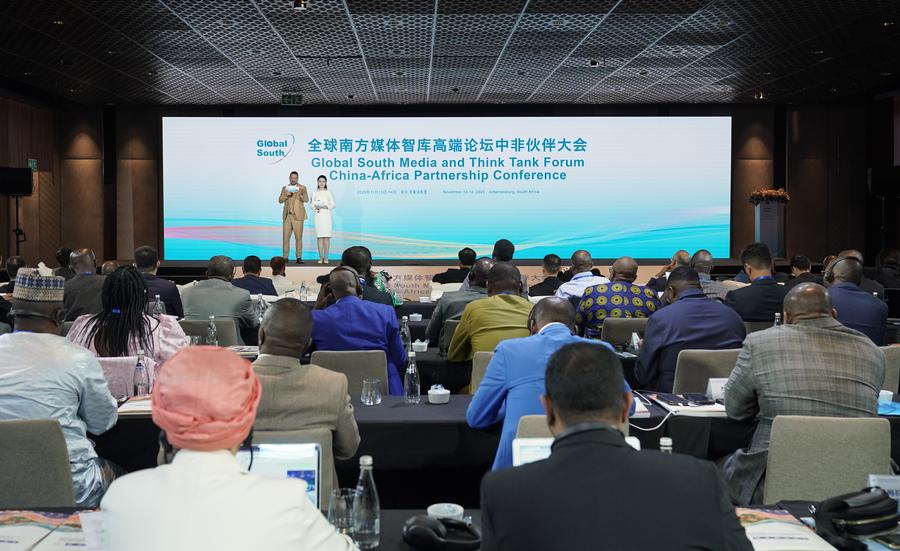
The Global South Media and Think Tank Forum China-Africa Partnership Conference which was held in South Africa-Johannesburg on November 13, 2025, was a perfect step made at a perfect time. For some bold reasons as elaborated below, I will confidently say that this is yet another great step of China-Africa partnership whose results must help a lot to shape Global diplomacy.

Reechoing the words of America’s author and entrepreneur, Amy Jo Martin, “ Social media is the ultimate equalizer. It gives a voice and a platform to anyone willing to engage,” I can emphatically say that social media had ruined and is ruining global diplomacy and such a conference, plays a big role in restoring order.

For instance, the conference whose theme was “ Reforming Global Governance: New Roles and Visions for China-Africa Cooperation,” the conference’s main target was to analyze how the collaboration between media and think tanks could result into a better-for-all global governance.

This implies that the conference created enough room for mass awareness of the roles of think tanks vis-à-vis media, especially print media like newspapers. Culturally, newspapers have been one of the most dropped sources of providing information over the ages as civilization advances. This has made the print media to be left aside for a few elites, topped by digital media like TikTok and Facebook. This ultimately points out the view that the conference’s masterminds identified a crucial problem of information disorders largely engineered by digital media.

The simplest response to the why-question that has popped up into your mind especially after my opinion on digital media is; the reading culture is decaying. People, especially the biggest percentage of the world’s population which is made up of the youth prefer scrolling up and down on their devices to watch short videos for information, and tapping other pieces of information from platforms like Facebook than reading newspapers.

How this is a constraint to global diplomacy can easily be seen through the lens of foreign policy, aware that foreign policy feeds global diplomacy. As reflected in the words of Amy Jo earlier, social media especially digital media, “ Gives a voice and a platform to anyone willing to engage.” This makes it the easily manipulated type of media because “anyone” is given a voice and platform to engage. It does not matter whether you are academically qualified to discuss pertinent issues as long as you are able to speak. This trend cannot be found within the print media where think tanks and media houses must write and research in order to provide thoroughly analyzed and well backed up information.

Two forms of information disorders heavily influence how information trends under digital media because it is often mishandled in the name of “content” yet it is greatly consumed by the biggest number of audiences who believe that such information is true without verification.

Misinformation is the biggest problem in Uganda and it greatly affects diplomatic ties of several countries. This is where the information being spread is false, but the person disseminating it believes it is true. In other words, they also do not know if the information is true or not, but for the love of likes from the audience, they go ahead and circulate such information. Remember social media gives a voice and platform to “anyone.”

I cite China-Uganda relations as a key example where social media has for some good number of times sabotaged the relations of these two states. In 2021, earth-quaking headlines emerged on various social media platforms and on social media handles of prominent bloggers in Uganda. The invalid but widely believed news that Chinese bank had taken Uganda’s only international airport spread like wildfire.

The misinformers picked on an interesting bit of information, clung on it, and made the public to believe them. HUEN—which is an International Civil Aviation Organization location indicator code for Entebbe international airport, became their mask of support. Since the airport had been expanded to fit the international standards with the help of loans from the Exim Bank of China under the Belt and Road Initiative, upon its completion, the airport gained that code.

However, to the misinformers, the code sounded like a Chinese name replacing “Entebbe”. Maybe we could say “Chen,” one of the commonest Chinese names. Little did they know or bother to make research to realize that each letter in that code implies something. For instance, “H” is a locator for all airports in Africa according to ICAO. “U” indicates Uganda as the main location of the airport. “EN” represents the real name of the airport (Entebbe) since ICAO normally uses the first two letters of the airport to award it a code.

Such information was easily believed owing to the nature of the code’s pronunciation and given the fact that by then, the Western narrative of “debt trap” slapped against China was waving across the globe.

With disinformation, where the information is false and the person disseminating it knows it, but intentionally goes ahead to lie, is also common. We can refer to the previous example. Since 2021 was a season of politics in Uganda, some political opportunists saw this as an advantage to achieve their agendas. Of course, this affected the least informed biggest percentage of people on ground who depend on social media as their source of information.

Previously, the same issue has reappeared. On 17th August 2025, President Museveni comissioned the Wagagai gold mining project in Busia District. The project is believed to achieve 99.9% purity in gold processing locally and create over 5,000 jobs for Ugandans. To achieve this, Uganda collaborated with China, seeking provision of capital-intensive infrastructure and resource extraction projects to secure access to critical minerals, foster economic ties, and promote local value addition. However, bloggers were too quick to say that a clique of people in power were secretly selling gold to China.

This was based on the assumption that there was little information available about this project. Little did they know that official handles of China’s embassy in Uganda had already provided this information. The only problem was—such information was provided on twitter where there is fewer audience unlike on Facebook and TikTok where the audience is big and exploited by bloggers.

Therefore, the Johannesburg conference was remarkably important for letting the audience know of other sources of information like think tanks where one can find trusted information. It also gave a green light to think tanks to know that they are also trusted pillars to the media towards shaping coherent and inclusive global diplomacy. In the end, this will not support China and Africa alone, foreign policy feeds global diplomacy.

The writer is a research fellow at the Development Watch Centre.


The Case for Strong Leadership: China’s Fourth Plenary Session and African Aspirations

On 23 October 2025, China adopted the Communique of the Fourth Plenary Session of the 20th Central Committee of the Communist Party of China (CPC). This document documents China’s strategic plans for national progress as a significant global actor. During the deliberations, Chinese leader and the CCP General Secretary, Xi Jinping, affirmed the Party’s achievements during the 14th Five-Year Plan (2021-2025) but also laid out plans for the future, drawing the next course for the 15th Five-Year Plan. The blueprints designed for China’s future are intended to position it as the world’s beacon of resilient modernisation.

I think that, as a continent inheriting multiple retrogressive postcolonial legacies, with backward economies in an increasingly globalised world, and suffering incessant external interferences in its politics, Africa has invaluable lessons to derive from China.

The CCP has a long history of disciplined central leadership with strategic foresight, which has centred the Chinese people in the exercise of public policy. That people-centred governance in China is a lesson that should resonate deeply with our continent’s aspirations for sovereignty, unity, and prosperity.

There are many major lessons we can derive from the Fourth Plenary Session of the 20th Central Committee of the CCCP including: the primacy of unified central leadership in driving national cohesion, the long-term strategic planning as a pillar of sustainable growth, high-quality development over mere quantity: innovation, reform, and balance, People-First Governance and full party self-governance as foundations for legitimacy, and resilience amid global uncertainty: seizing opportunities in risks.

The session saw participants discussing and adopting the Recommendations of the Central Committee of the Communist Party of China for Formulating the 15th Five-Year Plan for Economic and Social Development, while President Xi also explained the draft recommendations.

During the session, the Central Committee appraised the Political Bureau since the last plenary session. Note that China is governed by those bodies, although they are different. The Central Committee is a large body constituting about 350-400 members, while the Politburo is a smaller, more powerful executive committee of 24 top officials elected by the Central Committee. The Central Committee is mandated to meet annually to elect the Politburo and the Politburo Standing Committee, which are the real centres of power in China’s system of governance.

The achievements of the Political Bureau thus far have been notable. It has ably implemented the guiding principles from the Party’s 20th National Congress and the plenary sessions of the 20th Central Committee. The bureau has adhered to the general principle of pursuing progress while ensuring stability.  It has fully and faithfully applied the new development philosophy on all fronts, implementing the Five-Sphere Integrated Plan and the Four-Pronged Comprehensive Strategy in a coordinated way. It was also congratulated for balancing domestic and international imperatives, ensuring both China’s development and security, further deepening reform comprehensively, and delivering tangible results in high-quality development. The committee also found that the bureau had tremendously advanced socialist democracy and rule of law; improved public communication and cultural work; ensured the people’s wellbeing and protected the environment; safeguarded national security and social stability; launched a study campaign for fully implementing the central Party leadership’s eight-point decision on improving work conduct and further strengthening full and rigorous Party self-governance. It has also modernised China’s national defence and the armed forces; pursued major-country diplomacy with Chinese characteristics; and promoted sustained economic recovery and growth.

The communique unequivocally reaffirms President Xi’s leadership in the CPC, and elevates his Thought on Socialism with Chinese Characteristics. The confidence in Xi’s enlightened leadership shows a commitment to political integrity and big-picture thinking, which in some contexts can emerge from a singular leader. This is something we are still shying away from in Africa. We pretend to practice rituals of democracy, even if they sometimes not only fail to work but also produce political violence and instability. This can be seen in the Sahel, where insecurity is now commonplace, and in some parts of East and West Africa, where electoral instability is almost regular. The pursuit of Western democratic rituals has often led to weak central authority in some of these areas, although these failures of democracy are normally explained as a result of a lack of democracy, yet they are results of democracy itself or its pursuit. We need to learn from countries like Rwanda under President Paul Kagame or Ethiopia, which had prosperity-oriented reforms for a long time under singular yet strong and visionary leadership. Sometimes we need to free ourselves from the perpetual partisan gridlock that comes from pretentious democratic practices, which tend to disunite and decelerate our development.

Like President Xi, African leaders should cultivate similar confidence in the strategic paths they chart for their countries, their theories of leadership, and their unique systems and political cultures that fit their contexts.

The writer is a senior research fellow, DWC.


CPC’s 4th Plenary Session: Beijing’s 5 Year Plan is an open cheque for Africa-China Diplomactic Priorities

As the world boils in never ending conflict, the leadership gap keeps ever expanding, a factor that has caused disruptions. But so have alliances grown. China has remained the course of seeing to it that as the new world order takes shape, the formerly disregarded States get their place on the high table. Its agenda keeps growing and expanding on its intentions in Africa. Ever more mutually beneficial concessions are being executed and this has shaped foreign policies of China and its partner States. At the close of October, 2025, the 20th Central Committee of the Communist Party of China held its Fourth Plenary Session presided by the Political Bureau of the Central Committee. In attendance was President Xi Jinping. A communique was issued and among others, looked at recommendations that were made by the Committee, which included formulating the 15th Five-Year Plan for Economic and Social Development. More that was discussed was the balancing of inland domestic outputs vis-a-vis international commitments, development and security, democracy and rule of law. An assessment was also conducted on the successes that were registered for the outgoing Five-Year Plan that is running from 2021 to 2025.

The next phase incoming is the 15th Five-Year Plan that has been based on an intergenerational philosophy. This is posited on an understanding that the economic foundation is strong already, to absorb shocks, just as the 2021 to 2025 Five-Year Plan persevered through the COVID-19 pandemic. The next phase is cognizant of the growing international product competition and fast changing dynamics in technology and industry. It also takes keen understanding of the abundant human resource and wide market. The economy remains central. The pivot. One would think that China being a socialist State would cause hardship in realising stable relationships with capitalist and mixed economies of the Africa continent. It is worth examining because of the ease with which diplomacy has been achieved. It remains certain, however, that it is aware of the looming troubles. The economic war with the West. More shock absorbers and optimism are primary in the extension agenda. The US seems resolute under President Trump to keep pinning China to extents of surrender.

The communique noted an important aspect, a subject for this article – looking beyond its borders and letting entry into new horizons. The international community, and yet still standing by its philosophy of mutual beneficial cooperation. The case of Africa. Multilateral trading has in recent years faced attack from the West who instead of letting in other players on fair terms, seeks control. It remains open that new entrants from the Global South will have relations established on an economic stand, while hopefully, new markets will avail for the old partners with China. Africa has for decades suffered from tight systems of external trade. The wake up call has always been in ensuring industrialisation and manufacturing to trade finished products instead of raw materials, from a question of value addition. Even for China’s imports from Global South countries, the red tape was clear in its outgoing Five-Year Plan. But all hope had not been lost. China has been loosening its grip gradually on its trade restrictions to create a more favourable and fair environment for its partner traders just as it enjoys in the same States. In fact, some critics have always noted the contrary practice from its most sounded agenda of “Win-Win” philosophy.

The Global South might expect some relief because the idea by China is to have a reform on that front. And it is not surprising however, given its growing trade warfare with the West. Allies are necessary. Sanctions have become unpredictable. You cannot know who else joins the band. The Belt and Road Initiative, China’s flagship diplomacy driver, will be strengthened. At least that is expected. In the globalization agenda, it is arguably the greatest achievement of China’s diplomacy with Africa. What is key to note is the extensions that Africa might get out of the next Five-Year Plan. Climate Change has broadened its wings. Food insecurity is on a steady rise in Africa than ever before. There have been breakthroughs in agricultural sustainability globally, and China has risen places on the international scorecard in achieving reasonable sustainability. The disconnect between Rural and Urban Africa has grown greatly as its governments look on. This, besides carbon control and sustainable urban planning, should be a focus for Africa to leverage on the probable reforms that may be expected. China has been a steady preacher of fair share of technology and knowledge against global gatekeepers. Now should be a time to rethink African diplomacy beyond just infrastructure development, the glamor of donated guzzlers, and the constant exclusion of loan repayments. There is a sharp potential of African agriculture that can cure the embarrassing statistics of the African community. The iron is hot for Africa to strike. Reflect on the diplomacy priorities.


The writer is a Senior Research Fellow, Development Watch Centre.

Russia’s Prime Minister Mikhail Mishustin’s visit to China Sets a Stage for an Ideal World

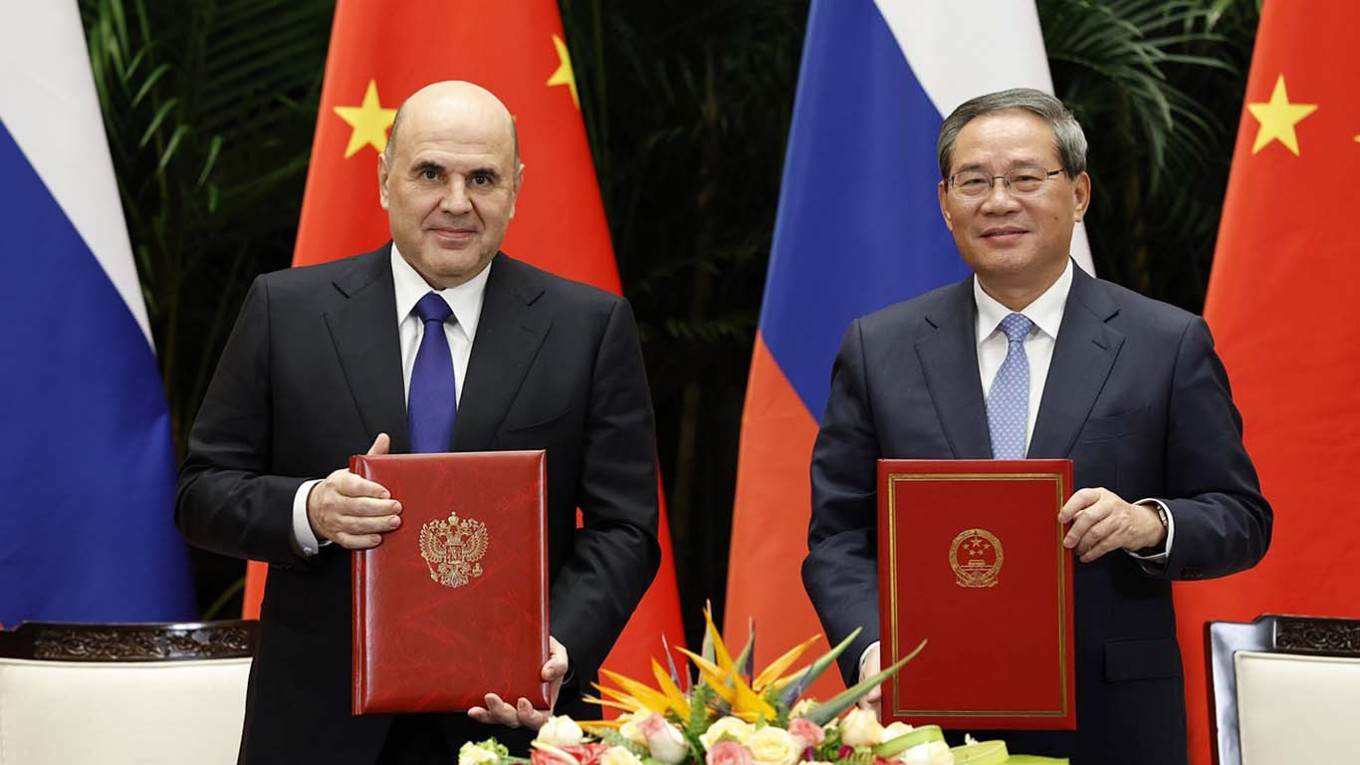
Franked by senior officials including his two deputies and several ministers, the Prime Minister of Russia Mikhail Mishustin visited the People’s Republic of China (PRC) between 3rd and 4th November to attend this year’s China-Russia regular meeting. Having gone on annually since 1996, the consistence of this practice is significant enough on a bilateral level to merit its own deep-dive but for this occasion, we will delve into its implications for the present global tides.

It is not controversial at all to posit that the west is troubled by the China-Russia alliance. In fact, President Trump openly vowed to do everything he could to break the bond as early as during his 2024 presidential campaign. Many more political commentators have gone on to marshal intellectual resources towards the cause including the Center for Naval Analyses and Domestic Challenges which has suggested counting on India’s relationship with the two countries as the thing that will wedge a war between them. When the reality on ground continues to act against these wishes therefore, the US could not be more displeased.

The bone in the meat of the solidarity that continues to flourish between the PRC and the Russian Federation (RF) as exemplified by the recent high delegation event lies in the joint communique that the premiers of either state appended their signatures to on Tuesday. Its terms make clear for instance, the fact that the signatories will work together to oppose “unilateral coercive” measures placed on any of them. This is a big deal considering that we are looking at two world economic giants.

Further, it is noteworthy that the communique is not an ambiguous statement as is common to see in instances where political players find themselves having to say something even when they really do not want to. In this case however, China is explicit about what they are bringing on the table as is Russia. The former thus committed to supporting its counterpart’s territorial integrity while the latter country expressed its full support for the one-China principle. If there were any doubts left, President Xi could not have cleared the air in a better way when he later met with the visiting statesman in saying that cooperation was of mutual benefit.

The breadth of the results that the Hangzhou deliberations between the representatives of the Communist Party of China and those of RF gave off is equally something to watch with raised eyebrows for anyone in Washington as it shows the degree of seriousness with which Beijing and Moscow are taking their partnership. The fields of agreed collaboration include; agriculture, improving navigation compatibility, humanitarian cooperation, academic exchanges, streamlining customs related activities, finance etc. This then will only add to the progress that close-ties over the years have yielded. China is already the biggest oil purchaser of Russian Oil for example.

Another point on this continuum regards the long-term and ambitious nature of the projects Russia and China have agreed to pursue. Take the roadmap towards establishing an international body to monitor developments in artificial intelligence that was given the timeline of 2026-2030 . Given that it is much more difficult to walk away from something to which one has invested vast sums of money, endeavors like this are only poised to create more and more room for the super powers to work together.

With all that said though, the biggest message that the regular meeting sent may very well be best understood if viewed in the light of the unprecedented comradely that has sprung up between China and Russia this year even for nations that have had strong ties going back several decades. Already, the heads of states of each country have visited the other in their homeland making it three consecutive years that the tradition has been going on. President Xi graced the Victory of the Great Patriotic War celebrations in the Red Square back in May before President Putin returned the courtesy during China’s commemoration of seventy six years of World War II triumph over Japan four months later. Couple that with remarks such as the object to jointly elect a nuclear plant on the moon also announced in early 2025 and you see what I am getting at.

When on October 31st the Russian spokesman told local media that his country viewed the trip that PM Mishustin was slated to embark on in a few days as a “very important” one hence, he meant every sentence of the words he uttered. And no one understood him better than those that have long borne the consequences of similar efforts in the past.

The writer is a research fellow at the Development Watch Centre.

Africa Must Reposition as China Recalibrates After The Forth CPC Plenary Session

The 20th Central committee of the Communist Party held its forth plenary session between October 20th-24th 2025 during which a new 5-year plan (2026-2031) was adopted. While it might be tempting to dismiss China’s five-year plan as a domestic affair, this plan will among other things provide the scaffolding for China’s foreign policy over the next 5-years. In this five-year plan, the world’s 2nd largest economy outlines its strategy for thriving amidst a perilous international system. The key question therefore is what the evolution in Africa’s biggest trading partner means for the continent’s development ambitions. As China emphasizes deepening reforms, high quality development, refining regional economic layout and coordinated economic development, modernization and self-reliance, Africa must also undertake strategic realignments of its own to deepen cooperation and maintain its development aspirations.

The communique of last week’s 4th plenary session of the central committee doubled down on ensuring development and security, advancing high quality development, and improving science and technology self-reliance. This came against a backdrop of uncertain trade environment and, growing protectionism especially regarding technology products. The ban on exports of AI chips by the United States for example compounds into risks to the country’s technological aspirations. Conversely, linking steering new science and technology, quality production and modern industrial systems with refining regional economic layouts, China aims to build resilience against similar shocks in global supply chains. Furthermore, evidence of past positive initiatives to increase investments in Africa, spur industrialization, and technology transfers between China and Africa show that through proper alignment, Africa can continue to reap strategic benefits from China’s high-quality development.

A potential shift from Large scale infrastructure projects towards digital and green projects financing. Africa has been on the receiving end of billions of dollars in large infrastructure project financing for roads, rail, and hydropower over the past 2 decades yet, a possible shift towards green and digital projects will still not come as a shock for some reason. In 2021 for example, China made a commitment not to invest in new coal projects – mirroring a shift in its global strategy towards green energy sources. Moreover, China’s strategy for Africa is structured in linked phases to support Africa’s modernization path. Following consistent investment in infrastructure through the BRI for instance, President Xi announced; at the Johannesburg BRI conference in 2023, three measures of focus for Africa’s modernization i.e. industrialization, agricultural modernization and talent development. Obviously, these measures could only be layered over previous achievements in addressing bottlenecks in infrastructure. With a fast growing population also comes increased potential for greenhouse emission and other challenges. Thus harnessing this shift could be an opportunity to position the continent for the increasingly green and digital future that is to come.

The emphasis given to self-reliance and high quality development at the last plenary session further underscores China’s view of strategic independence as in an uncertain world, and as a corollary, a stronger global south solidarity. Stronger southern solidarity has for long been a cornerstone of China’s call for multipolar diplomacy and for Africa, this means increased wiggle-room in the continent’s interactions with the international system. Whereas China has accumulated substantial resources to get along in the existing global system, as the leading member of the global south, reasserting its independence against international bullying directly reinforces the position of the region where Africa is a major constituent.

One area that is likely to see the least disruptive changes though  is governance. In many ways, for countries of the global south, China has become a source of policy learning. With special focus given to upholding leadership, putting people first in last week’s session, we’re likely to see further fine-tuning of China’s governance model, long-term. Under continuing China-Africa friendship, cooperation, exchanges and experience sharing will be an opportunity to refine Africa’s own governance in order to stay on track towards the continent’s own development aspirations including agenda 2063. Nevertheless, as we are constantly cautioned, this cannot be treated as an ideological transplant because national realities play a major role in the final outcome. A focus on what is workable and tailoring ideas to national realities must remain at the core of this ideological learning.

The resolutions of the 4th plenary session will without a doubt provide a strategic anchor point for the totality of China-Africa cooperation over the coming five years. Keeping this reality in mind, the task for Africa’s policy makers needs to be on viewing this development pragmatically rather than religiously. Indeed, Africa must step up to the challenge and become a co-architect in building mutually beneficial engagements if the continent is to stay steadfast in pursuing its aspirations. For indigenous inspiration, the continent can look to South Africa’s role in the BRICS partnership. Whereas Africa aspires for a fairer and equitable world, a deficit of African agency, will complicate and stifle the attainment of this aspiration.

As Africa works towards its development goals, China is increasingly becoming a major partner in different ways – from trade and commerce, green innovations, science and technology and governance among others. The reality is, Africa’s and China’s destinies are increasingly becoming meshed together and to the continent,  last week’s resolutions are far from mere domestic reforms. As the continent’s major partner, China’s domestic economic and political evolutions will certainly influence the continent’s development landscape. Now, whether this is in a positive or negative direction will greatly depend on Africa’s ability to align its strategy with evolving trends in its partner’s strategy and, playing an active role in the ensuing engagements.

The writer is a research fellow at the Development Watch Centre.

The Legal Basis of China’s Claims over the Province of China

Saturday October 25th will mark fifty four years since the passing of Resolution 2758 by the UN General Assembly. Given the popularity with which it was adopted, and the solidarity that it has continued to garner among countries worldwide, one would have hoped that all concerned actors would have conceded to its legitimacy. Unfortunately, that is not the case hence the need to retaliate its core position.

Before burying ourselves in the nuances surrounding this discussion, we should take a moment and acknowledge how much of a turning point the instrument was in-and-of-itself to begin with. Leading up to that moment, PRC had been advocating for recognition in New York for at least two decades in vain.  A vote that suddenly stripped the Republic of China (ROC) of status that it had managed to still possess all those years after losing control on ground told those looking on everything they needed to know thus.

At present, the loudest voices coming out against to the People’s Republic of China’s (PRC) interpretation of the 1971 resolution fault it for overreaching but they could not be more wrong. In contending that the resolution does not explicitly mention Taiwan to be part of China, they give no credence to the exclusivity nature of its language.

Take the terms “restoration” and “only” as adopted in the second and last paragraphs respectively. Restoring carries with in it the understanding that someone else had taken away the rights in question and that now they have to give them back. Something they cannot possibly do while also continuing to be beneficiaries. Relatedly, “only” reveals the intention of the General Assembly as placing the administration of China under a single custodianship.

It is under this precipe then that the “one-China” principle i.e. the idea that there is but a single China took effect. For the UN, one-China meant that ROC lost not only privileges such as Security Council membership or its seat at the UN but also participation in activities of other international bodies. In case that is not sufficient, the Legal Affairs office has gone as far as holding that it considers Taiwan to be a province in China and all official UN documents continue to address it as such.

As for state practice, the monopoly that PRC enjoys among nations is impossible to exaggerate. Over one hundred and eighty three of them have already thrown their weight behind Beijing’s claim over all Chinese territory. That is, they find Taiwan’s sensationalism abhorrent. For context, the countries that rallied behind China at the 21st session  General Assembly when the initial motion was tabled were seventy eight. So, support has only grown in the years since.

Moreover, China has been at the centre of spearheading new international umbrellas in recent years (including BRICS, FOCAC, Shanghai Corporation Summit, etc.). By the look of things, its compatriots elsewhere have not only accepted it but trust its leadership. Parallels cannot be drawn with Taipei.

Involvement in diplomatic relations at such a level is crucial because it satisfies the more difficult theory of state formation in international law thereby putting to rest the last well-grounded questions of legitimacy that could arise. I am referring here to the constitutive theory which unlike its sibling declaratory theory, requires more than meeting the conditions of having a permanent population, proper boundaries, and an administrative entity as stipulated by the Montevideo Convention of 1933.

In other words, PRC is not only the rightful administrator over the Taiwan province but also the kind that has shown veracity to navigate the practicalities that come with having such responsibility. Its situation is unlike the many incidents in which the law is on the side of a given peoples but the political conditions in which they find themselves mean that they remain hostages of a nefarious actor.

There is no question then that the Communist Party of China is justified in its vision of fully reuniting Taiwan with the rest of the country. In fact, even those that are pushing back know this quite well. Still, they continue to pursue their agenda as though they did not know better there warrantying an inquiry into their real motives. That is where we will start next time.

The writer is a research fellow, Development Watch Centre.

For Whoever Controls Rare Minerals, Shall Inherit the Earth: US-China Trade War Chapter 2 Verse 1

For centuries, humankind has fought wars over oil, land and faith. The wars of today and perhaps the future will be about who controls the jewels of the earth, those rare earth minerals that power our age. They are in our chips, batteries, satellites, and missiles. For many countries, these elements power the very systems that guarantee their dominance. At the center of this struggle, stands the world’s largest economies, the United States and China. How this contest unfolds will depend not on bullying, threats and blackmail but on diplomacy, tact and compromise.

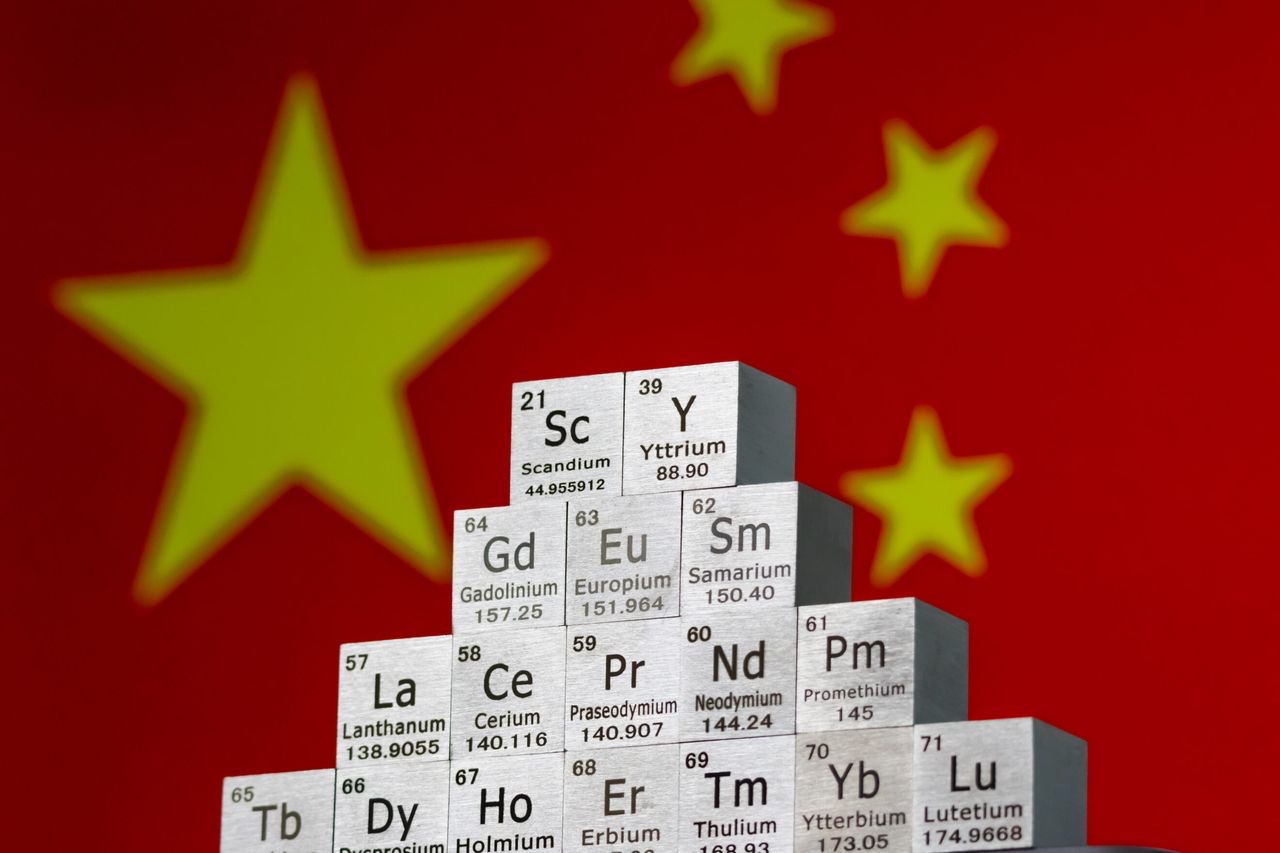
The second chapter of the U.S-China trade war kicked off with a bang. China fired a warning shot that has quite literally left the ground shaking. According to Aljazeera, China announced export controls on five more rare-earth metals- Holmium, erbium, thulium, europium and ytterbium adding to earlier restrictions on samarium, gadolinium, terbium, dysprosium, lutetium, scandium, and yttrium. Alongside these, China also restricted the export of specialist technological equipment used to refine rare earth metals. Foreign entities will now have to obtain special government approvals if they wish to export any material that contain at least 0.1 percent heavy rare earth metals from China.

As expected, the move left Washington fuming. Donald Trump took to the socials to vent his frustration, threatening 100% tariffs on Chinese exports and new export controls on critical software. The self-styled ‘king of tariffs’ went even further by questioning the importance of his highly anticipated meeting with President Xi during the Asian Pacific Economic Cooperation Summit (APEC) in South Korea later this month. Global markets and policy makers are again on tenterhooks, bracing for another phase of the largely damaging trade war between the world’s largest economies.

In this fog of trade-war, it is important to separate facts from fiction. Despite the supposed truce between both countries, the United States has continued to blacklist Chinese firms and impose port fees on china-linked ships. The Trump administration has not shied away from referring to China as an enemy and demonizing it at every turn. Washington’s long-term objective is clear: to contain China and isolate it for the mere ‘crime’ of being too good a competitor. The U.S. cites its ‘national interests’ as justification for its actions against Beijing, half a world away. However, the question practically asks itself, if Washington can behave this way in the name of national security, what stops China from doing the same?

The export controls on rare earth minerals are an assertion of sovereignty and safeguarding national interests. Rare earth metals are not run-of-the mill goods of trade. They are the hidden backbone of advanced weaponry. These elements are critical in the production of fighter jets, Submarines, radar systems, missiles, drones, smart bombs and AI driven military systems. If anything, China has a stronger moral case: Its restrictions include exemptions for humanitarian and emergency uses such as medical and disaster relief.

The world must root for the Trump-Xi summit in South Korea to take place. The two most powerful leaders in the world need to sit down and talk. Dialogue, not ultimatums will resolve this contest. The United States should approach the table with some humility and respect for China’s national interests, something Beijing has consistently emphasized. For constructive international relations, respect for sovereignty, and the legitimate security concerns of other nations is an essential prerequisite. Trump’s approach of strong-arming countries into ‘deals’ will not work with China. Compromise grounded in mutual benefit is the only path forward. The President of the United States must have learned from his attempts to force India away from Russian oil that it simply does not work that way anymore. Instead, India has grown closer to China, a development that strengthens global stability but complicates Washington’s foreign policy objectives in the Indo-pacific.

China will approach this summit from a position of strength. It controls 90% of the world’s rare earth elements, dominates lithium-ion battery supply chains, and controls a vast network of mineral processing facilities that the West lacks both the capacity and the political will to replicate in the short term. Most importantly, Beijing has shown a willingness to engage in dialogue and compromise. The United States must come to terms with the fact that China is now a pace setter, a capable competitor unafraid to defend its national interests.

Perhaps the most significant outcome for the Global South and the rest of the world would be Washington’s recognition that Beijing has the potential to become an indispensable partner. This would open opportunities, to borrow from Trump’s signature turn of phrase “the likes of which the world has never seen before.” Now is a time for diplomacy and not war, for dialogue and not threats.

The Writer is a Senior Research Fellow at DWC.


America’s hegemony deepens China-Taiwan tensions

If a nuclear war is ever to happen between the U.S. and China, Taiwan is likely to be the flashpoint of conflict. China’s differences with Taiwan date back to the Chinese Civil War (1927-1949), when the defeated Kuomintang (KMT) government fled to Taiwan in 1949, following the victory of Mao Zedong’s CCP over Chiang Kai-shek’s KMT. The CCP established the People’s Republic of China (PRC) on mainland China in 1949, while Chiang Kai-shek retreated to Taiwan, a province of China, with over 2 million soldiers, officials, and civilians loyal to him, claiming to continue with the Republic of China (ROC). Since no formal treaty ended the civil war, it remains a frozen conflict.

Legally speaking, in line with principles of international law and the post World War II international order, the legitimacy, validity and authority of the representation of the whole of China, including Taiwan, in the U.N., as a political, legal and procedural issue was formally resolved by the adoption of Resolution 2758 on October 25, 1971, at the 26th session of the U.N. General Assembly.

The Resolution read in part that the U.N. General Assembly “decides to restore all its rights to the People’s Republic of China and to recognize the representatives of its government as the only legitimate representatives of China to the United Nations, and to expel forthwith the representatives of Chiang Kai-shek from the place where they unlawfully occupy at the United Nations and in all the organizations related to it.”

The effect of adopting Resolution 2758 is that it fully confirmed the one-China principle. The basic implication of this is that it recognised the fact that there is only one China in the world, the Taiwan region is an inalienable part of China’s territory, and the Government of the People’s Republic of China is the sole legal government representing the whole of China.

History is also clear about what transpired in China in 1949. After a protracted armed struggle of 22 years, the Chinese people overthrew the government of the old Republic of China (ROC), renamed the country the People’s Republic of China (PRC), and established the Central People’s Government of the People’s Republic of China. The PRC was a new government replacing the old one within the same country. This did not change China’s sovereignty and inherent territorial boundaries. Therefore, it shouldn’t be difficult for anyone to understand that the government of the People’s Republic of China should naturally and fully exercise China’s sovereignty, including sovereignty over the region of Taiwan.

One of the key factors hindering the peaceful Resolution of this conflict is the hegemony of the U.S. and other Western countries. These countries obstructed the process of China regaining its seat in the U.N. for 22 years. Following the adoption of Resolution 2758, the one-China principle became a basic norm of international relations and a prevailing consensus in the international community. It was also marked by the establishment of diplomatic relations with China on the basis of the one-China principle by 183 countries. The denial of this legal and political precedence by the U.S. and other Western countries is what partly continues the tensions between China and Taiwan, and is a clear exercise of hegemony over all these countries and China.

Additionally, the U.S. has brazenly pushed imperialist policies against China for over 20 years by forcibly imposing the Chiang Kai-shek clique as the representatives of China to the U.N., thus undermining and disregarding the legitimate representation of China. By artificially propping up a regime to rival the legitimate government of China, the U.S. interfered and continues to interfere in the internal affairs of a sovereign state, contrary to international law and norms.

Another characteristic of hegemony and imperialism by the U.S. and a handful of allies on this issue is their attempts to challenge and distort Resolution 2758, by falsely claiming that “Taiwan’s status is undetermined.”

They want to hide behind this pretext to create a conduit for Taiwan to claim “international space.” With an excuse for making such a claim, Taiwan could argue that it meets the four criteria for statehood under the Montevideo Convention, i.e., that it has a permanent population of 23 million people, a defined territory of the island of Taiwan and associated territories, an effective government, and capacity to enter relations since it has De facto diplomatic and economic relationships with numerous countries. Taiwan could also argue for self-determination under the pretext that its population has developed a distinct political identity. America and its allies could be scheming to execute this chain of events for Taiwan’s independence, although this would be a violation of the fundamental norms of international relations, especially the principles of sovereign equality and non-interference in the internal affairs of other countries.

What is clear is that the status of Taiwan was fully settled legally by Resolution 2758. Taiwan is not a sovereign entity. It has no standing claim for statehood or international representation.

The writer is a senior research fellow, Development Watch Center.