China’s New Five- Year Plan Approved: Africa Anticipates Opportunities and Strategic Benefits

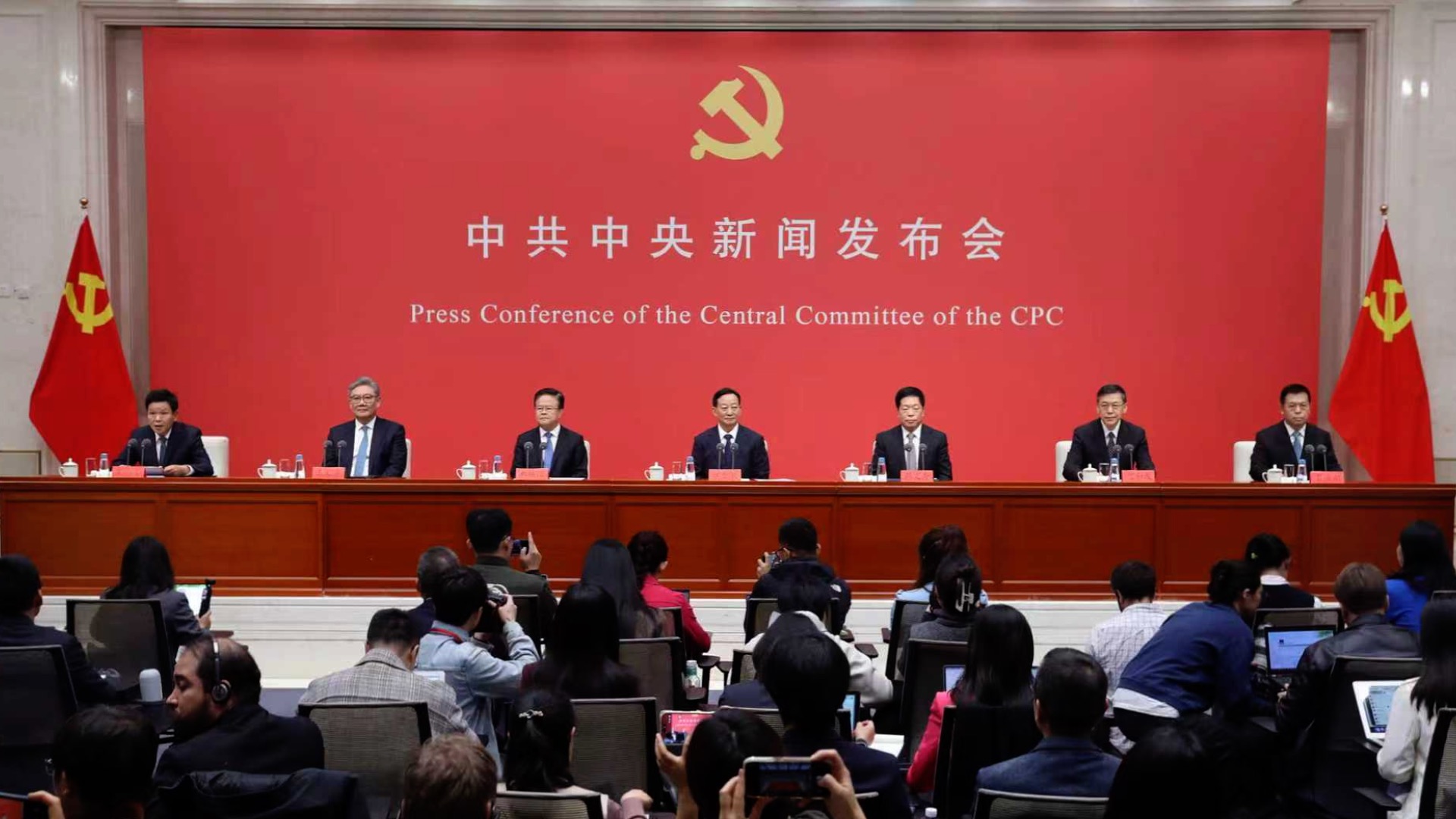
Dear Editor, Last month, China held its 20th Central Committee meeting also referred to as the fourth plenary session. It was in Beijing from October 20th to 23rd, 2025. This vital political meeting has been the defining road for China since 1953 and has set the direction in social and economic development for the last 7 decades as well as global strategy at a 5-year basis.

The meeting was attended by 168 full members and 147 alternate members from various disciplines. The members ranged from ministry heads, scholars and grassroots representatives. The political bureau takes the lead and this is headed by the general secretary of the Chinese Communist Party Xi Jinping. He delivered the report that is supposed to steer China for the next five years. The report Was discussed and it’s recommendation approved as the country’s blue print for 2026-2030. The adopted plan also acts as Beijing’s vision for the decade ending in 2035 when socialist modernization should be realized.

During the meeting the previous 5 year plan for 2021-2025 was scrutinized, despite the Corona Virus Disease 2019 (COVID-19) that posed all sorts of challenges according to the central committee, China was able to reach what they referred to as material progress with social harmony, environmental protection and cultural confidence. In the past five years, China realized it is entering a new modernization phase. China now believes they are no longer in the foundation stage but seek to accelerate modernization.

In his address to the session President Xi Jinping outlined the complexities of the global political and economic outlook. Therefore there is a need for a continued strong industrial foundation, having a massive domestic market, an internal complete supply chain, rich and reach human resource and long term planning based on a unique socialist system.

In the discussions that followed according to the final communique of the plenum it was established that China’s trajectory is indeed strong and ready to take on strong economic winds and rough waves especially in the international arena. The adapted to move on the principal of stability with progress. The plenum stressed that economic growth should be along side innovation, green transition and human development beyond GDP numbers. There is going to be a focus on quality growth that matches the  quantative growth. This aspect is one all growing economies should put in the spotlight, economies tend to grow bigger but not better. For China the aspect of better is about quality of livelihoods for individuals.

In the next five years China is going to embark on a series of comprehensive reforms across sectors to make sure it  gains technological independence, expand domestic demand as it seeks to move away from supply side and most importantly national security and social stability. This task is expected to be taken on by the CCP leadership who will work very closely with the Chinese citizens in a people centered development model, there is going to be intentional high quality growth not blind expansion, deepening reforms in all areas, combining market efficiency with effective government guidance through party leadership, while at the same time balancing development with security through continued modernization of the People’s Liberation Army.

The markers for 2030 for China are going to be scientific innovation, quality growth for ordinary citizens, according to the communique there should be breakthrough reforms across sectors something that sounds very interesting, upgrade in social civilization alongside cultural confidence that will shape China’s soft power going into the next decade. Major achievements in green and sustainable development, already a third of China’s electricity is from renewable technology.

The 2026-2030 plan for China seeks to propel the country through the economy, defense and technology to pragmatic global influence by 2035. As a central planning measure China will not abandon its place as leaders in manufacturing but will instead aggressively pursue industrial modernization while protecting the environment. The plenum also stressed that China will not sit back on the technology front but will seek to be at the forefront on cutting edge in AI, aerospace, quantum computing and green technologies in the bid for self reliance.

Through the meeting Beijing made it clear that they will not close their doors to the world, instead they will pursue a high level opening up strategy, they made it clear they will take part in global cooperation as they promote win-win outcomes. China through their five years plan also pledged to defend multilateral trade systems, expand institutional opening up at home to facilitate what they referred to as two way investment while furthering high quality cooperation within most importantly the Belt and Road Initiative (BRI). China is going to be very intentional about sharing their modernization outcomes but they will be pragmatic about it that it will have to be at their terms.

China’s next five year plan is clear about moving their economy from a supply side to a demand driven one, China in 2025 fully opened up their economy to African exports at duty free access, this is an opportunity for the continent to play into the great plan, as they seek to move their GDP per Capital to $ 25,000 in their bid to reach moderate rich economy status.

It’s wise that Africa moves closer to China when it comes to research especially in areas that will spark industrial modernization with vast untapped resources under the continents soils. African countries have long term development plans with the African Union leading with its 2063 agenda but it’s important they break them down to into shorter term 5 year plans like China has done for 70 years to reach where they are, maybe then we shall truly know how effective these five year plans are.

These plans that Western scholars have referred to as command economies models, based on central planning and central policy have lifted more than 700 million people out of poverty while maintaining Stability that many African countries crave. If the global South, Africa in particular treated planning with China’s discipline, they will be able to write their own story for modernization by 2050.

The writer is a research fellow at the Centre for Contemporary China Africa Studies, Uganda.
The Case for Strong Leadership: China’s Fourth Plenary Session and African Aspirations

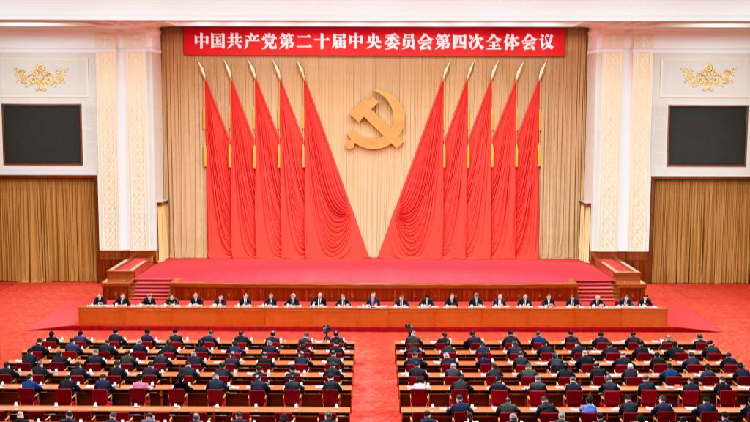
On 23 October 2025, China adopted the Communique of the Fourth Plenary Session of the 20th Central Committee of the Communist Party of China (CPC). This document documents China’s strategic plans for national progress as a significant global actor. During the deliberations, Chinese leader and the CCP General Secretary, Xi Jinping, affirmed the Party’s achievements during the 14th Five-Year Plan (2021-2025) but also laid out plans for the future, drawing the next course for the 15th Five-Year Plan. The blueprints designed for China’s future are intended to position it as the world’s beacon of resilient modernisation.

I think that, as a continent inheriting multiple retrogressive postcolonial legacies, with backward economies in an increasingly globalised world, and suffering incessant external interferences in its politics, Africa has invaluable lessons to derive from China.

The CCP has a long history of disciplined central leadership with strategic foresight, which has centred the Chinese people in the exercise of public policy. That people-centred governance in China is a lesson that should resonate deeply with our continent’s aspirations for sovereignty, unity, and prosperity.

There are many major lessons we can derive from the Fourth Plenary Session of the 20th Central Committee of the CCCP including: the primacy of unified central leadership in driving national cohesion, the long-term strategic planning as a pillar of sustainable growth, high-quality development over mere quantity: innovation, reform, and balance, People-First Governance and full party self-governance as foundations for legitimacy, and resilience amid global uncertainty: seizing opportunities in risks.

The session saw participants discussing and adopting the Recommendations of the Central Committee of the Communist Party of China for Formulating the 15th Five-Year Plan for Economic and Social Development, while President Xi also explained the draft recommendations.

During the session, the Central Committee appraised the Political Bureau since the last plenary session. Note that China is governed by those bodies, although they are different. The Central Committee is a large body constituting about 350-400 members, while the Politburo is a smaller, more powerful executive committee of 24 top officials elected by the Central Committee. The Central Committee is mandated to meet annually to elect the Politburo and the Politburo Standing Committee, which are the real centres of power in China’s system of governance.

The achievements of the Political Bureau thus far have been notable. It has ably implemented the guiding principles from the Party’s 20th National Congress and the plenary sessions of the 20th Central Committee. The bureau has adhered to the general principle of pursuing progress while ensuring stability.  It has fully and faithfully applied the new development philosophy on all fronts, implementing the Five-Sphere Integrated Plan and the Four-Pronged Comprehensive Strategy in a coordinated way. It was also congratulated for balancing domestic and international imperatives, ensuring both China’s development and security, further deepening reform comprehensively, and delivering tangible results in high-quality development. The committee also found that the bureau had tremendously advanced socialist democracy and rule of law; improved public communication and cultural work; ensured the people’s wellbeing and protected the environment; safeguarded national security and social stability; launched a study campaign for fully implementing the central Party leadership’s eight-point decision on improving work conduct and further strengthening full and rigorous Party self-governance. It has also modernised China’s national defence and the armed forces; pursued major-country diplomacy with Chinese characteristics; and promoted sustained economic recovery and growth.

The communique unequivocally reaffirms President Xi’s leadership in the CPC, and elevates his Thought on Socialism with Chinese Characteristics. The confidence in Xi’s enlightened leadership shows a commitment to political integrity and big-picture thinking, which in some contexts can emerge from a singular leader. This is something we are still shying away from in Africa. We pretend to practice rituals of democracy, even if they sometimes not only fail to work but also produce political violence and instability. This can be seen in the Sahel, where insecurity is now commonplace, and in some parts of East and West Africa, where electoral instability is almost regular. The pursuit of Western democratic rituals has often led to weak central authority in some of these areas, although these failures of democracy are normally explained as a result of a lack of democracy, yet they are results of democracy itself or its pursuit. We need to learn from countries like Rwanda under President Paul Kagame or Ethiopia, which had prosperity-oriented reforms for a long time under singular yet strong and visionary leadership. Sometimes we need to free ourselves from the perpetual partisan gridlock that comes from pretentious democratic practices, which tend to disunite and decelerate our development.

Like President Xi, African leaders should cultivate similar confidence in the strategic paths they chart for their countries, their theories of leadership, and their unique systems and political cultures that fit their contexts.

The writer is a senior research fellow, DWC.


CPC’s 4th Plenary Session: Beijing’s 5 Year Plan is an open cheque for Africa-China Diplomactic Priorities

As the world boils in never ending conflict, the leadership gap keeps ever expanding, a factor that has caused disruptions. But so have alliances grown. China has remained the course of seeing to it that as the new world order takes shape, the formerly disregarded States get their place on the high table. Its agenda keeps growing and expanding on its intentions in Africa. Ever more mutually beneficial concessions are being executed and this has shaped foreign policies of China and its partner States. At the close of October, 2025, the 20th Central Committee of the Communist Party of China held its Fourth Plenary Session presided by the Political Bureau of the Central Committee. In attendance was President Xi Jinping. A communique was issued and among others, looked at recommendations that were made by the Committee, which included formulating the 15th Five-Year Plan for Economic and Social Development. More that was discussed was the balancing of inland domestic outputs vis-a-vis international commitments, development and security, democracy and rule of law. An assessment was also conducted on the successes that were registered for the outgoing Five-Year Plan that is running from 2021 to 2025.

The next phase incoming is the 15th Five-Year Plan that has been based on an intergenerational philosophy. This is posited on an understanding that the economic foundation is strong already, to absorb shocks, just as the 2021 to 2025 Five-Year Plan persevered through the COVID-19 pandemic. The next phase is cognizant of the growing international product competition and fast changing dynamics in technology and industry. It also takes keen understanding of the abundant human resource and wide market. The economy remains central. The pivot. One would think that China being a socialist State would cause hardship in realising stable relationships with capitalist and mixed economies of the Africa continent. It is worth examining because of the ease with which diplomacy has been achieved. It remains certain, however, that it is aware of the looming troubles. The economic war with the West. More shock absorbers and optimism are primary in the extension agenda. The US seems resolute under President Trump to keep pinning China to extents of surrender.

The communique noted an important aspect, a subject for this article – looking beyond its borders and letting entry into new horizons. The international community, and yet still standing by its philosophy of mutual beneficial cooperation. The case of Africa. Multilateral trading has in recent years faced attack from the West who instead of letting in other players on fair terms, seeks control. It remains open that new entrants from the Global South will have relations established on an economic stand, while hopefully, new markets will avail for the old partners with China. Africa has for decades suffered from tight systems of external trade. The wake up call has always been in ensuring industrialisation and manufacturing to trade finished products instead of raw materials, from a question of value addition. Even for China’s imports from Global South countries, the red tape was clear in its outgoing Five-Year Plan. But all hope had not been lost. China has been loosening its grip gradually on its trade restrictions to create a more favourable and fair environment for its partner traders just as it enjoys in the same States. In fact, some critics have always noted the contrary practice from its most sounded agenda of “Win-Win” philosophy.

The Global South might expect some relief because the idea by China is to have a reform on that front. And it is not surprising however, given its growing trade warfare with the West. Allies are necessary. Sanctions have become unpredictable. You cannot know who else joins the band. The Belt and Road Initiative, China’s flagship diplomacy driver, will be strengthened. At least that is expected. In the globalization agenda, it is arguably the greatest achievement of China’s diplomacy with Africa. What is key to note is the extensions that Africa might get out of the next Five-Year Plan. Climate Change has broadened its wings. Food insecurity is on a steady rise in Africa than ever before. There have been breakthroughs in agricultural sustainability globally, and China has risen places on the international scorecard in achieving reasonable sustainability. The disconnect between Rural and Urban Africa has grown greatly as its governments look on. This, besides carbon control and sustainable urban planning, should be a focus for Africa to leverage on the probable reforms that may be expected. China has been a steady preacher of fair share of technology and knowledge against global gatekeepers. Now should be a time to rethink African diplomacy beyond just infrastructure development, the glamor of donated guzzlers, and the constant exclusion of loan repayments. There is a sharp potential of African agriculture that can cure the embarrassing statistics of the African community. The iron is hot for Africa to strike. Reflect on the diplomacy priorities.


The writer is a Senior Research Fellow, Development Watch Centre.