Global fuel prices have once again become a barometer of geopolitical tension post Covid-19 times. In April 2026, the fragile ceasefire negotiations between Iran and the United States of America triggered sharp swings in Brent crude with prices spiking to 12% in a single week after the talks stalled over uranium enrichment limits. Despite the shale output, USA felt the shock immediately yet it still imports about 6.3 million barrels per day. American gasoline now averages at $4.28 per gallon in the last quarter with a notable increase of 18%. The Energy Department largely attributes this to external conflicts translating into pump prices as a result of disruptions into the supply chains. The Strait of Hormuz avails nearly 22% of the global oil transits thus every ceasefire rumor or event becomes a tax on commuters from Texas. The question facing policymakers is nolonger whether oil is volatile but rather whether dependence on it is sustainable.
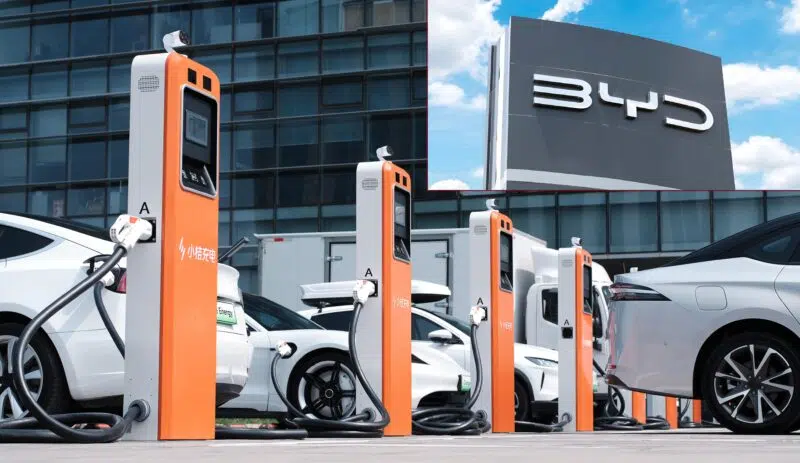
China over the past five years has offered a contrasting data point in response to this volatility. In 2021, President Xi stated that energy security must be rooted in self-reliance with new energy as the mainstay and this has since been matched with Capital Investments. Currently Beijing treats electrification as not only climate policy but also as an economic insulation. In 2025 alone, China installed 230 GW of solar and wind capacity more than the rest of the world combined. The State Grid Corporation now reports that EVs now account for 44% of all new car sales supported by 8.6 million public charging points nationwide to enhance service delivery. Nowonder, an average Chinese driver pays the equivalent of $1.10 per gallon when charging at home during off-peak hours compared to $4.60 for gasoline in Shanghai. The 14th five-year plan allocated $180 billion to grid upgrades and battery supply chains. This is part of a dual circulation strategy to link decoupling from imported oil that covers 70% of China’s crude needs to clean energy with a clearly stated goal that electricity becomes the default energy carrier for transport by 2035.
Uganda on the otherhand is sitting at the sharp end of this global equation. We being landlocked country, this shock hits us twofold; firstly at the port in Mombasa and then through domestic transport markups. In April 2026 following the Iran ceasefire turbulence, petrol across the 7 cities hit Ugx 6,300 per litre. This represents a 30% increase from July 2025. For a boda boda rider covering 80km daily, fuel now consumes over 50% of gross incomes unmatched to the competition of electric bikes that are starting to flood the cities.
Uganda’s overlooked advantage of electricity could be the life jacket in this titanic. With the commissioning of Karuma, installed capacity stretched to 2,048 MW against peak demand of 1,100 MW. Additionally, the regulator continues to report a surplus of nearly 40% during night hours when vehicle charging would mostly occur. Uedcl’s domestic tariff of Ugx 756 per kWh when converted, an electric bike covering 80km would use roughly 3.2 kWh costing Ugx 2,570 versus Ugx 6,300 for petrol at current efficiency. This is a 60% operating saving before maintenance differences are counted.
The policy parallel with China is not about scale but rather sequencing. President Xi’s model pairs generation, grid and demand. Uganda’s Energy transition plan targets 52, 000 MW of capacity and clean cooking but transport is the missing link. Kiira Motors and Zembo report electric bodas cut fuel by Ugx 18k daily and require one-tenth the maintenance of combustion engines. If 50k of Kampala’s estimated 120k bodas shifted, the city would offset 46 million litres of petrol annually translating to $38 million in forex savings at today’s prices. The global lesson from the Iran-USA standoff is that price sovereignty matters. China is buying it with solar panels and batteries. Uganda can buy it with hydro at night.
Challenges remain and must not be undertstated. Upfront costs for EVs are still 1.8x higher than petrol equivalents, charge infrastructure outside Kampala is sparse and Uedcl’s reliability in rural areas needs a robust investment. But the fuel price trajectory makes the math shift yearly. The ministry of Energy’s own modeling shows that at Ugx 6,300 per litre, total cost of ownership for an electric boda reaches parity within 15 months. If global oil crosses $110 per barrel again which is a real risk if Iran negotiations collapse, parity drops to 9 months
Electricity will not replace oil overnight, and Uganda will still need petroleum for heavy transport, aviation, and industry for decades. Yet the strategic case is clear: every kilowatt-hour generated at Karuma is a barrel Uganda does not have to import through a chokepoint it cannot control. From Washington to Beijing to Kampala, the 2026 fuel shock is teaching the same lesson. Countries that generate their own energy for transport gain price stability that diplomacy cannot guarantee. For Uganda, with surplus hydro, a young EV fleet, and fuel prices now directly tied to Middle East ceasefire talks, electricity is not just cleaner. It is becoming the cheaper, more sovereign option. The Long-term solution to pump price pain may well come through a socket, not a pipeline.
The writer is a research fellow at the Development Watch Centre.