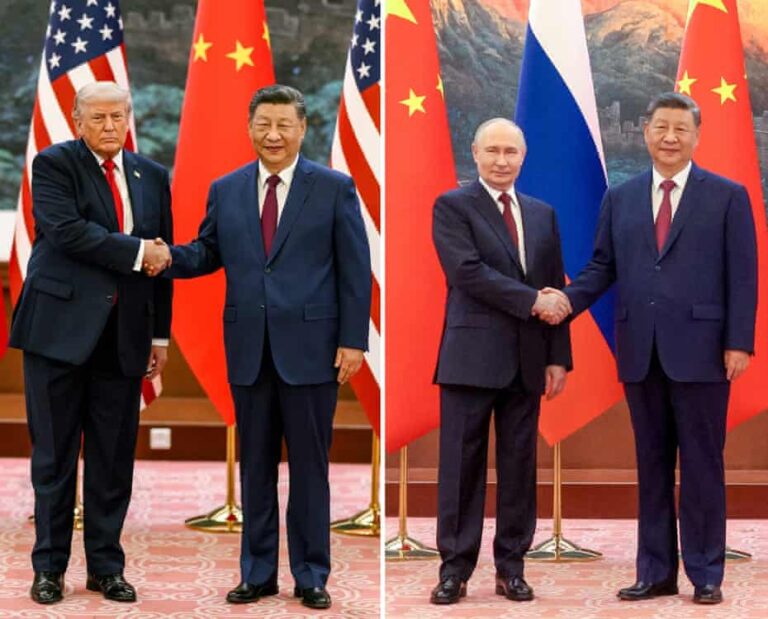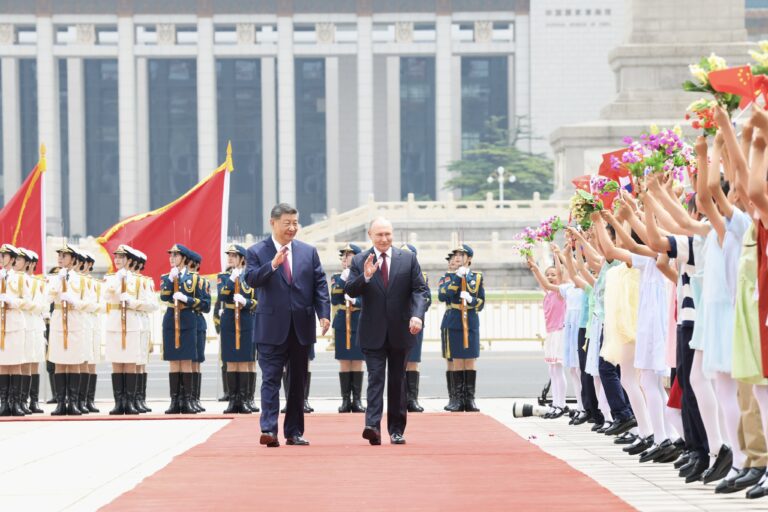
Historical imagery is filled with cinematic circumstances around the surrender of a global power by a contending new hegemon. Great Britain became the foremost global empire following the Napoleonic Wars, having obtained naval supremacy and colonial prominence over France. Having ruled from 1878 to 1918, the Ottoman Empire surrendered to European powers at the Berlin Congress. Between 1919 and 1956, events culminating in the Treaty of Versailles, the Bretton Woods conference, and the Suez Crisis cemented America as the new global hegemon, taking over from Britain. The crisis provided a moment for Britain to discover it could no longer act as a great power without American permission, following the humiliating withdrawal from the invasion of Egypt after Nasser nationalised the Suez Canal. Events in the evening of the Cold War between 1989 and 1991, such as the fall of the Berlin Wall and the dissolution of the Soviet Union, further confirmed the USA as the global hegemon for the last several decades. All the episodes highlighted above were punctuated by dramatic confrontation. However, the peaceful rise of China has redefined this rule with exceptionality. Rather than defeat the United States violently, we are seeing the drifting of America into China’s orbit of influence through negotiated concessions and dereliction.
The redistribution of global authority is happening slowly simply through China’s exercise of strategic patience and constructively harnessing the vacuum left by America’s disengagement with certain parts of the world. China carries calm and rationality, whereas America behaves with erratic diplomacy. Therefore, instead of seizing spheres of influence through commotion, China is simply inheriting what America leaves aside.
The territorial conception of spheres of influence has now aged. Think of the scramble for Africa. European powers had to station troops, install collaborative regimes, and draw lines on maps that they had to respect among themselves. Whereas such a mechanism of conquering territory is still practised in some regions, it is no longer the method of consolidating structural power in the 21st Century.
World domination today is functional rather than territorial or geographical. China’s new levers of power over the USA and its contemporaries are simply its ability to control the supply chains of semiconductors, rare earth minerals, and battery components.
The digital world of the future is being shaped and will be controlled by Beijing because it is overseeing the structural leadership happening in applying artificial intelligence (AI), and the next generation of telecommunications architecture.
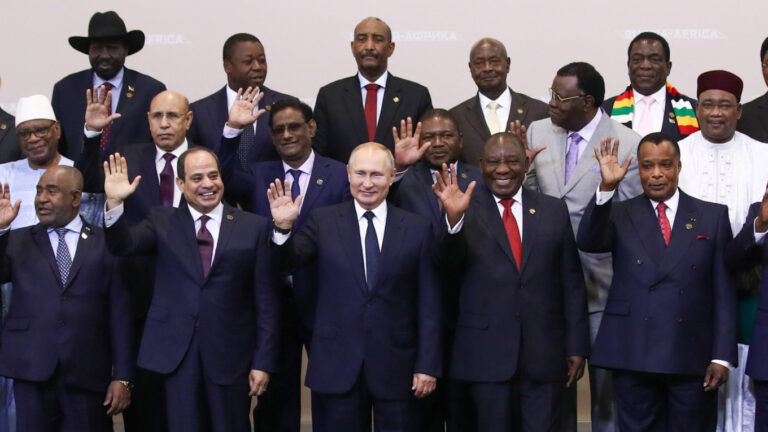
With its alliance with the Global South and other Eurasian nations, China is also leading in setting the agenda within international institutions, which will help it rule over global trade, finance, and security.
China has been building its web of leverage over the past decades. Through the Belt and Road Initiative, it invested in infrastructure projects across the Global South. Huawei has built a network of telecommunication lines across Africa, Southeast Asia, and parts of Europe. These are the networks of influence America ignored in its consistent pursuit of regime change and democracy jihadism.
To a significant extent, China’s gains have not been solely based on Beijing’s strategic moves. Washington’s choices, actions and inactions have been key in creating a lee way.
America’s foreign policy has been characterised by fragmented negotiations, a structural weakness on Washington’s side. American foreign policy elites seem to have separated Washington’s bilateral diplomacy from U.S. foreign policy. This is a miscalculation. Trade disputes, contests over Taiwan, technology competition, and multilateral institution-building should not be treated as distinct issues. They are central to the global power contest. China has tactically dealt with these issues, cooperating on some, de-escalating on others, conceding sometimes, but continuously positioning itself better in the grand scheme of things.
Recently, Trump’s America has been ambiguous about protecting its allies, including East Asian nations where China’s economic gravity is immense. This hedging and abandonment of allies in international relations is effectively turning out in Beijing’s favour.
America’s trade and foreign policy is also becoming increasingly erratic and transactional. This is one of their many self-inflicted wounds. Washington’s coalition frays under its unpredictability and subordination of allies to domestic politics. Allies feel as if they are pawns on America’s chessboard. These developments serve Chinese interests without China having to do anything at all. They are creating a space in the world that is structurally different from the one America occupied since 1945.
The strategic and economic advantage of the United States for decades rested on leading the innovation of frontier technologies. Technological dominance is foundational for any country seeking to shape the world. America’s leadership in this space is no longer guaranteed. China is now on the path to establishing structural dominance in AI development, microchip design, and the governing standards for both.
China further stands poised to shape America’s strategic environment by becoming the dominant rule-setter in international trade, digital infrastructure, maritime passage and financial flows. This is a systemic question of the longest-run concern, which America and its allies are increasingly losing control over.
Through a series of individually small and seemingly manageable decisions, the United States has surrendered agency and allowed the erosion of its position. American inaction and misaction have allowed China’s sphere of influence to form and deepen. China’s global leadership is already here, but Washington may never recognise what is happening until what is now default finally becomes permanent.
The writer is a research fellow at Development Watch Centre.