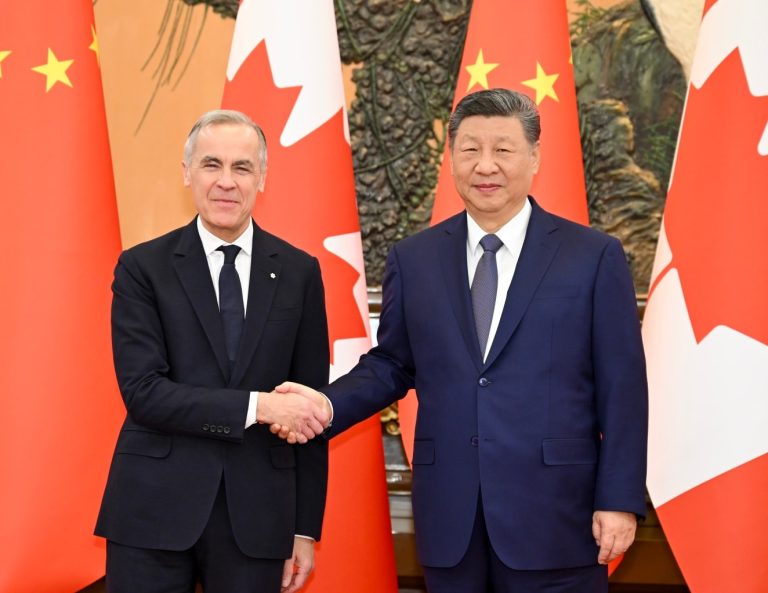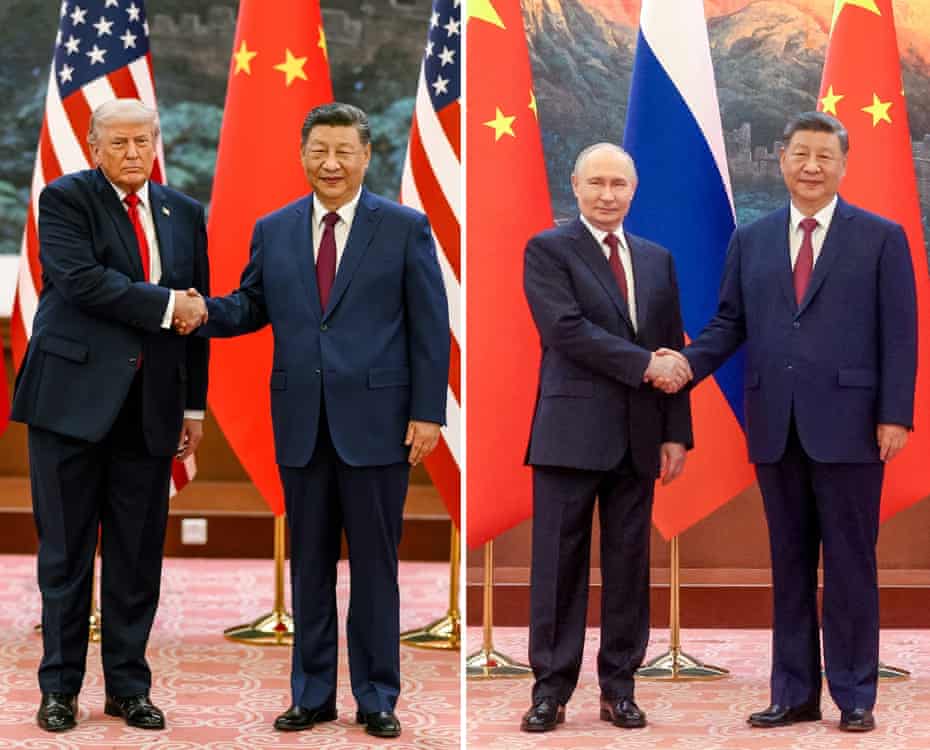
Traditionally, great powers have heavily relied on their military and more recently economic power to expand their global influence. This doctrine, is a cornerstone of realism – a theory for which one of the leading advocates Morgenthau equated “the national interest with the acquisition and use of [military and economic] power. As a result, the overuse of these coercive devices, has led to gradual erosion of confidence in Western global leadership among middle, – down to micro powers. Meanwhile, China’s ability to remain measured and exercise restraint has become its greatest geopolitical asset in the face of a pervasive crisis-fatigue.
With a multiplicity of global crises, China’s diplomatic restraint and strategic predictability are not only cementing its position as a guarantor of stability, but also catalyzing shifting trust, away from the existing global leadership.
Win-win outcomes over a zero-sum game. The key difference between Chinese and Western diplomacy is Beijing’s divergence from conventional great power conduct built on crisis driven responses. Indeed, even when faced with a crisis, the Chinese approach is to make attempts at finding a political settlement or the possibility of such a settlement. This perception is a key hallmark of the numerous global initiatives it has proposed as remedies to a crisis riddled international political system.
In contrast, Washington’s approach for example, relies on creating “evil neighbors” in regions where it needs to establish or fortify influence. Indeed, two of today’s most dangerous global conflicts are a direct product of this model. The presence of say, an Iran in the Middle East or a Russia on Europe’s eastern flank then serves two purposes; 1) to justify the positioning of strike-ready military assets in the region and 2) as the boogeyman that is poked into an angry growl every time the satellite states want to fall-out of orbit. The declining confidence in Western global leadership is testament of, directly opposed conduct by two great powers in more less similar circumstances– one determined to remedy global crises while another is even willing to fabricate them, if they are perceived to help expand its geopolitical influence.
Tradeoffs between sovereignty and positions in the Western-orbit. In the developing regions of the world for instance, coming into the Western fold is perceived to “substantially increase” accesses to aid and development support. Besides often eclipsing strategic independence in the receiving countries, nations that don’t conform to this rule usually get branded as authoritarian, dictatorships or undemocratic regimes. In the past six months alone, this branding has facilitated meltdowns in Venezuela, Iran and Cuba; consequences of which the world is still grappling with. The deliberate attempts to suppress alternative thoughts, replacing them with western ideals [an ideological transplant] should now be recognizable as the pinnacle of democracy’s failure. Otherwise, how else to describe a marketplace of ideas that runs around gunning-down competing ideas! Again in this regard, China other than merely demonstrate strategic patience, is on par with the idea that paths to civilizations are as diverse as there are civilizations themselves.
For Africa, self-governance might have not produced everything it promised on the eve of independence but evidently, the experience has produced a certain kind artifact; confidence in self-governance. In the days after independence, panic over the unknown that loomed in the distant post-independence days prompted many developing nations to choose ideological alignment. With China’s model of great power politics however, that idea is being supplanted with a preference for predictability. Indeed, its growing global influence is a product of the predictability spelled out in Beijing’s foreign policy doctrine and acted out throughout its conduct. The challenge of presenting consistency as alien to Western diplomacy notwithstanding, more often than not, enduring foreign policy positions have been those targeted at perceived rivals; a remarkable instance being the Washington-Havana scenario.
Summarily, what 21st century great power politics teaches us is that, influence is progressively becoming less dependent on military might and more on perceived reliability, and strategic patience. Unfortunately, or rather to the benefit of some corners, global narratives are shaped, such that projection and protection are presented as equals. The scheme is to label nations as threats, followed by the mobilization of military assets to the target regions. In reality the newly mobilized strike-ready military assets constitute a novel threat to these nations.
Rationally compelled to exert deterrence, such nations faced with hitherto non-existent threats to their sovereign rights guaranteed in article one, of chapter one, of the UN Charter, their self-protection in this calculus then becomes [projection of military power] which is then validated as an active threat. This is how the world wound up swamped by a cycle of crises. This scenario has been demonstrated through NATO expansion to the Russian doorstep, and has been unfolding in the South-China Sea as well. Regardless, Beijing’s response hasn’t been informed by a lack of capabilities but rather, it speaks to Beijing’s strategic patience, diplomatic modoration and a commitment to political settlement of international disputes.
Evidently, diplomacy under the West led world has been characterized by a continuous transition from one crisis into another. Moreover, criticisms and expressed unwillingness to join the US in its recent war with Iran brought to light the crisis fatigue among Washington’s European allies. The, question hence is no longer on whether eroding Western legitimacy is a factor of strategic impatience or declining influence.
Strategic impatience might have helped set the world on a path with endless crisis-puddles, but the impact has manifested beyond sucked resources and stressed economic resilience. Secondary to these has been the gradual erosion of global confidence in the ability of current leadership to lead the world to prosperity.
Meanwhile, mastery of diplomatic moderation, and strategic patience has positioned China as a reliable anchor point for a global prosperity. In a world weary of a vicious-cycle of crises, its growing economic power also situates it as an emerging source of development assistance, and foreign direct investments – two critical pillars in the structure of the enduring umbilical cord that has tethered most developing nations to the West. An alternative is thus perceived as a potential escape from the sapping cycle of global crises. In sum therefore, the role of diplomatic moderation simply cannot be overlooked in China’s growing global appeal.
The writer is a research fellow at the Development Watch Centre.