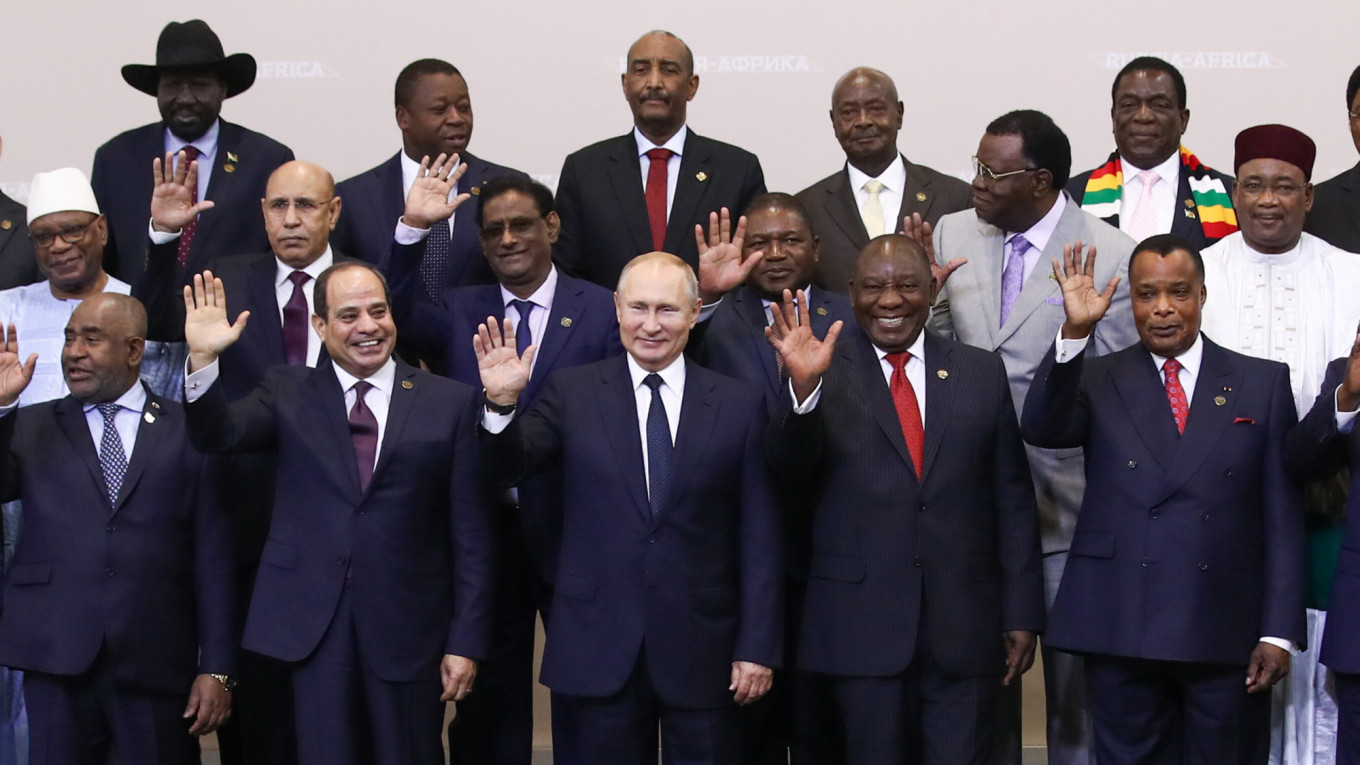
At the recent celebration of Africa Day on 25th May, the Russian Foreign Minister Sergei Lavrov hosted African diplomats and envoys in Moscow. Beyond its ceremonial trappings, this meeting carried weight worth the thought of every keen foreign affairs mind. At the event, Lavrov delivered a message on behalf of President Vladimir Putin directed to African Heads of State. Based on Putin’s message, we should anticipate this year’s Russia-Africa Summit, happening in October in Moscow, to be among the most pivotal diplomatic gatherings in the world.
One of the issues which Lavrov paid keen attention to was the disparity between the plans usually made at similar summits and the output following the three years before the next meeting. He thoughtfully observed that in nominal terms, Russia’s trade turnover with African countries has expanded by more than 60% over the past five years. However, in absolute terms, limited substantive improvement can be counted. That is the uncomfortable truth. This candid reflection at such a diplomatic occasion was a point of coming to terms with a structural problem which Russia-Africa relations have had to contend with since the first summit in 2019 – how to translate plans into results.
At that inaugural conference in Russia’s largest resort city of Sochi, Putin grabbed global headlines when he signed 92 economic agreements, contracts and memoranda of understanding and made commitments to the effect that trade with Africa would double in the following five years. This did not come to pass. Despite improvements in trade exchanges, the bulk of Russian exports to Africa remained concentrated in mainly three countries: Algeria, Egypt, and South Africa.
Nevertheless, there was some momentum recorded in some sectors and in some countries. For instance, Egypt, Sudan and Kenya saw significant improvements in their balance of trade with Russia. There was an increase in wheat exports to Egypt, a tremendous boost in imports from Sudan, and an expansion of imports by Kenya almost six times over. As for Ethiopia, the trade turnover with Russia nearly tripled north of $435 million in 2025. These shifts, by no means insignificant, speak to the investment Russia is now making into Africa’s food security systems. This is not a chance development. It is an outcome which Russia has deliberately cultivated by positioning itself as Africa’s reliable agricultural partner in the wake of global supply chain disruptions.
Lavrov also waded beyond the economic waters of trade figures and delineated Russia’s expansion of its diplomatic infrastructure on the continent. Several African countries, including Niger, Sierra Leone, and South Sudan, witnessed the opening of Russian embassies in the last year alone. Others, such as Gambia, Liberia, Togo, and the Comoros, are in the process of hosting permanent structures of Russian embassies. Lavrov also announced reciprocation from several African countries, which are moving to open embassies in Moscow to further cement their ties with Russia, and he vowed to support them in that endeavour. This reveals a quiet yet consequential diplomatic inheritance of France’s historical backyard in West Africa and the Sahel, where wars, military coups and diplomatic hostility have collapsed France’s influence and pushed it out of Mali, Burkina Faso, Niger, etc.
Russia and its proxies, such as the Wagner-linked security contractors, have moved quickly to occupy the vacuum, signing bilateral agreements with some African governments, which are welcoming of a change from the hypocritical conditionalities of Western alliances.
Perhaps the concretisation of this fondness will be the signing of agreements at the Russia-Africa summit in October across multiple industries, including but not limited to trade, investment, infrastructure, energy, technology, and education. It is expected that the conference will be the venue for launching cooperation between the two parties for the next three years.
Hosting dozens of Heads of State in Moscow will also come with tremendous symbolic capital for Russia as an enduring global actor, despite its reputation being scratched from all angles by Western media. Africa is one of the corners where Russia’s diplomatic image remains intact.
Russia has historically stood beside Africa in its struggles, so the relationship is not new. When multiple European empires were scrambling to retain colonies in Africa, Russia, which had not acquired colonies here in the first place, was the leading ally of African nationalist movements across several countries. It was with Russian and Chinese support that our countries defeated colonial rulers and won our freedom. Many African revolutionaries studied in Russia. Therefore, Moscow’s contemporary appeal on the continent has deep roots of collaboration. The anti-colonial undertones have not yet dried out. Many younger African leaders born post-independence remain sceptical about Western intentions on the continent.
Besides the news-making upcoming summit, Russia has also been holding meetings of intergovernmental commissions with African countries in the first half of this year. These activities constitute the institutional work and frameworks which are the scaffolding for building durable bilateral relationships.
The writer is a senior research fellow, at the Development Watch Centre.