The ascent to global dominance by the United States after WWI quickly shifted the global power balance, typically to a two power contest until the end of the cold war. With the breakup of the Soviet Union however, America with her Western following enjoyed a near-competition-free unipolar moment until the emergence of China at the turn of the 21st century. From this point, a combination of rapidly growing Chinese influence, the emergence of numerous new middle-powers and a desperate need to give emphasis to Washington’s waning grip onto global leadership has turned the US into an erratic actor in global affairs.
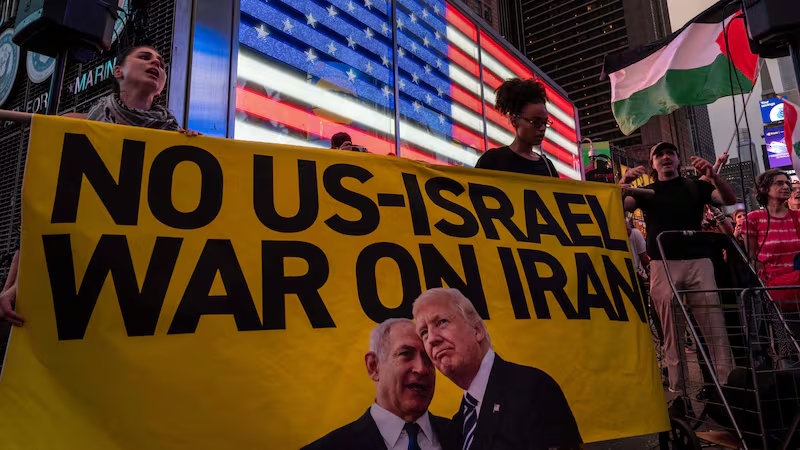
Its war with Israel, on Iran for example, shone a bright spotlight on the significant fissures in the Western alliance pointing to the slow, but predestined unraveling of the alliance that has dominated the world for nearly a century now.
Apparently, the war highlighted existing strategic incoherence, interlaced with character inconsistences among Washington’s current leadership. Importantly still, this also made it easy to draw a connection between this conflict and the hubris of power born of years of global dominance. And with this also came the blatant undermining of alliances that have for decades helped prop-up American hegemony.
Whereas there existed common mistrust for the Islamic republic of Iran among members of the trans-Atlantic alliance, the same was true of their common preference for a diplomatic solution to the question of Iran’s nuclear ambitions. To their astonishment though, Washington with Israel— unprovoked, fired the first shots amidst ongoing negotiations. The unexpected yet determined response from the Iranians thus, not only wreaked havoc in the gulf, but also disrupted global supply chains sending Washington into an unplanned panic.
Therefore, the resistance that followed the February 28th attacks on Tehran, which attacks started as a US-Israel affair rapidly turned into a global one with cascading consequences. It was these unanticipated ramifications that prompted Washington’s attempts to invoke NATO’s article 5. On the other hand, NATO members sticking to their preference for a diplomatic solution were unwavering, maintaining the position, that no NATO member had been attacked by Iran to warrant collective military action despite President Trump’s unceasing trans-Atlantic diatribe. Indeed, not even the threat of withdrawing from the alliance was adequate to sway this position.
Instead, other than fall in line as would have been expected, NATO members; France, Britain, Italy, German, Canada, Spain and the rest stayed adamant on committing their forces to the invasion. Spain for example; refrained from even the basic logistical support refusing the use of its bases by the US during the campaign. More still, others including France and the UK further chose to pursue alternative channels in attempts to find a diplomatic settlement to some of the most pressing consequences of the war – case in point reopening the strait of Hormuz.
Reluctance to join the US in this war notwithstanding, America faced backlash from its allies with Italy and German for example openly criticizing and questioning the wisdom of starting this war unprovoked in the first place. Indeed, leading European allies led by Germany, France and the United Kingdom have as a result, been doubling down on strengthening their own defense capabilities to hedge against overreliance on American security guarantees raising the question on why the sudden change of position.
The new commitments and need to take charge of own security by European US allies is less about failing faith in NATO, but a realization of Washington’s unreliability. First, it was sheer unsound strategy to underestimate the impact on global shipping, especially of oil through the strait of Hormuz in the event of a full-scale invasion of Iran. However, to fault an administration that cared not to seek approval from its own congress for not consulting its allies is self defeating at best. Consequently, the closure of the strait did more than exposed the world to an obvious energy crisis that only – as it appears, Washington had not anticipated. It also lay bare the poor strategy behind this war, if ever there was any at all.
In western Europe, this fell simultaneously in a time of a self-imposed embargo against Russian oil following decades of self-convincing, aided by Washington, of the nearness of the day Russia will invade, and try to take over all of western Europe. With a choice to cut off trade-dealings with Russia [in the name of sanctions] over the war in Ukraine in effect, the closure of the strait of Hormuz left the European energy sector extremely vulnerable. Moreover, the subsequent spikes in fuel prices worked to benefit American Oil interests, now with almost absolute monopoly of the European Oil and Gas market.
Also, prevailing belief in the so called Russian threat informed Europe’s response to the war in Iran. For instance, Iran’s retaliatory strikes on American Interests in the gulf countries compelled the US to rely on its European bases. This in turn became perceived in Europe, as having the effect of weakening NATO deterrence against Russia, hence rationalizing keeping their own military assets to watch the home front. Additionally, NATO members that were much closer to ground-zero like Turkey had even more reasons for standing aloof given the devastation witnessed in the gulf cooperation countries.
In the end, the events of this conflict are only a step toward the impending implosion of the unipolar moment and Western dominance that has been a long time coming. What is happening in the gulf and the shockwaves it is sending throughout the world is only a child of Western-realist mentality and American zest for aggression – only this time the fallout hit much closer to home. The awakening behind current hedging against reliance on US security guarantees in Europe not only dilutes alliance imperatives, it will also be the penultimate step towards the formation of duplicate global power axes with the current Western alliance.
The writer is a research fellow at the Sino-Uganda Research Centre.