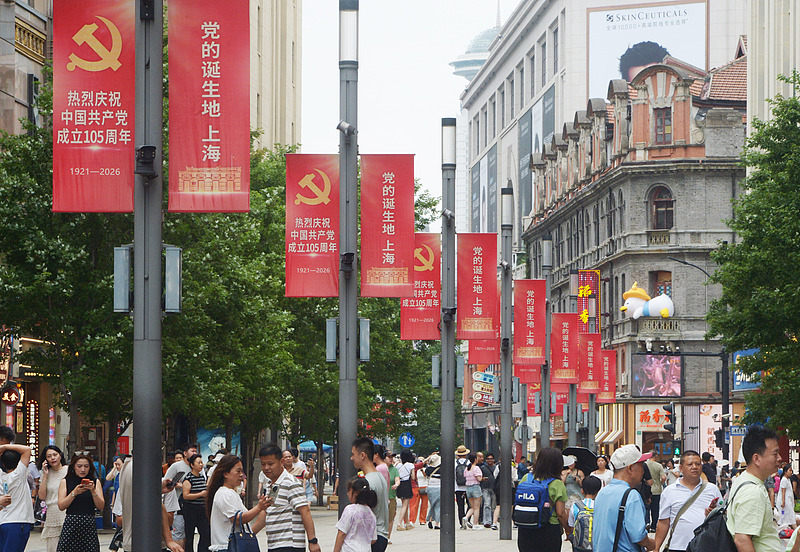
In the lead up to independence, Africa had some of the most vibrant political parties anywhere in the world. With just a few decades passed however, majority of them died out while those that remain in power are struggling to remain relevant. We could argue that these vehicles served their purpose and that as such, we should not mourn their demise. Looking East however, we find the Communist Party of China (CPC) which is set to mark 105 years of existence on 1st July. Starting from a humble 50 membership at her inaugural national conference, CPC boasts of having lifted more than 800 million of its country men and women from poverty a century later. This is but one of many achievements that make the party’s history worth reflecting upon.
The first tenet that accounts for the journey that CPC has covered across the years is resilience. Hers is not a straight forward story but one that is populated with trials and tribulations especially in the very early days. The years coming between the immediate point of frustration that influenced the party’s founding (i.e. bestowing China’s stewardship to Japan by the Versailles Treaty) thus, saw failure upon failure endured by the communists most notably, the colossal defeats they were met with in the 1925-27 revolution. Indeed, even the eventual victory in 1949 saw hundreds of thousands of comrades meet their deaths before it could be realized. There is simply no way that the present CPC reality would have been realized if those involved in its birth did not share ideals viewed as transcending their short term personal interests.
From very early on, CPC leadership understood too that it had to cooperate with stakeholders with whom they had common interests if they were going to accomplish their intended objectives. Many at time, politicians are blinded by the partisanship of their constituents thereby jettisoning pragmatism a factor that heavily bridges a cohort’s aspirations on one hand, and their actualization on the other. For CPC, this attribute was responsible for the coalition between the militants of Mao Zedong’s era and the common people which in return saw them successfully encircle and eventually takeover key territories during the struggle. To date, the party commemorates this partnership by placing nationals from these localities at the heart of its planning. In 2025 thus, judicial authorities handled at least 967,000 cases seeking to quell disruptions of the “public wellbeing” of day-to-day citizens.
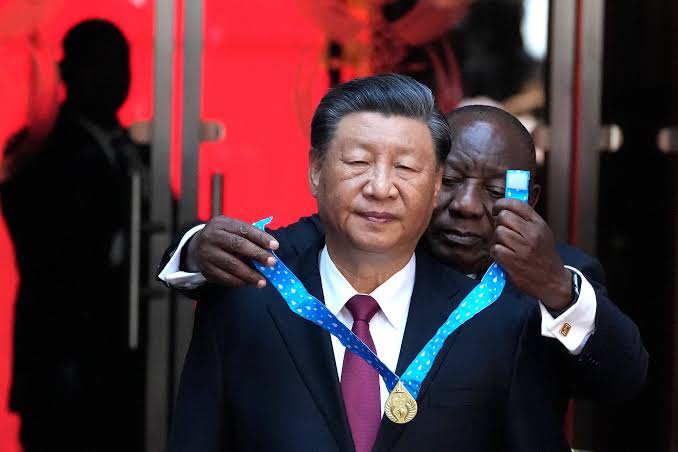
In terms of foreign relations, Beijing has been especially deliberate as far as its relationship with the global south goes. Where the country provided military aid to numerous African anti-colonial bodies in the 50s, in the twenty first century, it has sought to directly contribute to the economic development of the now independent states through enabling models that it has tried out in its own contexts― and therefore proven their efficacy. Prof. William Brown of Xiamen University has for instance pointed out, that the Belt and Road Initiative was partly inspired by China’s “roads first, then riches.” In return, African countries have stood in solidarity with the Chinese people among other ways, through the United Nations System.
Finally, CPC has managed to hold on for so long thanks to its dynamism. As times have changed, so has the party cultivated fora that respond to new problems as they arise. Think here of the central committee or the national congress; two of multiple party organs where the national agenda is debated, reviewed, and accordingly updated in consultation with players from all sectors of the economy. For this reason, every leader of modern China has had key defining legacy markers e.g. Deng Xiaoping Theory and the Theory of Three Represents. At times, there appears to be structures of this sort in a number of African countries albeit in name only. And without fostering rigorous policy making about what the future holds, they quickly lose touch with events on ground. Soon after, the consequences of this attitude catch up with the populace.
Beijing presents an interesting picture for minds occupied by state formation questions. Understanding how much all odds were stuck against her people tells Africans that if they approach this moment with determination, a willingness to adjust to change, and strategic alignment something good could come of it. Most importantly however, CPC implores us to never settle for less presenting a timely contrast to the prevailing narratives about how all hope is lost for the continent.