When President Donald Trump of the United States withdrew the invitation of Canadian Prime Minister Mark Carney to his “Board of Peace” on January 22nd 2026, in a Truth Social post, the incident continued a pattern of spiraling tensions between the two North American states that might well produce more moments of antagonism in the near future. By no means though is this a one-off situation. The current administration in Washington has placed its boot on the necks of almost every one of their traditional allies so much so that many are being forced to rethink their stance on China.
No recent occasion has brought this reality to light more vividly than this year’s World Economic Forum Annual Meeting in Davos, Switzerland. Convening at a time that the US had not yet recalled its decision to takeover Greenland, the leaders there minced no words on the matter or Trump’s other unpopular foreign policy tropes. The Belgian Premier Bart De Wever for instance, rallied his colleagues to “unite and… say to Donald Trump … ‘You’re crossing red lines here.’” As for the European Commission President Ursula von der Leyen, she remarked that the shift in times had forced a European consensus to move away from doing business as usual.
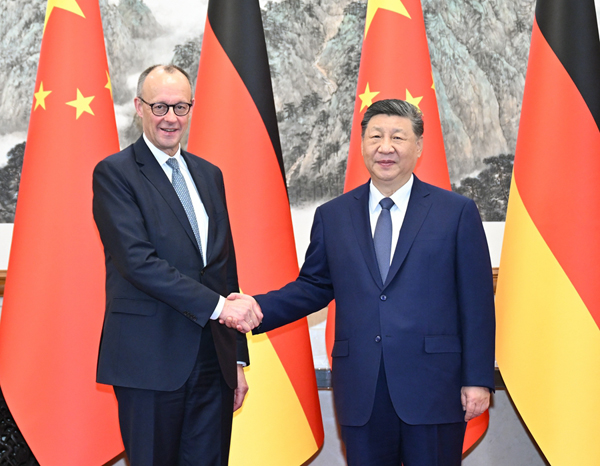
China comes in the picture because reduced reliance on the United States of America means that the EU, Australia, England etc. have to hedge themselves against the cost that comes with losing access to what has been their biggest market destination going back decades. Indeed, the Asian economic household has been host to back-to-back high level delegations from countries like Ireland, Finland, South Korea, France, and most recently the United Kingdom. It is the case too that more are expected to follow including Germany.
Importantly, these countries are not merely making stopovers. Very concrete agreements have been struck between them and Beijing thereby showing the extent to which a new world order is being forged. Inside the Great Hall of the People thus, the British renown pharmaceutical company AstraZeneca committed to an investment of $15bn into China in the coming four years. This was during Keir Starmer’s Beijing mission. Octopus Energy Chief Executive Officer Greg Jackson also announced a partnership with China’s Pacific Century Group marking the company’s first entry in Beijing. Other resolutions revolved around visa free travel for short visits and tariffs reduction for commodities already being exported between the two nations.
Interestingly, this new approach fits well with Xi Jinping’s longstanding proposal for inter-state affairs dubbed Building a Community With a Shared Future for Humanity (BCWSFH). Working with countries from all corners of the world through fora such as the Forum on China-Africa Cooperation, BRICS, China-Arab States Summit et.al, the statesman has sought to forge a new way of thinking on the international scene rooted in the notion that because the planet is our shared home, if push comes to shove, the problems ailing one state will at least inadvertently derail her neighbors too. Furthermore, BCWSFH has been adopted in multiple General Assembly resolutions at the United Nations.
When the British PM told journalists that framing his China state visit as a move to abandon Washington for Beijing was a false dichotomy thus, he was (knowingly or otherwise) espousing one of the core tenets of BCWSFH i.e. that because the future of the human race is the same no matter where one lives, our fundamental interests are similar and that therefore, we should not seek to divide ourselves in camps. Of course, some (like the members of the press that Sir Kir Stamer was addressing) still view things in an us vs. them lens but things do not have to stay that way.
BCWSFH’s emphasis on multilateralism equally acts to counterbalance the winds presently blowing from Washington. Rather than place the bargain of sovereignty at the mercy of the strongest among nations as USA has decided, this agenda flips things making it a “special responsibility” for the said countries to encourage cooperation among all peoples of the world as well as maintaining global stability. In insisting that Europe was not going to bend to the laws of the jungle during his Davos address hence, President Emmanuel Macron of France was keeping with the stipulation that he together with President Xi spelled out when they met at the end of last year. Therein, the world leaders affirmed that to be on the right side of history, they each had to spearhead dialogue and openness among members of the global community.
Countries in the West thus stand at unique point in time. Should they keep up with the present trajectory of joining with the forces that are reimaging the future, the project’s success could force the US to equally revise its misguided course down the road.
Joshua Kingdom is a Research Fellow at the Development Watch Centre.