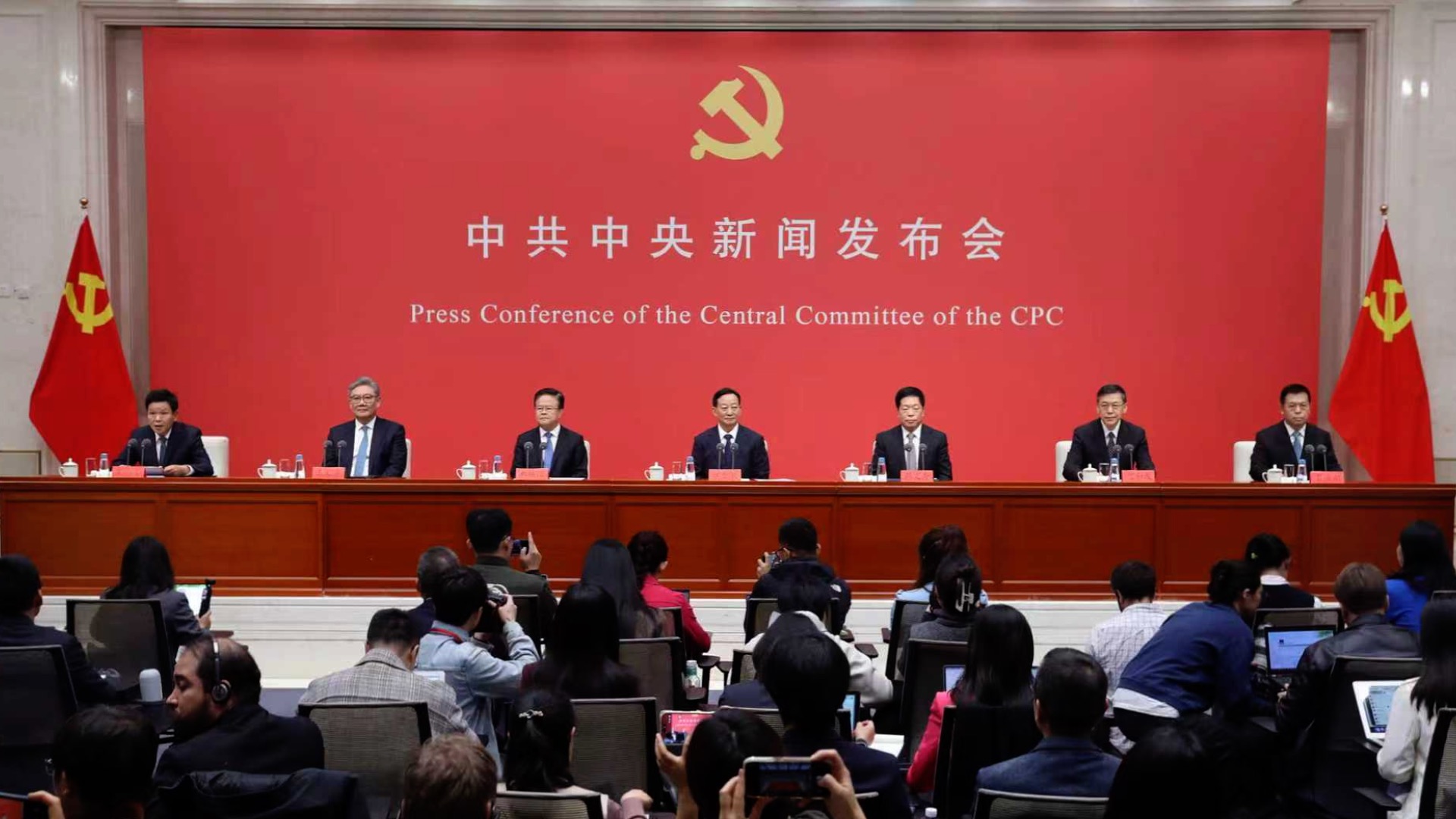
As the world boils in never ending conflict, the leadership gap keeps ever expanding, a factor that has caused disruptions. But so have alliances grown. China has remained the course of seeing to it that as the new world order takes shape, the formerly disregarded States get their place on the high table. Its agenda keeps growing and expanding on its intentions in Africa. Ever more mutually beneficial concessions are being executed and this has shaped foreign policies of China and its partner States. At the close of October, 2025, the 20th Central Committee of the Communist Party of China held its Fourth Plenary Session presided by the Political Bureau of the Central Committee. In attendance was President Xi Jinping. A communique was issued and among others, looked at recommendations that were made by the Committee, which included formulating the 15th Five-Year Plan for Economic and Social Development. More that was discussed was the balancing of inland domestic outputs vis-a-vis international commitments, development and security, democracy and rule of law. An assessment was also conducted on the successes that were registered for the outgoing Five-Year Plan that is running from 2021 to 2025.
The next phase incoming is the 15th Five-Year Plan that has been based on an intergenerational philosophy. This is posited on an understanding that the economic foundation is strong already, to absorb shocks, just as the 2021 to 2025 Five-Year Plan persevered through the COVID-19 pandemic. The next phase is cognizant of the growing international product competition and fast changing dynamics in technology and industry. It also takes keen understanding of the abundant human resource and wide market. The economy remains central. The pivot. One would think that China being a socialist State would cause hardship in realising stable relationships with capitalist and mixed economies of the Africa continent. It is worth examining because of the ease with which diplomacy has been achieved. It remains certain, however, that it is aware of the looming troubles. The economic war with the West. More shock absorbers and optimism are primary in the extension agenda. The US seems resolute under President Trump to keep pinning China to extents of surrender.
The communique noted an important aspect, a subject for this article – looking beyond its borders and letting entry into new horizons. The international community, and yet still standing by its philosophy of mutual beneficial cooperation. The case of Africa. Multilateral trading has in recent years faced attack from the West who instead of letting in other players on fair terms, seeks control. It remains open that new entrants from the Global South will have relations established on an economic stand, while hopefully, new markets will avail for the old partners with China. Africa has for decades suffered from tight systems of external trade. The wake up call has always been in ensuring industrialisation and manufacturing to trade finished products instead of raw materials, from a question of value addition. Even for China’s imports from Global South countries, the red tape was clear in its outgoing Five-Year Plan. But all hope had not been lost. China has been loosening its grip gradually on its trade restrictions to create a more favourable and fair environment for its partner traders just as it enjoys in the same States. In fact, some critics have always noted the contrary practice from its most sounded agenda of “Win-Win” philosophy.
The Global South might expect some relief because the idea by China is to have a reform on that front. And it is not surprising however, given its growing trade warfare with the West. Allies are necessary. Sanctions have become unpredictable. You cannot know who else joins the band. The Belt and Road Initiative, China’s flagship diplomacy driver, will be strengthened. At least that is expected. In the globalization agenda, it is arguably the greatest achievement of China’s diplomacy with Africa. What is key to note is the extensions that Africa might get out of the next Five-Year Plan. Climate Change has broadened its wings. Food insecurity is on a steady rise in Africa than ever before. There have been breakthroughs in agricultural sustainability globally, and China has risen places on the international scorecard in achieving reasonable sustainability. The disconnect between Rural and Urban Africa has grown greatly as its governments look on. This, besides carbon control and sustainable urban planning, should be a focus for Africa to leverage on the probable reforms that may be expected. China has been a steady preacher of fair share of technology and knowledge against global gatekeepers. Now should be a time to rethink African diplomacy beyond just infrastructure development, the glamor of donated guzzlers, and the constant exclusion of loan repayments. There is a sharp potential of African agriculture that can cure the embarrassing statistics of the African community. The iron is hot for Africa to strike. Reflect on the diplomacy priorities.
The writer is a Senior Research Fellow, Development Watch Centre.